There’s a lot of talk these days about AI replacing jobs, but the reality isn’t quite as dire as it seems—at least not yet.

New research suggests it’s not whole roles disappearing overnight, it’s pieces of them being chipped away, often without people even noticing at first. Instead of a clear break, it’s more like a slow transition in which tasks are handed over bit by bit.
That’s what’s starting to change how work actually looks. The job title might stay the same, but the day-to-day reality begins to change. Some tasks disappear, others get faster, and new expectations start creeping in. In the long run, that can reshape a role more than people expect, even if nothing seems to change all at once.
AI isn’t replacing entire jobs as much as it’s reshaping them.
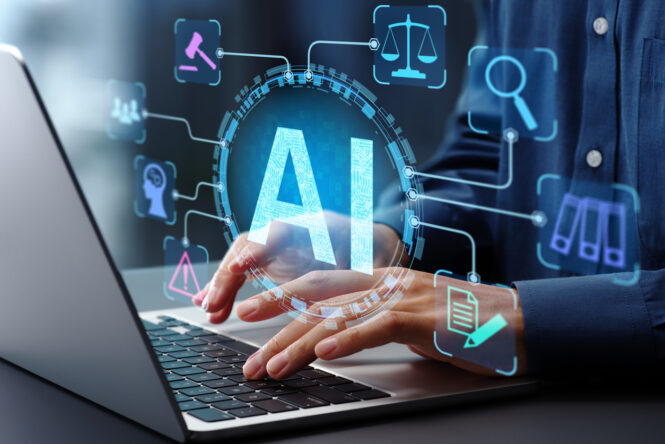
One of the biggest misconceptions is that AI arrives and replaces a job completely. In most cases, that’s not what’s happening. Instead, it’s taking over the more repetitive, structured parts of a role that follow clear patterns or rules.
This might include things like basic report writing, handling simple customer queries, organising data, or dealing with admin tasks that used to take up a large chunk of the day. The job still exists, but the balance of what a person actually does begins to change. In the long run, that can be just as significant as a full replacement.
A large share of jobs could be affected in some way.

The research suggests that a very high percentage of roles now include tasks that AI could handle, at least partially. That doesn’t mean those jobs disappear, but it does mean very few roles are completely untouched by the change.
For many people, this manifests in small, gradual ways. A tool might speed something up, or a process becomes more automated than it used to be. At first, it feels like a minor improvement. But when those changes build up over time, they start to reshape how the job actually functions.
Some roles are far more exposed than others.

Jobs built around routine, predictable tasks are the ones feeling the biggest impact. Office-based roles, admin work, and certain types of customer service are already seeing AI take on a growing share of the workload.
By contrast, jobs that rely on physical skills, human interaction, or complex judgement are much harder to automate. Roles in trades, care, hospitality, and hands-on services still depend heavily on people, and that’s unlikely to change quickly. This is why the impact of AI feels uneven rather than universal.
It’s already starting to affect hiring.

Even where jobs still exist, the way companies hire is beginning to change. Some entry-level roles are being reduced because AI can now handle the basic tasks those positions were built around.
This creates a knock-on effect. Fewer junior roles means fewer opportunities for people to gain experience and move up. That could eventually reshape how people enter industries altogether, making career paths less straightforward than they used to be.
The skills that matter are starting to change.

As AI takes over routine work, the skills that stand out are the ones it can’t easily replicate. That includes problem-solving, communication, decision-making, and the ability to think beyond a set of instructions.
There’s also a growing emphasis on understanding how to work with AI rather than against it. People who know how to use these tools effectively are often in a stronger position than those who ignore them, even if their core role hasn’t changed much on paper.
Not all of the impact is negative.

While there’s understandable concern about job losses, AI is also creating new types of work. Roles linked to managing, building, and improving AI systems are growing, particularly in tech and data-driven industries.
The challenge is that these new roles don’t always line up with the ones being reduced. That means some workers may need to retrain or switch direction, which isn’t always easy or immediate. The opportunity is there, but it doesn’t automatically reach everyone.
Some industries are already seeing clear changes.

In sectors like tech, finance, and business services, AI is already being used to automate tasks and streamline operations. That can lead to smaller teams in some areas, but it can also allow companies to grow faster in others, which is why the impact looks so mixed. In one company, AI might mean job cuts, while in another, it might mean expansion. The technology itself isn’t the deciding factor, it’s how it’s used.
The change is gradual, but it builds over time.

This isn’t a sudden moment where everything changes overnight. It’s a slower process where tasks are replaced or supported bit by bit. That makes it less visible in the short term. However, as time goes on, those small changes add up. A job that looked one way a few years ago can end up feeling very different, even if the title hasn’t changed. That’s where the real impact of AI starts to show.
The biggest change is happening in the background.

Part of what makes this change harder to grasp is how subtle it is. People don’t usually notice one big turning point. Instead, things change bit by bit over a longer period as expectations adjust. That can make it harder to prepare for because it doesn’t feel like a big deal in the moment. However, when you look back, the difference becomes much clearer.
The real story is about adaptation, not replacement.
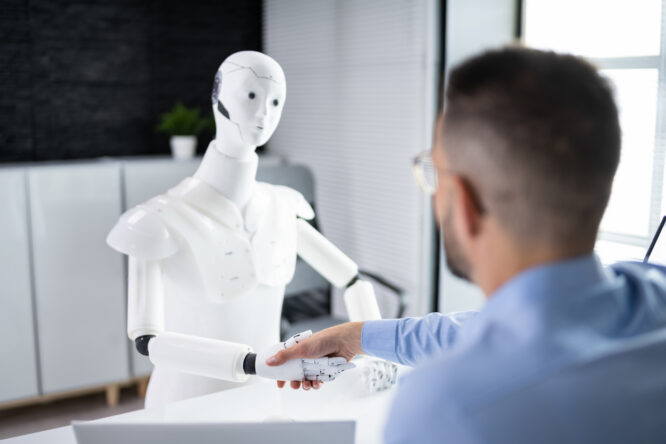
What this research really highlights is that the future of work isn’t about jobs disappearing in one go. It’s about roles evolving, sometimes in ways that aren’t obvious at first. For most people, the challenge won’t be losing their job overnight. It will be keeping up with how that job changes, and finding ways to stay relevant as those changes continue.
The overall picture is still unfolding.

AI is already shaping how work gets done, but it’s still early enough that the full impact isn’t completely clear. What is clear is that the change is already happening, even if it doesn’t always feel dramatic. For now, the safest assumption is that change will continue, and that most jobs will feel it in some way. Not all at once, and not in the same way, but steadily over time.