Keeping weeds under control doesn’t have to mean reaching for harsh chemicals or pricey sprays.
Stepping out into the garden on a sunny morning only to find a fresh army of weeds erupting through your patio slabs or choking your flowerbeds is enough to make any gardener’s blood boil. The temptation to run straight to the garden centre for a bottle of heavy-duty chemical weedkiller is massive, but spraying toxic mixtures around your home comes with a nasty list of downsides for your soil, your pets, and the local wildlife.
Thankfully, tipping gallons of poison onto your turf isn’t the only way to get the upper hand against stubborn roots. By understanding exactly how these unwanted invaders spread and deploying a few simple, entirely natural physical barriers and clever kitchen-cupboard tricks, you can completely clear your outdoor spaces and keep them pristine without ever exposing your garden to a single drop of chemicals.
Get to grips with a hoe.
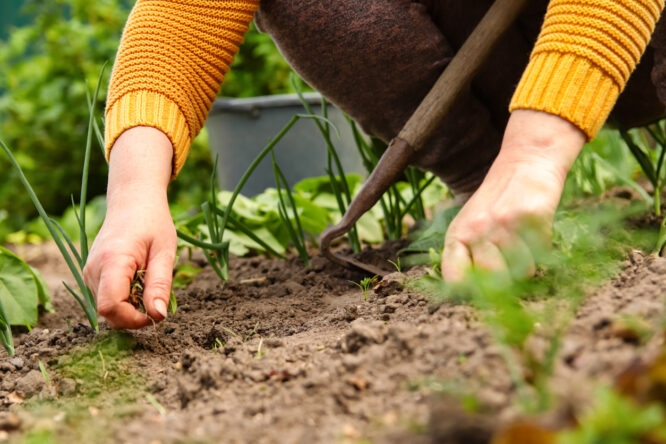
A hoe is the unsung hero of weed control, and it’s brilliant for quickly clearing a big patch of small weeds in one go. The best time to use one is on a dry, sunny day because the weeds you slice out will dry up and die off before they get a chance to root again. There’s a knack to it, though. The temptation is to stoop over and stab away, but you’ll do your back in within minutes.
Instead, stand upright and glide the hoe horizontally just under the surface of the soil, slicing the weed stems off at the roots or pulling them out entirely as you go. It’s far less effort than it looks, and once you get into a rhythm you can clear a surprising amount of ground in 15 minutes.
Bury weeds under cardboard.
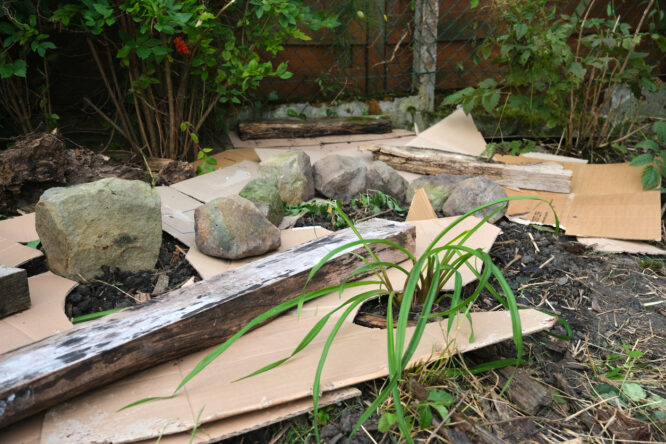
For larger problem areas, particularly bare beds rather than lawns, this old gardener’s trick is hard to beat. Lay flattened cardboard boxes straight onto the soil, covering everything you want to clear, then pile on around five centimetres of garden compost on top. The cardboard blocks out the light and gradually smothers whatever’s growing underneath, while the compost weighs it down and feeds the soil as it breaks down.
You’ll need to keep an eye out for the tougher weeds that try to push their way through, and dig those out as you spot them. Stick with it, though, and eventually, they’ll give up entirely, leaving you with a nicely improved patch of ground ready for planting.
Pick the right hand tools for the tricky spots.
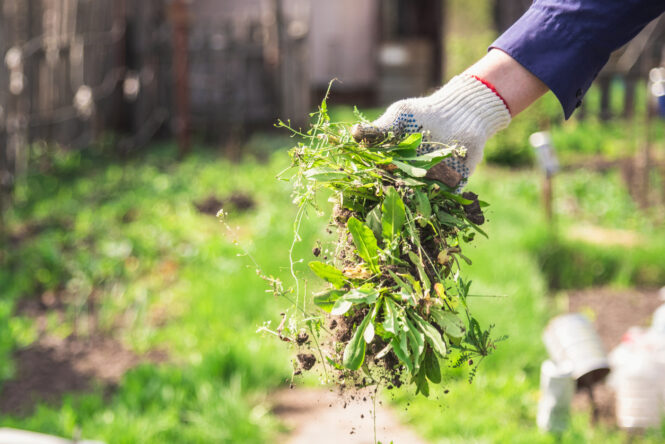
When weeds start poking up between paving stones or along the edges of paths, sprays often feel like the easy answer, but they rarely sort the problem out permanently. A good hand tool, used well, works far better in the long run. A dedicated weeding knife is ideal because it slides neatly into the gap and gets right down to the root.
A simple hand fork or a small trowel will also do the job nicely if that’s what you’ve got to hand. Yes, it takes a bit of effort to get going, especially across a large patio, but the satisfaction of pulling out a weed root and all is hard to beat. Do it once properly, and that crack stays clear for far longer than any spray would manage.
Keep on top of the mowing.

Plenty of us are happy to leave the odd flowering weed alone, particularly the cheerful little daisies that bees and other pollinators love. But there are limits, and once dandelions start running riot they need keeping in check. Regular mowing is one of the simplest ways to do that, since it stops taller weeds from getting established and seeding everywhere.
If you’ve got weeds forming a thick, low-lying mat that the mower can’t quite catch, run a rake over the lawn first to lift their stems up. That way the blades catch them completely, and you actually take a chunk out of the problem rather than just skimming over the top.
A word on dandelions

Dandelions have a slightly mixed reputation, and not without reason. They’re a useful source of pollen and nectar, particularly early in the year, when bees and other pollinators are struggling to find much else. Plenty of gardeners now deliberately leave some alone for exactly that reason. However, the watchword is “moderation” because dandelions are also enthusiastic spreaders, and a small clump can become a takeover bid in a single season.
The sensible approach is to let a few stay for the wildlife and pull the rest out before things get out of hand. Growing a wide mix of other flowering plants also takes the pressure off, since it gives pollinators plenty of options without you needing to keep every single dandelion.
Ditching the chemicals is ultimately worth it for a number of reasons.

Going chemical-free in the garden isn’t just about being kind to bees and butterflies, though that on its own is a decent reason. It’s also better for your soil, your pets, your kids and the local wildlife that wanders through. Sprays can knock back a weed in the short term, but they don’t always tackle the root properly, and you often find yourself reaching for the bottle again a few weeks later.
The methods above take a bit more elbow grease at first, but they sort the problem out and leave the rest of your garden the better for it. Once you’ve got into a regular weeding rhythm, you’ll find the whole job becomes far less of a chore and far more of a quietly satisfying part of pottering about outside.