There’s nothing quite like the stomach-churning thud of hitting a hidden crater in the tarmac to ruin your morning and potentially your bank balance.
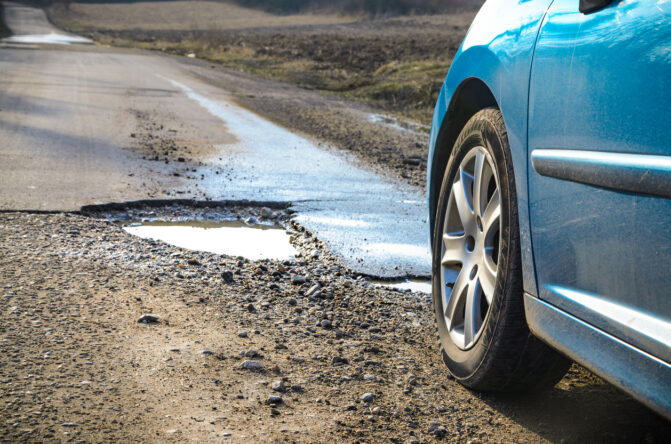
With the state of the UK’s roads feeling more like a cross-country obstacle course lately, pothole damage has become a depressing rite of passage for drivers, often resulting in buckled wheels or snapped suspension. The good news is that councils have a legal duty to maintain the highways, and if they’ve been negligent, they’re on the hook for the repair bill.
However, getting that money back is not as simple as sending a stern email. You need to be armed with a specific paper trail of photos, measurements, and evidence that the fault was reported long before your tyre met its end. If you are tired of paying for the government’s lack of maintenance, here is the step-by-step guide on how to navigate the claims process and actually win your battle against the local authorities.
UK roads are in a rough state right now.

UK roads are in a properly rough state at the moment. The Asphalt Industry Alliance has put the backlog of road repairs in England and Wales at around £18 billion, which is a polite way of saying there are a lot of potholes out there waiting to take a chunk out of your tyre, your alloy, your suspension, or all three.
The good news is that whoever’s in charge of the road has a legal duty to keep it in decent condition, and if they’ve failed to do that, you can claim back the cost of repairs. People have successfully clawed back hundreds, sometimes thousands, of pounds doing this.
When you can actually claim

You can only claim if the authority responsible for the road has been negligent. That basically means they should have known about the pothole and fixed it, but didn’t. If a lorry drops a paving slab two minutes before your car hits the resulting hole, that’s not on the council, and there’s nothing to claim.
That being said, if the pothole has been there for weeks, locals have reported it, and nothing’s been done, that’s a different story. The general rule of thumb is that for a claim to really stand up, the pothole usually needs to be at least 4 cm deep, which is roughly the height of two 20p coins stacked on top of each other.
How to work out who’s responsible

Different roads are looked after by different bodies. Most local roads are the council’s responsibility. Motorways and major A-roads in England are managed by National Highways. London roads come under Transport for London. Major roads in Scotland are split between Amey and Bear Scotland. Welsh trunk roads are handled by Traffic Wales, and Northern Ireland’s roads come under DfI Roads.
Working out which one applies to where you were driving is the first step because you’ll be claiming from them. There’s also a government rating system in England that grades 154 local highway authorities red, amber, or green based on how they’re handling their roads, which can be handy evidence if your local lot are clearly underperforming.
Gather evidence the moment it happens.
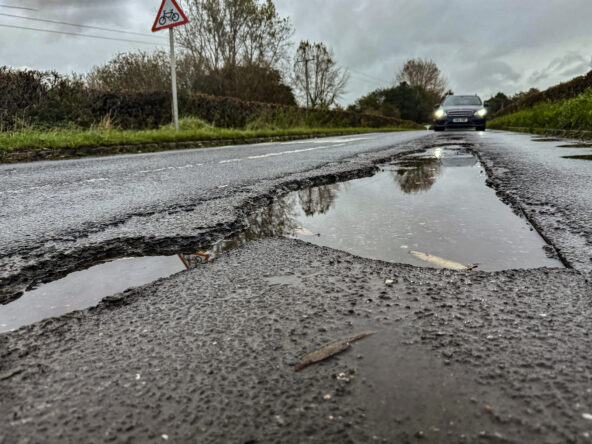
This is the bit that makes or breaks a claim. As soon as it’s safe, take photos of the pothole, ideally with something inside it for scale like a tape measure, a newspaper, or a 20p coin. Get close-ups of the damage, mid-range shots of where the pothole sits in the road, and wide shots showing nearby road signs or landmarks like a school, church, or pub.
Make a note of the time, date, weather, and traffic conditions, and write it all down as soon as you can. If anyone saw it happen, ask if they’d be willing to back you up in writing later. Keep notes that are dated, as contemporaneous notes carry more weight if anything ends up in court.
Get the damage looked at properly.
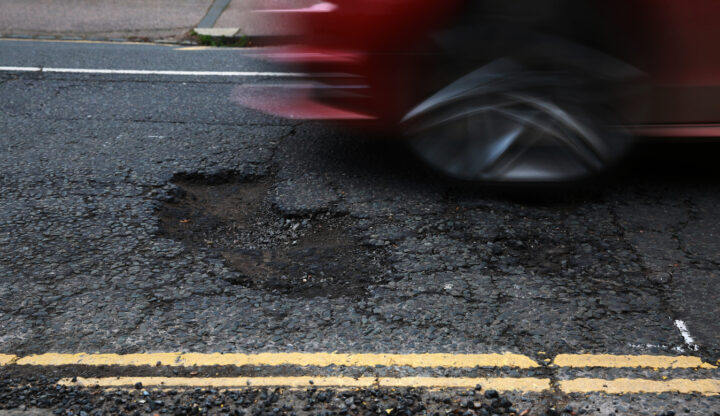
Take your car to a mechanic and get the damage assessed and repaired. Keep every receipt, and make sure the bill is itemised and dated. Crucially, ask the mechanic to put in writing that the damage was caused by a pothole. That single line in writing is worth a lot when you’re trying to convince an authority to pay up. The whole point of the claim is that you’re recovering the cost of repairs, so you need clear evidence of what was wrong and how much it cost to fix.
Report the pothole before you claim.

Before you can claim, you need to report the pothole to whoever’s responsible. Most authorities have an online reporting system, and you’ll usually get a reference number. This serves two purposes. It puts the pothole officially on the radar so they can fix it, and it adds to the evidence that this was a known hazard.
If you can show the pothole had been reported by you or someone else weeks earlier and nothing was done, that’s an enormous boost to your claim because it goes straight to the question of negligence.
The fast claim route

The quickest way to get your money back is to use the authority’s own claims process, often called a “fast claim.” Most councils, plus National Highways and TfL, will send you a form once you’ve reported the pothole. You fill it in, send it back with your evidence, and wait. Some come back with a cheque within a few weeks, while others will reject it on the first go and hope you give up.
The trick is not giving up. People who push back, supply more evidence, and politely persist are the ones who tend to get paid. Forum users have shared stories of getting full reimbursement for repairs running into hundreds and thousands of pounds, sometimes only after the second or third attempt.
What to include in your claim

Whatever route you go down, your claim should include copies of your repair invoices and proof of payment, your mechanic’s statement saying the damage was caused by a pothole, photos of the damage and the pothole itself, a note or sketch of where the pothole was, the date and time of the incident, and statements from any witnesses.
The more thorough your evidence pack, the harder it is for them to brush you off. A short covering letter outlining your case and making it clear you’re prepared to take the matter further if needed adds extra weight without being aggressive about it.
Should you tell your insurer?

This is worth thinking about carefully. If the damage is minor and you can afford to pay for repairs yourself, claiming on your insurance can sometimes do more harm than good, since it might affect your no-claims bonus and push your premium up next year. But if the damage is serious enough that paying out of pocket isn’t realistic, your insurance will cover it. Either way, some experts recommend letting your insurer know what happened, even if you don’t actually claim, just so it’s on record.
The ethical bit
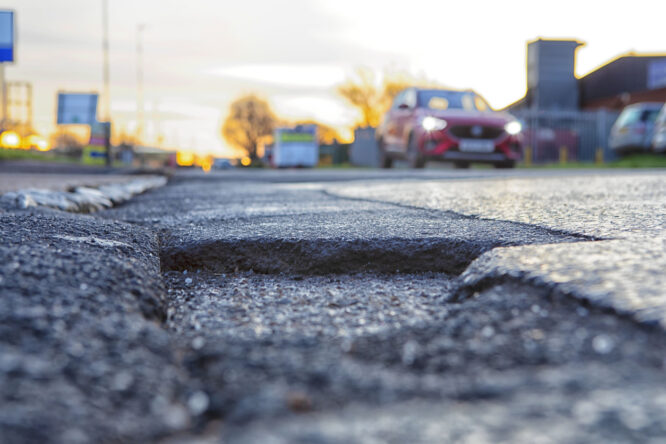
It’s worth saying that there’s a small but real argument going on around all of this. Every successful claim takes money out of council budgets that could otherwise be spent fixing the roads in the first place. On the other hand, the more pressure councils are under from claims, the more incentive they have to actually maintain the roads properly.
Martin Lewis has weighed in on this and basically said that compensation culture is something to be wary of, but that authorities have a legal duty to keep roads safe, and if they don’t, they should pay. It’s ultimately a personal decision. If your car has been seriously damaged through clear council negligence, a claim is entirely fair. The key is being honest about whether the authority was actually at fault.