If you’ve spent the last six months stepping over piles of shoes or digging through a junk drawer that’s more like a junk graveyard, the idea of sorting it all out probably feels like a nightmare.
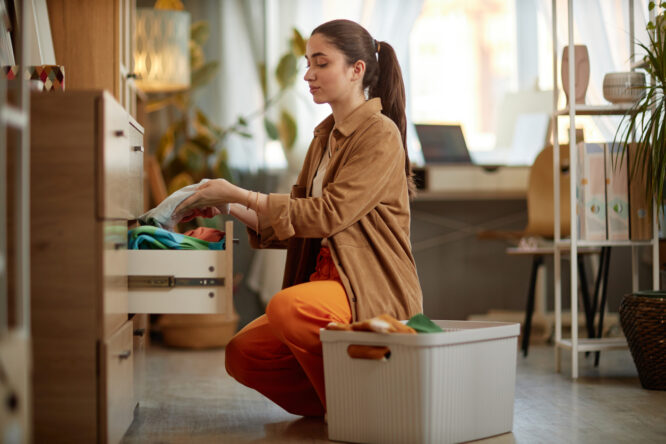
We all have those days when we look at the spare room or the kitchen cupboards and just think, “I’ll do that when I have a spare week,” but then that week never actually turns up. The thing is, you don’t actually need a fortnight of annual leave to get your house back in order. You can genuinely flip the place around in a single weekend if you stop overthinking it and just get stuck in. It’s about being a bit more methodical so you’re not just moving a pile of mess from the living room to the hallway and calling it a win.
Here’s how you can actually get it done without losing your head.
Step 1: Figure out what you’re actually trying to accomplish.

Before you start Y-fronts-deep in a wardrobe, take a minute to decide what a win actually looks like for you. If you try to reorganise the entire house, the garage, and the garden shed in two days, you’re going to end up sitting on the floor crying by Saturday lunchtime.
Pick the three or four spots that are doing your head in the most—maybe it’s the hallway where you can’t find your keys, or the kitchen counter that’s disappeared under a mountain of post. Having a finish line in mind stops the whole thing from feeling like a never-ending slog.
Step 2: Gather the supplies you’ll need to get the job done.

There’s nothing that kills your flow faster than getting halfway through a cupboard and realising you’ve run out of bin bags. Before you even open a drawer, grab a load of heavy-duty bags, some decent-sized cardboard boxes for the charity shop, and a permanent marker.
If you’ve got some old plastic tubs or baskets knocking around, keep those handy too. Having a “bin” pile, a “donate” pile, and a “keep” pile ready to go means you’re making decisions and moving on, rather than just staring at a heap of stuff on the carpet.
Step 3: Start small.

Don’t dive into the most emotional, difficult part of the house first. If you start with a box of old photos or sentimental letters, you’ll spend three hours reminiscing and zero hours decluttering. Start somewhere easy and impersonal, like the spice rack or the bathroom cabinet.
Getting rid of out-of-date paracetamol or a jar of cumin from 2019 gives you that immediate sense of “I’m actually doing this.” It builds up a bit of momentum so that when you get to the harder stuff, you’re already in the zone.
Step 4: Declutter room by room.

The biggest mistake people make is “butterfly decluttering,” where you find a toy in the kitchen, walk it to the playroom, see a stray sock there, take that to the laundry, and suddenly, you’ve spent an hour walking around without actually finishing anything.
Stick to one room until it’s done. When you’re looking at an object, ask yourself if you’ve used it in the last year or if you’d actually buy it again today. If the answer is no, it’s just taking up space in your head as well as your house. Be honest with yourself; you’re not going to fix that broken toaster one day.
Step 5: Create zones and work your way through them one by one.

As you’re putting things back, try to group them in a way that actually makes sense for how you live. All the batteries should be in one place, all the lightbulbs in another, and the kids’ school stuff should have its own dedicated hook or basket.
Labels are brilliant for this because they stop other people in the house from asking you where things are every five minutes. When everything has a proper home, you stop tidying up the same mess over and over again because it’s much easier to just put things back where they belong.
Step 6: Donate and discard—don’t leave stuff lying around.

This is the most important part: once a box is full for the charity shop or a bag is ready for the tip, put it in the car. If you leave those bags sitting in the hallway, there’s a massive chance you’ll start second-guessing yourself and pulling things back out. Or worse, the bags just become a new type of clutter.
Make a plan to drop them off at the local donation centre or the recycling plant as soon as you finish for the day. Seeing that physical space open up in your house is the best feeling in the world.
Step 7: Clean and organise your space once the mess is cleared.
There’s no point in putting your organised stuff back onto a shelf covered in two years’ worth of dust. Once a surface is clear, give it a proper wipe down. Vacuum the corners of the cupboards you’ve just emptied and clean the windows. It’s much easier to keep a space tidy when it feels fresh and looked after. It changes the whole vibe of the room from storage unit to actual living space and makes all that hard work over the weekend feel like it was totally worth it.
Step 8: Keep on top of things so you don’t have to do it again.

Once you’ve had a successful weekend, you really don’t want to be back in the same position in three months. Try to get into the habit of a “one in, one out” rule—if you buy a new pair of jeans, an old pair has to go. Spend 10 minutes every evening just putting things back in their zones.
It sounds like a chore, but it’s a lot better than having to spend another entire weekend fighting with your belongings. Living in a house where you can actually see the floor and find your matching socks makes life about 100% less stressful.