Kicking the vape habit is often harder than quitting traditional cigarettes, or so it seems.
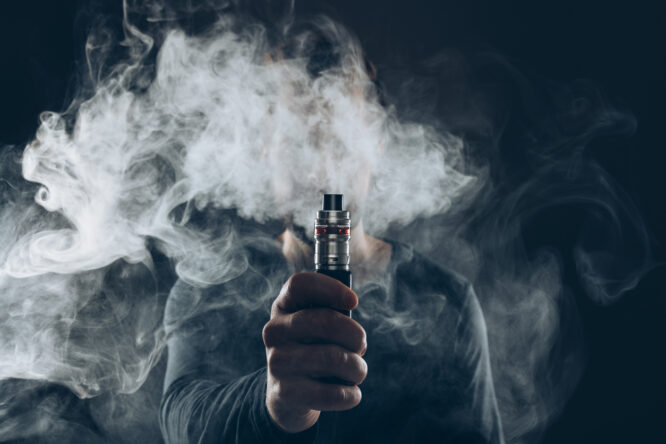
That’s mostly because the thing never leaves your hand, and you can puff away in places you’d never dream of lighting up. It’s a constant, high-speed delivery system for nicotine that makes the habit feel like a permanent part of your personality rather than just a vice. Breaking that cycle requires more than just willpower; you need a proper strategy to deal with the specific hand-to-mouth fidgeting and the sudden spikes in irritability that come when you finally put the device in the bin.
Of course, this means rewiring your daily routine so that your morning coffee or your walk to the station doesn’t feel empty without a cloud of synthetic watermelon. If you’re ready to stop being tethered to a USB charger, here’s the practical, no-nonsense way to reclaim your lungs and your focus for good.
Quitting vaping is harder than people think.

The first thing to understand is that vaping isn’t a watered-down version of smoking, even though it feels like it should be. Modern vapes deliver nicotine more efficiently than traditional cigarettes, and a single pod can contain as much nicotine as an entire pack of cigarettes.
The nicotine in vapes is usually salt-based, which is smoother to inhale, which means you can take in higher doses without your throat fighting back. It hits your brain in seconds, and unlike cigarettes you don’t have to step outside or light anything, so it just slots into your day from morning until bed. That constant, easy access is part of what makes the habit so deep. By the time you decide you want out, you’re often more hooked than you realised.
Get clear on why you actually want to stop.

The first proper step is honestly working out why you’re doing this. Generic reasons like “vaping is bad for you” rarely keep anyone going through the wobbly bits. The reasons that tend to stick are personal and a bit specific. The money you’re spending.
Maybe it’s the fact you can’t sit through a film without sneaking off, or the slight breathlessness when you climb the stairs. Perhaps it’s the way your kids have started copying the gesture. Whatever it is for you, write it down somewhere you’ll see it often. When the cravings come hardest, those personal reasons are what get you through, not vague health warnings.
Pick a quit date and actually mark it.
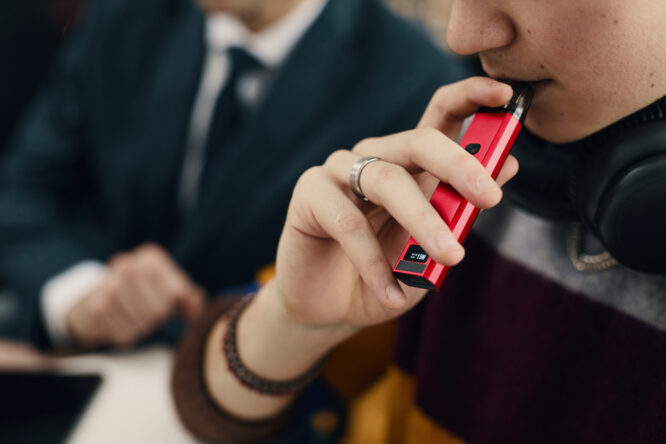
Most successful quitters set a quit date within the next week or two and treat it like an appointment they can’t move. Picking a Tuesday in three months gives you too much wriggle room to talk yourself out of it. Picking tomorrow gives you no time to prepare. Somewhere in between is the sweet spot.
Mark it on your calendar, tell a few people whose support you actually want, and use the days before it to get yourself ready rather than panic-vaping more than usual. Some people like to write a little pledge to themselves, or treat the morning of their quit day as something a bit special. Whatever helps you take it seriously is worth doing.
Should you cut down or go cold turkey?

There’s no single right answer here. Some research has actually found that going cold turkey works better for more people than cutting down gradually because it stops dragging the process out. Other people genuinely can’t face going from full use to nothing overnight.
If you’re going to cut down, you need a clear plan with dates, not a vague intention to “use it less.” That might mean halving your usage in week one, halving again in week two, and stopping completely on a set date. The cold turkey route is sharper but quicker, and the worst of it is over within a couple of weeks. Be honest with yourself about which approach actually fits your personality, then commit to it properly.
Get rid of every device, pod, and charger.

This bit catches people out. The single biggest predictor of relapse is having a vape “just in case” tucked away somewhere. The drawer, the car, the desk at work. If it’s there, you’ll find it during a stressful evening. Properly clear out every device, every pod, every charger, every spare bottle of liquid. Throw the lot away or hand it to someone you trust to bin for you.
The same goes for anything that triggers the habit, whether that’s a particular mug you always vaped with, a chair on the balcony, or a routine you can change slightly. The point isn’t to be dramatic, it’s to make the path back to vaping just inconvenient enough that you don’t go down it on autopilot.
Know your triggers before they hit you.

Triggers are the things that make you reach for a vape without thinking. The morning coffee. The drive home. The first drink at the pub. Stress at work. Boredom in the evening. The phone call to a particular family member. Spend a few days noticing when you reach for your vape and why, and you’ll start seeing a pattern.
Once you’ve got that pattern, you can plan around it. Have something ready to do with your hands during your morning coffee. Take a different route home. Tell your friends you’re quitting before going to the pub, so the first drink isn’t a surprise ambush. The cravings hit much harder when they catch you off guard than when you’re expecting them.
The withdrawal bit is tough, but it doesn’t last forever.

Nicotine withdrawal is a real thing, and it’s worth knowing what to expect. Most people get some combination of irritability, headaches, restlessness, trouble sleeping, low mood, brain fog, and an almost itchy feeling of needing to do something with their hands. Cravings come in waves rather than as a constant feeling, and most individual cravings only last about three to five minutes if you ride them out.
The worst of the physical symptoms usually peak in the first three days and ease off within two weeks. The psychological side of it, the habit and the urge, can take longer to fade, but it does fade. Knowing the timeline helps because day three feels less impossible when you know day three is the worst it gets.
Nicotine replacement and other proper tools can help.

You don’t have to white-knuckle this if you don’t want to. Nicotine replacement therapy, or NRT, can take a lot of the edge off and massively improve your chances of actually quitting. Patches give you a steady background dose that takes care of the constant low-level cravings. Gum, lozenges, mouth sprays, and inhalers handle the sudden sharp cravings that come out of nowhere.
Some people use a patch and a faster-acting product together, which research has shown works better than using just one. In the UK, Nicorette QuickMist is currently the only NRT specifically licensed for quitting vaping, but other options can still help. Speak to your pharmacist or GP because they can talk you through what’s likely to suit your situation, and some options are available cheaper or free through the NHS.
Find something to do with your hands and mouth.

Half of the vape habit isn’t really about the nicotine, it’s about the fiddling. The hand-to-mouth motion. The little click. The breath in and out. That bit needs replacing, not ignoring. Sugar-free chewing gum, lollipops, toothpicks, those plastic stirrer sticks, even a straw cut to size, all give your mouth something to do.
Fidget toys, knitting, doodling, peeling the labels off bottles, anything that keeps your hands occupied helps. It feels silly at first, but the muscle memory of vaping is very specific and it needs a substitute, not a void. Without one, your hands will just keep reaching for a vape that isn’t there.
Tell people, even if it feels awkward.

Quitting alone is much harder than quitting with even one or two people in your corner. Telling friends and family you’re stopping does two things at once. It gives you accountability, since announcing it makes you less likely to quietly back out. And it gives you support because the people who care about you can encourage you, distract you, or just not vape in front of you for a while.
If your social circle is heavy on vapers, that conversation can feel awkward, but most people are kinder than you expect. Frame it as your decision rather than a judgement on theirs, and most friends will rise to it.
Slip-ups happen, and they’re not the end.

This is the bit nobody tells you clearly enough. Most people who successfully quit vaping have tried more than once. A slip is not a failure, it’s information. If you have one puff, or one bad evening, or one weekend back on it, that doesn’t mean the whole thing’s ruined. It means you’ve learned something about a trigger you weren’t ready for, and you can plan better next time.
The worst thing you can do after a slip is spiral and decide you’re hopeless. After all, that’s how a slip turns into a full relapse. The trick is to stop, look at what set it off, and get straight back on track without making a meal of it.
It’s a long game you’ll need to be prepared to play out.

The first month is the hardest, but cravings can pop up months down the line, especially when you’re stressed, drunk, or with people who vape. They’re shorter and weaker than they used to be, but they can take you by surprise. Knowing this in advance is half the battle.
The flip side is that the benefits start showing up faster than people expect. Your sense of taste and smell sharpen up within days. Your skin starts to look a bit better within weeks. The constant low-level wheezing eases off. And the money you stop spending is genuinely surprising, often hundreds of pounds over a few months, depending on how often you were buying pods. Most people who quit successfully describe a kind of mental quiet that takes a few weeks to settle in, but feels brilliant once it does.
Quitting vaping is properly hard, but thousands of people manage it every year, and the reason it works for them isn’t willpower or luck. It’s preparation, support, and treating slip-ups as part of the process rather than the end of it. Pick your date, tell your people, get rid of every device, and walk into it with a plan rather than a vague hope. Your future self, your lungs, your wallet, and the people around you will all be quietly grateful you did.