Faith has always been about meaning, connection, and something deeper than the surface.

However, it seems like lately, when you scroll through social media, it’s hard to tell if you’re looking at someone’s spiritual practice or their personal brand. Filtered devotionals, curated Bible study corners, aesthetic prayer journals, and reels filled with soft music and just-right lighting are everywhere. It’s not that people shouldn’t share their beliefs, but the way it’s being done often feels more like marketing than ministry. These are just some of the ways social media has made faith start to look like just another lifestyle brand.
1. Faith is now part of the aesthetic.

Whether it’s a perfectly arranged flat lay of a Bible, candles, and a latte or a sun-drenched video of someone journaling with soft music in the background, faith content has been styled to fit the vibe. Belief is only a small part; it’s really about how good it looks.
There’s nothing wrong with beauty, but when presentation becomes more important than meaning, the message can feel hollow. Faith ends up being another item in a curated grid, rather than something deeply lived and wrestled with.
2. Influencers are preaching more than pastors.
 Source: Unsplash
 Many people get their spiritual input from TikTokers and Instagram creators now, not actual communities or spiritual leaders. Influencers are untrained but confident, mixing personal opinion with theology in bite-sized, emotionally charged clips. This means a lot of people are basing their beliefs on what trends or goes viral, not what’s rooted or thoughtful. Faith becomes a performance, filtered through ring lights and edited into short-form inspiration content.
3. The messaging is tailored to “engagement.”

Algorithms reward the dramatic, the emotional, or the confrontational. So naturally, religious posts often start to sound like clickbait: “This is the ONE verse that changed everything” or “Christians need to hear THIS today.” Instead of sitting with doubt, nuance, or slow reflection, the tone becomes urgent and reactive because that’s what boosts reach. Faith gets trimmed down into slogans, designed for likes, not understanding.
4. There’s a heavy focus on image.

It’s not just what you believe, it’s how good you look doing it. The rise of modest fashion influencers, aesthetic prayer spaces, and glow-up faith testimonies puts pressure on people to look like they’ve got it all figured out spiritually and visually. It creates an expectation that faith should always look polished and serene. Of course, real spiritual growth is often messy, quiet, and far from camera-ready, and that side rarely makes it into the feed.
5. Christianity is being packaged like a wellness product.

Some faith-based content now overlaps heavily with the language of self-care and lifestyle trends. You’ll hear phrases like “protect your peace,” “set spiritual intentions,” or “align with your purpose” in spaces that once used more grounded language about struggle, surrender, or sacrifice.
While it might feel accessible, this change can turn deep theology into a kind of motivational backdrop. Belief becomes another way to vibe-check your life, not necessarily something that challenges or changes you.
6. Doubt and complexity are edited out.

On social media, there’s little space for the grey areas. People often present faith as a straight path with a constant sense of clarity, happiness, and purpose. There’s not much room for those seasons where belief feels uncertain or messy. This can make followers feel like they’re failing spiritually just because their experience isn’t picture-perfect. The reality is, real faith often includes silence, confusion, and questions, but you won’t always see that online.
7. Posts are designed to convert, not connect.

Some creators treat their platforms like a mission field, which sounds good in theory, but their posts start to feel more like marketing pitches than genuine conversations. “Share this if you love Jesus” or “Only true believers will repost” turns faith into a chain letter. It adds pressure and guilt into the mix, encouraging performance over sincerity. Connection gets replaced with call-to-actions, and spiritual moments become sales tactics in disguise.
8. Faith gets merged with political branding.

In some spaces, particularly in the U.S., religion is so tangled with politics online that it’s hard to separate belief from party lines. Hashtags about Jesus are mixed in with culture war rhetoric and partisan messaging. For those just trying to explore their faith or find community, this can be alienating. It turns spiritual identity into a loyalty badge and makes nuance feel like betrayal.
9. There’s a sense of spiritual FOMO.

Watching other people post highlight reels of retreats, conferences, or their morning devotions can make you feel like you’re not doing enough. Like your faith isn’t “strong” or “aesthetic” enough to count. That subtle comparison game undermines the personal nature of belief. Faith isn’t a competition or a content strategy, but social media can make it feel like you’re constantly behind.
10. Online faith communities can become cliquey.

Like with any niche, religious content creators can form tight-knit circles, boosting each other’s posts and speaking the same language. That’s fine, until it starts feeling exclusive or performative. People on the outside looking in may feel like they don’t belong if they don’t dress a certain way, quote the right scriptures, or have the same soft-lit backdrop. Faith becomes less about connection and more about access.
11. Struggles are turned into story arcs.

Some people share genuine testimonies online, but others seem to stylise hardship for likes. It’s all wrapped up with a bow, ending in “but God came through!” Whether it’s breakups, trauma, or anxiety, everything is turned into a redemption arc. Real growth isn’t always linear or social-media-ready. The problem is that when struggles are turned into content, it risks minimising the hard stuff and turning pain into performance.
12. It promotes a curated version of morality.

Online faith content often highlights specific virtues like modesty, patience, happiness, and obedience, while leaving out others like justice, humility, or even healthy anger. The goal becomes looking morally “clean,” not being deeply transformed. Such selective emphasis can pressure people to present a specific version of goodness that fits the feed. It’s not always about inner growth. It’s about being the kind of Christian that gets the algorithm’s approval.
13. It can feel more like performance than practice.
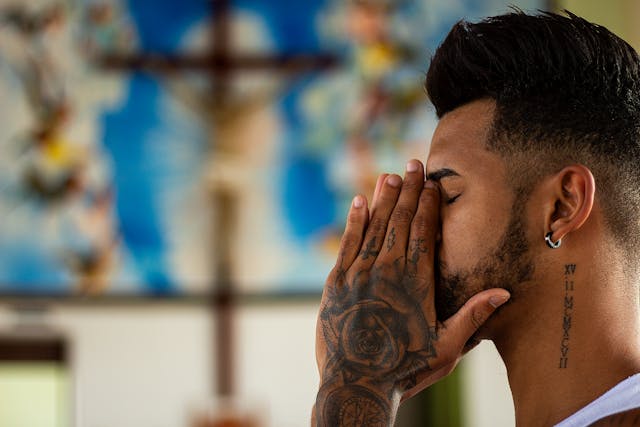
When you’re constantly posting about your beliefs, it can be hard to know what’s real and what’s just for show. Even well-meaning creators can slip into performative spirituality without realising it. The pressure to keep showing up online with verses, reflections, or “godly content” can hollow out the personal side of faith. At some point, it stops being about your relationship with something greater, and becomes a content plan.
14. It’s easy to forget faith isn’t about branding.

Faith wasn’t meant to be packaged, monetised, or sold. However, online, everything gets filtered through personal branding: your values, your content pillars, your tone, etc. Somewhere in the middle of all that curation, something real can get lost. That doesn’t mean sharing faith is wrong. It just means it’s worth asking: am I living this, or performing it? Because belief isn’t supposed to be a vibe. It’s supposed to mean something.