Most of us rely on a takeaway coffee to get our brains working in the morning.

And generally speaking, we blindly assume that a medium cappuccino or a standard latte delivers roughly the same caffeine kick wherever you buy it. You grab your cup, tap your card, and expect a predictable, reliable boost to carry you through the working day.
The reality on the British high street is wildly different. A major new comparison looking at the nation’s biggest coffee chains has revealed massive, eye-opening differences in caffeine levels between brands, with some standard takeaway cups packing more than quadruple the punch of their direct competitors. If you’ve ever wondered why a flat white from one shop leaves you feeling energised while the same drink from another has you bouncing off the walls, we’ve got a rundown of how the UK’s biggest high street names actually compare.
Caffeine content differs between popular high street chains in a big way.
Before getting into the numbers, it’s important to understand why this gap exists in the first place. Caffeine levels largely come down to a combination of factors: the type of coffee bean used, how it’s roasted, the brewing method, and the overall size of the cup being served. Even drinks that sound identical on paper, like two different cappuccinos from two different chains, can end up with wildly different caffeine levels depending on how each one approaches its recipe.
According to caffeine tracking resource Caffeine Informer, a standard espresso typically contains around 80 mg, while a latte and an Americano usually sit closer to 160 mg. That gives a useful general benchmark, though as this comparison shows, individual chains can sit well above or below that average.
How much coffee is actually too much?
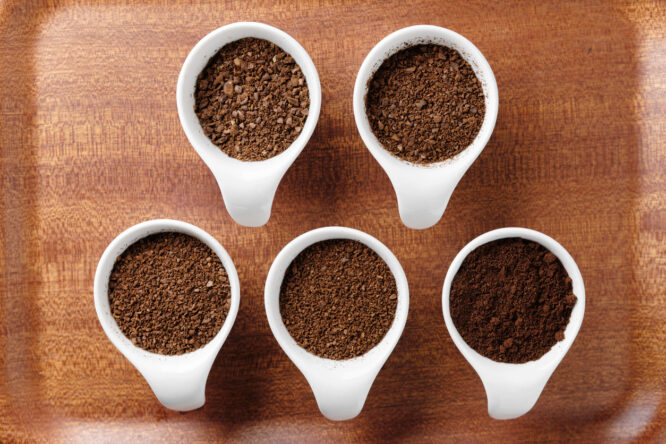
According to a registered dietitian, drinking coffee in moderation, roughly three to five cups a day, has consistently been linked to a healthy diet and lifestyle overall. Research has pointed to potential benefits including a lower risk of type 2 diabetes and cardiovascular disease, along with reduced tiredness, better attention and mental performance, and even improvements in some aspects of physical performance.
Many of these benefits are largely down to the caffeine itself, though there’s growing interest in the antioxidants found in coffee too, which may offer some anti-inflammatory effects. Coffee also contains small but useful amounts of nutrients like potassium and magnesium, adding a bit more to the picture beyond just the caffeine hit.
Working out how much caffeine is actually in your daily cup isn’t always straightforward.
The amount of caffeine in a typical cup of coffee can vary considerably depending on how it’s made. A cup of instant coffee generally contains around 65 mg, a standard brewed coffee closer to 85 mg, and a single espresso shot roughly 60 mg. That means an Americano or latte made with three shots of espresso could realistically contain around 180 mg of caffeine in one drink, without necessarily looking any different from a single shot version at first glance.
Matcha isn’t as gentle on caffeine as people often assume.

Matcha is frequently marketed as a calmer alternative to coffee, but it’s far from caffeine free. Across the chains tested, matcha lattes ranged from as little as 28 mg up to nearly 100 mg, a bigger spread than you might expect from a drink often positioned as the gentle option.
If you’re switching to matcha specifically to reduce your caffeine intake, check the specific figures for wherever you’re ordering from, since the difference between chains can be considerable even within the same drink category.
New research has now compared major UK coffee chains directly.
A recent study compared caffeine levels across five major UK coffee chains: Caffè Nero, Costa, Pret a Manger, Starbucks and Greggs. Testing covered some of the most popular drinks on each menu, including espresso, cappuccino, flat white, latte, Americano and hot matcha latte, to see exactly how much caffeine customers are actually getting cup for cup.
The results showed a pretty wide spread. Starbucks consistently served the lowest caffeine content across almost every drink category tested, making it a solid choice for anyone actively trying to cut back. At the other end of the scale, one chain stood out considerably from the rest.
Costa came out with the highest caffeine content by a significant margin.
Topping the list was Costa, whose medium cappuccino, made with espresso, hot milk and a layer of thick foam, contains 325 mg of caffeine. To put that in perspective, that’s roughly the same amount of caffeine as four cans of Red Bull, and almost three and a half times more than the 89 mg found in the same drink from Starbucks.
Costa’s espresso shot also came out strongest of any chain tested, at 100 mg, while its flat white, made using three smaller “cortissimo” shots, reached 241 mg, a striking amount for what’s typically considered a shorter drink. Its Americano matched its cappuccino at 325 mg too, making it the most consistently caffeine-heavy menu of the five chains compared.
How the different drinks and chains actually compare
Espresso: Caffè Nero (67 mg), Costa (100mg), Greggs (75mg), Pret (180mg), Starbucks (45mg)
Cappuccino: Caffè Nero (221 mg), Costa (325mg), Greggs (235mg), Pret (180mg), Starbucks (89mg)
Flat white: Caffè Nero (105 mg), Costa (241 mg), Greggs (150 mg), Pret (180 mg), Starbucks (89 mg)
Latte: Caffè Nero (175 mg), Costa (200 mg), Greggs (208 mg), Pret (180 mg), Starbucks (89 mg)
Americano: Caffè Nero (191 mg), Costa (325 mg), Greggs (257 mg), Pret (180 mg), Starbucks (89 mg)
Hot matcha latte: Costa (99 mg), Pret (28 mg), Starbucks (57 mg)
Caffeine levels have crept up noticeably since the last comparison
The previous version of this research was carried out back in 2023, and the shift since then has been fairly significant for some chains. Caffè Nero in particular appears to have leaned further into stronger coffee, with its cappuccino now containing roughly double the caffeine it did previously, sitting at 160 mg at the time.
Costa Coffee has said it’s committed to helping customers make informed choices, pointing out that caffeine and nutritional information is available across its menu and website, alongside decaffeinated and non-caffeinated options for anyone looking to cut back. Given how much variation exists between chains, and even between different drinks at the same chain, it’s worth paying a bit more attention to exactly what you’re ordering if you’re trying to manage your caffeine intake, rather than assuming all coffees are roughly equivalent.