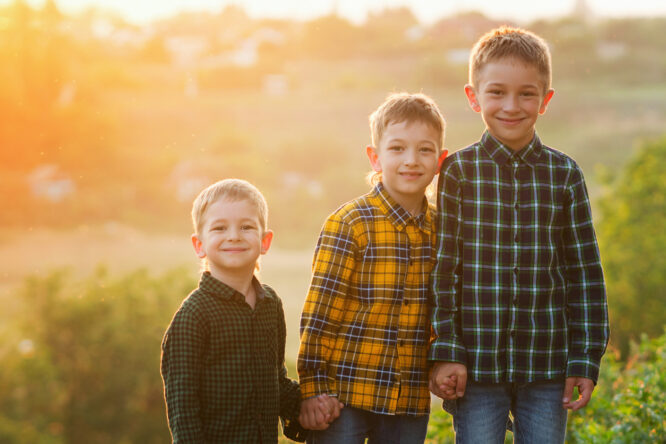
We all grow up in the same family, but not in the same position. Whether you were the oldest, middle, youngest or only child, your place in the line-up quietly shaped how you see yourself. Here’s how birth order can affect confidence in ways most people never notice.
Firstborns learn to perform for approval.
From the start, firstborns are watched closely. They’re the ones parents experiment on, expecting maturity before it’s natural. Praise often follows achievement, not effort. That early pressure can create confidence built on performance. They appear capable and organised, but their self-worth can depend on being “the responsible one.” When things go wrong, they take it personally.
Middle children learn confidence through comparison.
Middle kids grow up surrounded. They’re not leading, not trailing, but constantly negotiating. They learn to adapt and read people fast, which often makes them easy-going but quietly unsure. Because they’re neither the “first” nor the “baby,” they sometimes wonder where they fit. Their confidence often comes from friendships or social balance rather than direct recognition at home.
Youngest children learn confidence from charm.
The youngest grow up watching everyone else. They learn how to win people over quickly, using humour, warmth, and lightness to get attention when rules feel flexible. Their confidence is often social rather than structured. They’re great at connection but can struggle with independence, especially when they’ve always had older siblings to fall back on.
Only children learn confidence from competence.
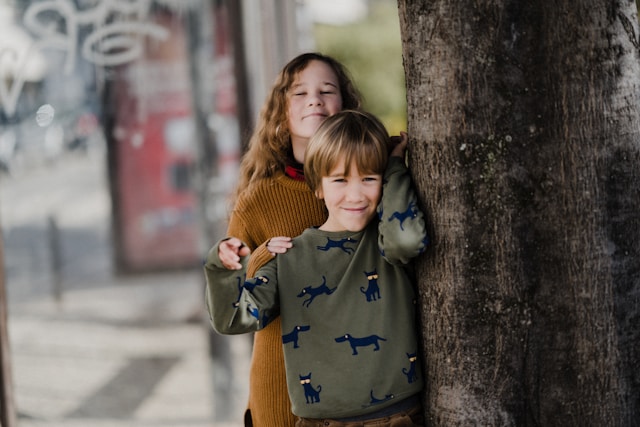
With no siblings, only children grow up in an adult world. They learn self-reliance early, but the constant focus can feel intense. Praise and correction both come straight from adults, not peers. That creates high self-awareness but also perfectionism. Their confidence can feel fragile when they’re not instantly good at something because they’ve grown used to excelling first time.
The gap between siblings changes everything.
If there’s a big age gap, the younger child often grows up like an only child, while the older one carries the “mini-parent” role longer. Small gaps create rivalry; large ones create distance. Confidence develops differently depending on that space. Too much competition can make kids doubt themselves, while too much independence can make self-belief hinge on isolation.
Gender plays into birth order dynamics
A first-born daughter might feel she has to be emotionally mature; a firstborn son might feel pressure to lead. Family expectations shape how each learns to express or hide vulnerability. These unspoken roles carry into adulthood. Many people confuse gender traits with personality, when often, it’s the birth-order expectations that built them.
The family’s emotional climate sets the tone.
In some families, love feels earned through behaviour; in others, it’s given freely. That difference changes how birth order plays out completely. Two firstborns from different homes can grow into opposites: one confident and steady, the other anxious and approval-hungry. It all depends on whether they were nurtured or pressured.
The “parentified” child grows up too soon.

In families where parents struggle, the oldest often becomes caretaker. They learn strength early but also lose space to be vulnerable. Their confidence comes from survival, not support. That kind of self-assurance looks solid but cracks easily under emotional pressure. Healing for them means learning that resting doesn’t equal weakness.
The overlooked middle learns invisibility.
When attention goes to the eldest’s achievements and the youngest’s milestones, middle children often get left to “just be fine.” They start hiding needs to avoid burdening anyone. That can create quiet insecurity that shows up later as people-pleasing. Their confidence grows best when they learn to speak up rather than blend in.
The spoiled youngest struggles with accountability.
If the baby of the family is overprotected, they grow used to shortcuts and forgiveness. They learn charm works better than responsibility. That charm builds surface confidence, but it’s easily shaken when life demands structure. Real growth happens when they stop expecting rescue and start building resilience.
Only children can feel safest alone.

Because they never had to compete for space, only children can feel most confident in solitude. They thrive on focus, creativity and independence, but teamwork can unsettle them. They sometimes equate collaboration with loss of control, which makes trust harder until they see group success as shared rather than threatening.
Birth order shapes how you handle failure.
Oldest kids fear it, middle kids deflect it, youngest kids joke through it, and only children overanalyse it. Each style comes from how they first learned to earn approval. Confidence isn’t about avoiding failure, it’s about seeing it without shame. Once you understand how your family role trained your reaction, you can rewrite it.
Healing starts with self-definition.
Birth order explains patterns, but it doesn’t have to define you forever. Awareness lets you keep the strengths and soften the edges. Whether you grew up as the fixer, the peacekeeper or the wildcard, confidence becomes real when it comes from choice, not childhood conditioning. Recognising that is where self-assurance truly begins.