Something genuinely surprising is happening with Britain’s youngest adults.

The generation everyone wrote off as the most secular ever, glued to screens and uninterested in tradition, has started turning to religion. Bible sales are soaring, churches are seeing a steady trickle of fresh young faces, and faith is becoming a topic of conversation in places it had completely vanished from. So what’s actually going on, and why is Gen Z, of all generations, the one finding faith again?
The numbers behind the trend are pretty surprising.

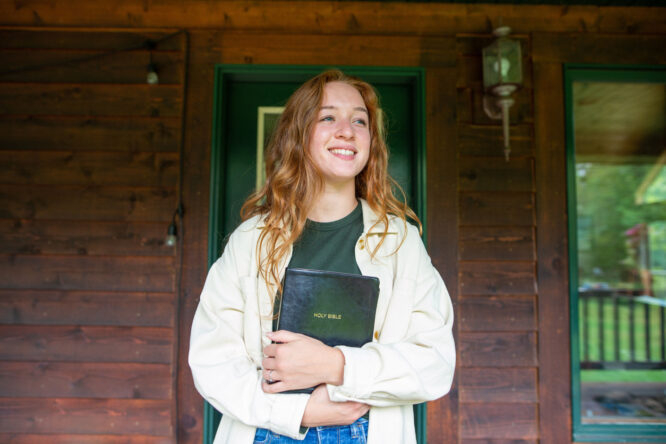
The figures are properly eye-catching. Bible sales have shot up by around 134% over the past six years, with a huge chunk of that growth driven by people in their teens and twenties. In the UK, around 37% of young people now say they believe in God, which is double the figure from just a few years ago. That puts Gen Z’s level of faith ahead of boomers, which would have sounded utterly unbelievable a decade ago.
This is the same generation that was supposed to leave religion behind for good. Instead, they’re picking it up in ways their parents and grandparents wouldn’t quite recognise. The traditional Sunday service still exists, but for many young believers, the journey starts somewhere far more modern.
Like most things, it all starts on their phones.

For loads of young people, the doorway into faith isn’t a church, mosque or synagogue, it’s a phone. Religious content has exploded on social media, with millions of posts under hashtags about Christianity, Judaism, Islam, Buddhism and beyond. Young creators talk about their beliefs in a casual, relatable way, sharing how prayer fits into their week, how a particular verse helped them through a tough patch, or how they’re approaching big life questions.
That kind of content meets young people where they already are, and it encourages curiosity rather than feeling like a lecture. From there, a small number go on to actually try a service or read a holy text properly. The online world is doing what church youth groups used to do, just on a much bigger scale.
There’s a deep need for proper community.

One of the strongest reasons young people are gravitating towards religion is the sense of community it offers. This is the loneliest generation on record, with mental health surveys showing higher levels of isolation among under-thirties than any other age group. They’ve grown up with group chats that are full of noise but short on real connection, and with friendships that often live entirely on screens.
Places of worship offer something genuinely different. There are actual humans in a room together, talking, sharing food, asking after each other and meeting up week after week. That kind of regular, real-world connection is genuinely hard to find elsewhere.
Third spaces that have slowly but surely disappeared over the years.
Part of what’s driving this is that the places young people used to socialise in are vanishing at speed. Pubs are closing across the country, youth clubs have been cut back to a shadow of what they once were, and cafes feel less inviting when you’re nursing a four-pound coffee under the eye of a barista wanting the table back. Add in the way working from home has cut down on face-to-face contact, and you’ve got a generation properly hungry for places to just be.
Churches, mosques, and synagogues are some of the few remaining spaces that genuinely welcome people in, often without expecting them to spend money. That alone makes them stand out in a world where almost everything else seems to require a transaction.
Faith serves as a break from the noise.

Another draw is the simple, contemplative quality of religious practice. For a generation glued to screens that ping at them all day, the idea of sitting in a quiet building, putting your phone away and thinking about something bigger than yourself is genuinely radical. Prayer, meditation, reading scripture, sitting through a service, all of these involve a deliberate pause from the relentless scroll.
A bit of stillness is something modern life rarely offers anymore, and young people are starting to crave it. Religion provides a structured way to step back from the noise, which secular life hasn’t quite managed to replicate. Mindfulness apps have tried, but they don’t tend to come with a community attached.
There’s a deep search for something solid in a wobbly world.

Young people today are growing up against a backdrop of constant uncertainty. Climate change, wars, political polarisation, the rising cost of living, the looming impact of AI on work, none of it is exactly reassuring. Add in the ordinary worries of getting on the housing ladder, finding a stable job and figuring out who you are, and you’ve got a generation looking for something solid to hold onto.
Religion offers exactly that. Ancient texts, time-tested traditions and clear moral frameworks all feel reassuring when everything else seems to be in flux. The appeal isn’t about being old-fashioned, it’s about finding something that has lasted for thousands of years through every kind of turmoil.
There’s also the pull of doing good in the world.

Another big reason religion is resonating with younger people is the message of goodness at the heart of nearly every faith. Christianity preaches forgiveness and looking after the needy. Islam teaches charity and right conduct. Judaism encourages good deeds in everyday life. Buddhism aims for enlightenment and reducing suffering. Sikhism advocates equality and justice. Hinduism teaches right action and care for others.
For a generation already deeply interested in activism, social justice, and making the world better, the philosophy of giving back rather than just taking lines up with values they already hold. Religion provides a deeper, older framework for those instincts, often within a community that puts them into practice.
What the actual attendance numbers say

It’s worth being honest about the numbers because not everyone in the trend is showing up on Sunday morning. Some reports have suggested a significant rise in young people attending church regularly, though parts of that data have since been called into question. More cautious studies suggest that actual weekly attendance among young people has only nudged up, and may even have dipped slightly in some places.
What’s clearer is that interest and personal exploration of faith have grown significantly, even if not everyone exploring it ends up sitting in a pew every week. So, this isn’t quite a packed-church revival, it’s more a subtle change in how young people relate to belief.
There’s a political question hanging over it all.

There’s a more uncomfortable layer to this story too. The rise in religious interest has come at the same time as a notable rise in young men leaning towards far-right politics, both in the UK and abroad. Some of the most popular religious influencers online blend faith with strongly conservative political views, often around traditional gender roles, immigration, and culture wars.
A small but very loud group of religious voices online have used their platforms to push divisive messaging that doesn’t always sit easily with the broader teachings of the religions they claim to represent. That’s worth keeping an eye on, since it can shape how a whole generation thinks about both faith and politics.
The majority keep it positive.

The good news is that most of the religious content reaching young people online is positive, focused on kindness, community, gratitude and personal growth. Influencers sharing their morning prayers, their reflections on scripture, or how their faith helps them through anxiety, tend to attract the biggest and warmest followings.
There’s a real hunger for sincerity and meaning, and a lot of young creators are providing exactly that without any divisive agenda. So while the worrying voices get the headlines, the broader picture is gentler. Most young people exploring faith are doing it for personal, peaceful reasons, not as part of any culture war.
This change might be just the beginning.

Whether this trend keeps growing depends on a lot of things, including whether religious institutions can keep adapting to a generation that won’t be lectured at and won’t sit through anything that feels stale. Many churches, mosques, and synagogues are already getting better at meeting young people where they are, with online services, casual community events, mental health support and conversations rather than sermons.
That level of openness is part of what’s drawing people in. If religious communities continue to lean into authenticity and connection, the trend could carry on growing. If they fall back into old habits of judgement and exclusion, it’ll fade just as fast.
What it says about the world we’ve built

Maybe the most interesting thing about Gen Z’s return to religion isn’t really about religion at all. It’s about what their search reveals about modern life. A generation drowning in stuff and content is reaching for meaning. A generation living more online than any before is desperately searching for real, in-person community. A generation that grew up watching the world feel less stable is looking for something steady to anchor them.
Whether they find that in a church, a mosque, a yoga studio, a meditation app or just round a friend’s kitchen table, the underlying need is the same. Young people aren’t really looking for rules to follow, they’re looking for somewhere they can belong, something to believe in and someone who actually hears them. Religion is one of the oldest ways humans have ever met those needs, and it makes a lot of sense that, in a world like this one, they’re turning back to it.