We like to think that with better medicine, cleaner eating, and regular exercise, humans might eventually crack the code to living well past 100.

However, scientists now reckon our bodies have a hard biological ceiling baked straight into our DNA. It turns out our lifespans aren’t just winding down because of general wear and tear or bad luck; it comes down to microscopic copying glitches that happen every single time our cells divide, starting from the second we’re conceived. As those tiny genetic typos pile up over the decades, our internal repair systems simply run out of road, setting an ultimate expiration date that modern medicine might never be able to beat.
Researchers were curious about the realities of mortality.

A team from the Skolkovo Institute of Science and Technology in Moscow asked a fairly wild question: if we somehow managed to cure every fixable cause of ageing, how long could a person actually keep going? Their sums landed on somewhere between 146 and 194 years for the average lifespan, with a few outliers potentially stretching past 550.
Obviously, nobody’s ever come close to that in real life, and that’s not really the point here. This is more of a thought experiment mapped out with actual maths, zeroing in on just one small piece of why our bodies eventually give out.
There are tiny glitches that build up over a lifetime.
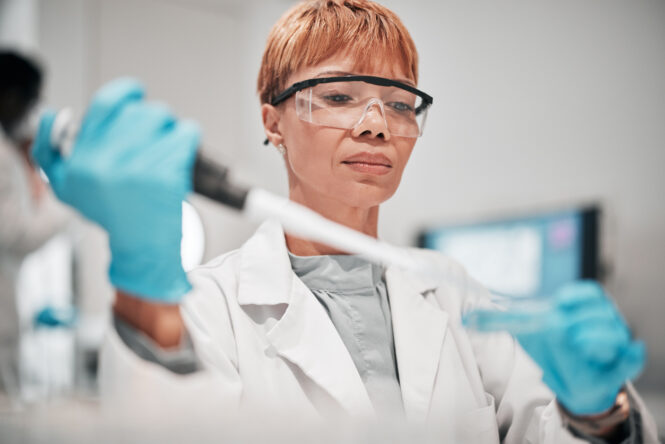
The culprit in question goes by the name somatic mutations, small genetic slip-ups that happen naturally every time our cells divide and repair themselves. They’re not something we inherit from our parents, they just quietly creep in over the decades, a bit like making a photocopy of a photocopy of a photocopy and watching the quality slowly degrade each time.
Most of these little errors don’t actually do anything harmful on their own, but stack up enough of them over enough years, and eventually the wrong combination lands in the wrong place, throwing off how a cell works properly, sometimes even tipping things toward cancer.
Your heart and brain have it tougher than your liver.

Here’s the interesting bit, though. Our bodies are actually pretty impressive at dealing with this kind of wear and tear. Organs like the liver and lungs can basically keep regenerating their cells over and over, essentially refreshing themselves throughout our whole lives.
Your heart and brain don’t get that same deal. Their cells just don’t bounce back and renew the way liver or lung cells do, which leaves them a lot more exposed to decades of these little genetic errors piling up. And according to the researchers, it’s ultimately the slow breakdown of these two organs specifically that would put a ceiling on how long anyone could live, even in some imaginary world where every other cause of ageing had already been solved.
This is really just one small piece of a much bigger jigsaw.

The team behind the study are pretty honest about the limits of their own work. Their model doesn’t take into account how different organs might influence each other, so really it’s more of a mathematical guess at one factor in ageing rather than the whole story. They see it as a starting point rather than a finished answer.
Their hope is that bringing in other big contributors to ageing down the line could eventually help build a much fuller picture of why we age at all in the first place, though that’s going to take a lot of different research teams working together over time rather than any single study cracking it alone.
Not every scientist is convinced this tells the whole story.

Unsurprisingly, other experts have some thoughts. A professor specialising in molecular biogerontology at the University of Birmingham called the modelling interesting, but said it leans on quite a few speculative assumptions, pointing out that basing any lifespan estimate purely on these genetic slip-ups only accounts for one possible explanation among many.
His own research actually points somewhere quite different. Rather than ageing being about physical damage building up in our cells over time, he reckons it might come down to how our cells are programmed to behave in the first place, essentially a software problem rather than hardware wearing out.
There’s a wildly different number if that idea turns out to be right.

And if that theory does hold up, the numbers involved get truly mind-bending. Instead of humans topping out somewhere around 200 years old, being able to reprogram how our cells actually behave could theoretically push that ceiling all the way up toward 20,000 years.
That’s an enormous gap between the two ideas, and both sides seem to agree there’s still a long way to go before anyone can say for certain which explanation is closer to the truth, or whether it turns out to be some mix of both. For now, as one researcher summed it up, the real challenge is simply figuring out why we age in the first place, everything else comes after that.