You’ve probably seen the terrifying headlines claiming that artificial sweeteners are secretly destroying your brain power and raising your risk of cognitive decline.

As it turns out, the study behind those alarming stories is a lot shakier than the breathless coverage suggests, relying on flawed data and correlations that don’t hold up under real scrutiny. Once you look past the sensationalist framing and dive into what the research actually says, the real picture looks far calmer, reassuring us that swapping sugar for a diet drink isn’t the brain-wrecking risk the internet wants you to believe.
This story keeps coming back around.
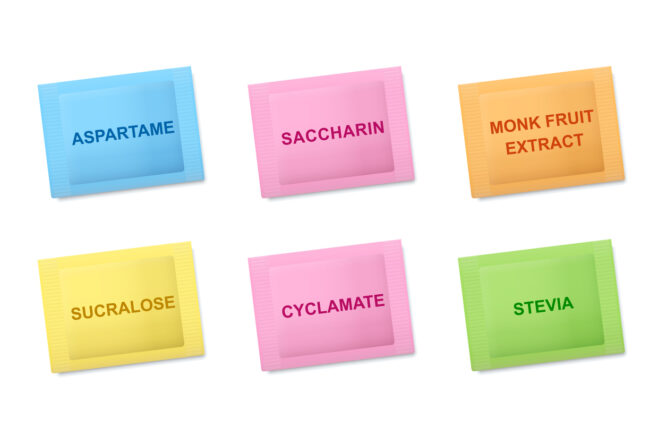
Stories about sweeteners being dangerous crop up constantly, and this latest one is a textbook example. A study first published back in 2025 claimed six common sweeteners, the kind found in everyday drinks and foods, might be speeding up brain decline. Despite being nearly a year old, it’s still being shared and reported as though it’s brand new. Hundreds of outlets picked the story up, which is fairly striking considering the research itself doesn’t actually show a clear problem with sweeteners once you look closely at how it was carried out.
What did the study actually do?

Researchers followed a large group of public sector workers in Brazil, tracking their brain function over roughly eight years using standard cognitive tests. At the start, participants filled out detailed lifestyle questionnaires, including one asking them to recall everything they’d eaten over the past year.
Researchers then compared how much sweetener people said they consumed against how much their brain function declined over time. People who reported the highest sweetener intake showed a small amount of extra decline compared to those reporting the least.
There’s a big problem with asking people what they ate.

Here’s where things start to fall apart. Food questionnaires like this one don’t measure what people actually eat, they measure what people think they remember eating, often stretching back a full year. Most of us aren’t great at recalling our own diets in that kind of detail, let alone accurately.
On top of that, participants only filled out this questionnaire once at the very start. If anyone changed their eating habits at any point over the following eight years, researchers had no way of knowing, making it hard to draw firm conclusions from a single snapshot taken years earlier.
The biology doesn’t quite add up, either.

Beyond the memory issue, there’s a deeper question about whether this claim even makes sense scientifically. The six sweeteners studied are chemically very different from one another, some occur naturally, one is actually a rare type of sugar, and they don’t share an obvious shared mechanism that would explain why they’d all affect the brain in the same way.
There’s also a strong chance the relationship runs backwards entirely. People already showing early signs of conditions like diabetes or heart disease may have been more likely to switch to sweeteners in the first place, which would make it look like sweeteners caused the decline when the decline may have actually come first.
Buried results tell a very different story.

One particularly telling detail sits tucked away in the paper’s supplementary material rather than in the headline results. When researchers ran their analysis using the entire original group of participants, rather than excluding certain people for reasons like having Parkinson’s disease or unusually high calorie intake, they found no link between sweeteners and brain ageing at all.
The version that made headlines everywhere was based on that smaller, filtered dataset, not the full one. That’s a meaningful difference that barely got a mention anywhere in the widespread coverage this study received.
There are also just plain mistakes in the paper.

On top of the shaky methodology, independent reviewers found clear mathematical errors scattered through the study. Even after the authors issued a correction, mistakes remained, including an error in one of the key statistical figures reported in the summary. Put it all together, the unreliable food data, the questionable biology, the buried null result, and the maths errors, and what’s left is a study that proves very little about sweeteners and brain health either way.
What the wider evidence actually shows is less alarming.

Despite decades of headlines warning people away from artificial sweeteners, the broader body of research paints a far calmer picture. These ingredients have been extensively tested over many years and generally aren’t considered harmful.
Some studies have even suggested drinks made with artificial sweeteners might work out slightly better for health than plain water in certain contexts, though that’s likely because people choosing those drinks are also cutting back on high calorie, sugary alternatives at the same time, rather than the sweeteners themselves doing anything special.
The bottom line on sweeteners versus sugar is pretty simple.

Artificial sweeteners tend to get an unfair reputation, but when you look at the full weight of evidence rather than any single shaky study, they come out looking better for you than sugar, not worse. This particular paper, once the media attention is stripped away, simply doesn’t hold up as proof of anything alarming.
Next time a headline claims sweeteners are secretly harming your brain, it’s worth remembering how easily a flawed study with a scary conclusion can spread, especially when the more reassuring result gets left sitting in an appendix nobody actually reads.