Getting a GP appointment can be tricky, so many people are turning to their local pharmacy for help with everyday health problems.

Now, some pharmacies in England can go a step further, with specially trained pharmacists able to prescribe medicines on the NHS for a wider range of conditions. The new services have only just started, and only a small number of pharmacies are offering them so far, but more are expected to join next year. Here’s what’s changing and what it could mean for you.
What’s changing at your local pharmacy

Pharmacists who have completed extra training to become prescribers can now write NHS prescriptions in approved community pharmacies across England. This builds on the existing Pharmacy First service, which already lets pharmacists treat some common conditions without you needing to see a GP.
The aim is to make it quicker and easier for people to get the treatment they need, while freeing up GP appointments for those with more complicated health problems. It also means patients may be able to get medicines that previously needed a doctor’s prescription.
The conditions already covered

Pharmacy First already allows pharmacists to treat seven common conditions, including sinusitis, sore throats, ear infections in children, infected insect bites, impetigo, shingles, and urine infections in women. Pharmacists who are trained prescribers can now prescribe medicines for these conditions too.
Pharmacists who aren’t prescribers can still offer help with these conditions using set rules that allow them to supply certain medicines. That means you can still use Pharmacy First at most pharmacies, even if they don’t offer the new prescribing service.
The five new conditions added to the list

Five new conditions have been added that can only be treated by a pharmacist who is a trained prescriber. These are migraines in adults, outer ear infections in adults, hay fever in children, mild to moderate acne and mild skin infections. These are common problems that many people currently visit their GP for. Being able to get treatment at a pharmacy could save time and make it easier to fit an appointment around work or family life.
Help with contraception

The changes also cover the NHS pharmacy contraception service. Prescribing pharmacists can now help people starting contraception, restarting it or continuing their current method. They can also help people switch to a different type of contraception or provide emergency contraception taken by mouth. This could make it easier for many people to get contraception without needing to book a GP or clinic appointment.
Fixing problems with prescriptions
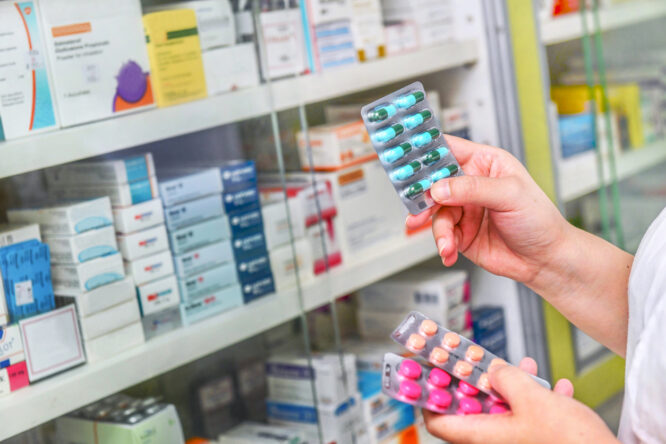
Another change allows prescribing pharmacists to issue a new prescription when one from your GP can’t be supplied as written. This might happen if a medicine is out of stock, there’s a mistake on the prescription or something important has been left off. Instead of sending you back to your GP, the pharmacist may be able to sort out the problem there and then. That could help you get your medicine faster and stop you missing doses.
What to expect at your appointment

During your consultation, the pharmacist will ask about your symptoms and medical history, and with your permission, they should look at your GP record. This helps them make safe decisions about your treatment.
You’re free to collect any medicine prescribed at whichever pharmacy you choose, and the pharmacist shouldn’t try to change where your prescriptions are usually sent. Normal NHS prescription charges apply in England unless you qualify for free prescriptions.
Why not every pharmacy offers it yet

To provide the new service, pharmacies must be approved and have a trained prescribing pharmacist available for a set number of hours each week. Only a small number of pharmacies have signed up so far, with more expected in the new year.
Pharmacy groups have raised concerns that the funding may not cover the cost of running the service. They’ve also warned that computer systems aren’t yet fully joined up, which could make it harder for some pharmacies to take part.
How to get help

To find out whether your local pharmacy offers the new prescribing services, ask the pharmacy team or check the NHS website. If your pharmacy doesn’t offer them, the pharmacist can still give advice and may suggest another pharmacy or your GP. For urgent health problems that aren’t emergencies, you can also contact NHS 111. If you have a serious or life-threatening problem, such as chest pain or difficulty breathing, call 999 straight away.