There’s nothing quite like the let-down of stepping out of a warm shower, grabbing a fresh towel from the airing cupboard, and being greeted by something with the texture of dried sandpaper.
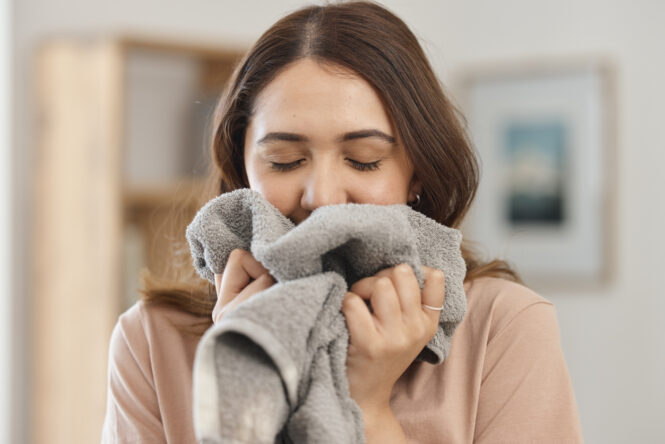
You buy them thick, plush, and hotel-soft, but after a handful of runs through the washing machine, they end up stiff enough to stand up on their own. It’s one of those everyday domestic gripes that drives people mad, and the internet is crammed with well-meaning hacks promising to restore that cloud-like feel.
Half the problem is that standard laundry habits, like drowning your wash in fabric conditioner, actually make the problem ten times worse by coating the fibres in waxy residue. Working out why your towels are turning brittle in the drum is the first step to sorting them out, and a couple of simple tweaks on wash day can bring that fluffy softness back for good.
Why towels lose their softness over time
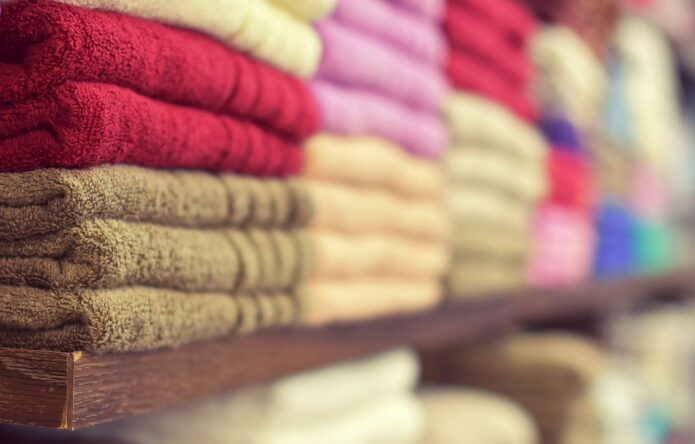
Most towels are made from cotton, a natural fibre made up of countless tiny filaments woven together. How these filaments hold up during washing determines whether your towels stay soft and fluffy, or end up feeling hard and scratchy over time.
Detergent and fabric softener can gradually leave a waxy residue building up on the cotton fibres with every wash. Eventually, most towels lose their original softness, though Egyptian cotton towels, often pricier to begin with, tend to hold onto their softness for longer, since their cotton fibres are more tightly ordered and concentric. Fortunately, there are still ways to slow down that hardening across any type of towel.
Getting the washing temperature right is important.
Plenty of us default to washing towels at 60 °C without really questioning it, but that higher temperature isn’t always necessary. Some bacterial spores and viruses actually survive being washed at 60 °C anyway, so the extra heat doesn’t necessarily buy you much.
You’re generally better off washing towels at 40 °C alongside a bleach-based laundry product, which still effectively removes bacteria and viruses without subjecting your towels to unnecessary heat.
Less detergent is actually better.
It’s tempting to think more detergent means a cleaner wash, but the opposite tends to be true over time. Detergent residue builds up gradually, making it progressively harder for future washes to penetrate the fibres, on top of simply wasting money.
Cutting your usual detergent amount by up to a third is a sensible starting point, followed by a thorough cold-water rinse to help clear any lingering residue and let the cotton fibres settle back into their natural shape. A good washing machine should rinse away detergent effectively without needing an extra dedicated rinse cycle tacked on.
Fabric softener does more harm than good.
It might feel like fabric softener is exactly what crispy towels need, but it’s actually best avoided altogether. Fabric softeners work by coating fabric in a layer of electrically charged chemical compounds, typically containing silicones and ammonium compounds.
That coating can make towels feel softer in the short term, but it builds up with repeated use, eventually leaving them feeling crispy rather than soft. Worse still, it blocks detergent from cleaning the fabric and stops water penetrating the fibres properly, meaning your towels become less effective at their actual job, soaking up water and getting you dry.
You should know when it’s time to let a towel go.
If your towels are lower quality to begin with, or you’ve simply had them for a very long time, there may be nothing left to revive. If that’s the case, there’s no need to just bin them, they can be repurposed as cleaning rags for DIY jobs, or donated to a local textile recycling facility instead.
Consider using vinegar to strip away build-up.
White, or distilled, vinegar can help dissolve detergent and hard water deposits that have built up on towels over time. It shouldn’t go directly into your washing machine though, since it can corrode rubber and plastic components over time. The safer approach is soaking towels in vinegar first, then rinsing thoroughly before putting them through a normal wash.
Hard water areas in particular tend to leave mineral deposits, like magnesium and calcium, behind on towel fibres. Vinegar’s acidic properties can help neutralise these alkaline deposits, and once they’ve broken down and rinsed away, the fibres are no longer stuck together, leaving towels noticeably softer and fluffier. Baking soda is another home remedy that’s often recommended online. However, be cautious here, as it can irritate skin and lead to rashes, redness, and burning, and plenty of people don’t realise they’re sensitive to it until it’s already caused a reaction.
Simple habits can make a real difference.
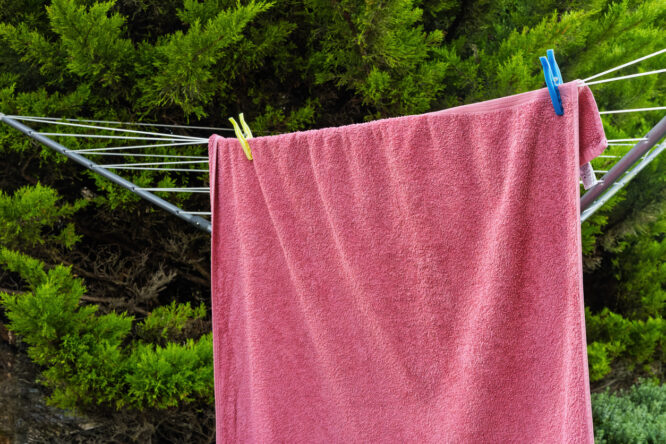
Whatever drying method you use, giving your towels a good, vigorous shake can help fluff them back up. As soon as a wash finishes, pulling the towels out immediately and shaking them helps reshape the cotton fibres before drying even begins.
This won’t rescue towels that are already too far gone, but it’s a habit plenty of people swear by. Tumble drying on a low heat setting also helps keep towels soft, but you’ll want to avoid high heat specifically, since that can actually damage the cotton fibres over time. On a warm, breezy day, line drying can achieve similar results, though tumble drying is hard to beat for softness. If you’re mindful of energy costs, a good compromise is hanging towels out until they’re nearly dry, then finishing them off with just ten minutes in the dryer.
Can you get soft towels without a tumble dryer?

It’s possible, though matching the exact results of a tumble dryer is pretty tough without one. Testing a few different approaches produced mixed results. One approach involved adding white vinegar directly to the detergent drawer before washing, then drying two identical towels differently, one on an outdoor line, the other laid flat indoors on a clothes horse with regular shaking to loosen the fibres. The towel dried flat indoors ended up slightly fluffier than the line-dried one, though the difference was fairly minimal overall, not enough to fully replace a tumble dryer.
A second approach involved soaking towels directly in a bath filled with water and white vinegar for an hour, giving the acetic acid more time to strip away detergent build-up, before washing normally with baking soda in the detergent compartment and vinegar in the fabric softener slot. After a vigorous shake and drying flat on a heated airer, the towels did feel softer than usual, though nowhere near as soft as brand-new ones, and the whole process took the better part of a day and left the room smelling strongly of vinegar throughout.
Remember that manufacturers generally advise against adding vinegar directly into a washing machine, since it can gradually damage rubber seals and hoses over time, so any of these vinegar-based methods are best treated as an occasional fix rather than a regular habit. Baking soda is also important to use cautiously given its potential to irritate skin.
What to look for when buying new towels

When it comes to buying new towels altogether, the quality of the cotton used plays a major role in how long that softness actually lasts. Egyptian cotton fibres tend to be more tightly aligned, meaning towels made from it are more likely to stay fluffy for longer, provided they’re looked after.
A towel’s GSM rating, meaning grams per square metre, matters just as much. Denser towels, with more layers of cotton fibre packed in, tend to hold their structure and stay fluffier for longer. Higher GSM towels feel thicker, denser, and more absorbent, while lower GSM towels, typically in the 300 to 400 range, dry faster, making them a practical choice for something like a gym towel. A medium weight towel, somewhere between 400 and 600 GSM, tends to suit a standard bath towel best, while anything above 600 GSM feels luxurious and dense, though it will take noticeably longer to dry. Bamboo towels are another soft, absorbent option to consider.
Generally speaking, this is an area where you do get what you pay for, with pricier towels typically staying softer for longer. Whether that’s worth paying extra for really comes down to personal preference, some people are perfectly happy with a firmer, more budget-friendly towel and don’t mind sacrificing a bit of softness in exchange.