Most of us are short on sleep, and we’ll do whatever we can to get more of it.
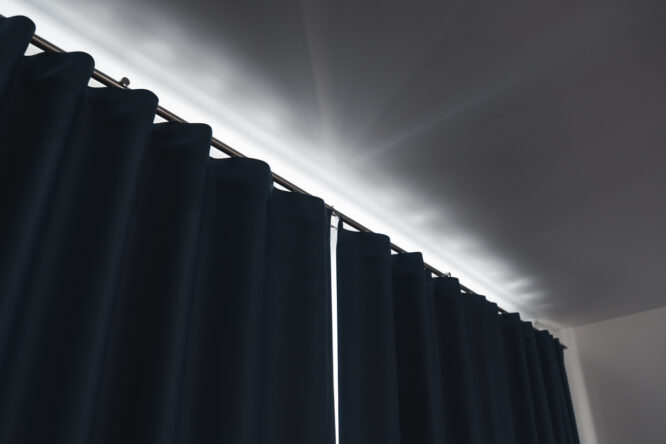
If you find yourself waking up the second the sun peeks over the horizon or struggling to nod off with streetlights glaring through your curtains, blackout blinds probably feel like an obvious purchase. Sleep coaches and wellness brands swear that plunging your bedroom into total pitch darkness is the ultimate magic trick for deeper, unbroken shut-eye.
Turning your room into a cave sounds great on paper, but the science behind how your body clock responds to total darkness is a bit more nuanced than the marketing suggests. Before you spend a small fortune fitting custom thermal blinds to every window in the house, here’s what actually happens to your sleep quality when you block out every single speck of natural light, and whether they’re really worth the money.
There are several different types of blackout blinds available.
Roller blinds have a top-mounted mechanism that rolls the fabric up out of the way when not in use, though the extra space at the top can leave a gap that lets light creep in. Stick-on or no-drill options use adhesive strips or brackets that hang on the outside of a window frame, making them ideal for anyone who can’t or doesn’t want to drill.
Curtains work the same way as regular curtains but are typically made from thicker or layered materials to block out extra light. A cassette refers to housing at the top of the blind that tidies away the fabric and helps prevent it from unravelling, while also blocking one of the most common gaps where light sneaks in. Blinds with rails come with additional guides along the sides to stop light bleeding in from either edge. Electric blinds are motorised and often pricier, though some can be set on a timer to open automatically each morning. Temporary options are essentially darkened sheets stuck onto windows with magnets, cheaper but requiring removal each morning.
Do blackout blinds actually help you sleep?

Blackout blinds genuinely excel at night, blocking artificial light pollution and creating conditions that maximise melatonin production for deeper, more restorative sleep. That said, this same darkness can work against you come morning.
The brain relies on natural morning sunlight to halt melatonin production and trigger cortisol release, the process that naturally wakes us up. Waking in complete darkness instead often leads to noticeable grogginess, sometimes called sleep inertia. The simplest fix is opening blackout blinds immediately upon waking, letting in that essential morning daylight to reset the body’s natural rhythm properly.
Do curtains or blinds block out more light?
For anyone chasing total darkness in a bedroom, blinds tend to outperform curtains. Curtains are often easier to install, but they’re more prone to letting some sunlight creep through around the edges regardless of fabric thickness.
Whichever option you choose though, getting a good fit for your specific window matters more than the material itself. Depending on the model, some need trimming to size, while others simply need to fully cover the window frame to work effectively.
Blackout versus blockout—what’s the actual difference?
Retailers and manufacturers tend to use both terms interchangeably, but there is a subtle distinction you should know about. Blackout blinds are specifically designed to block all incoming light entirely, while certain blockout blinds allow a small amount of sunlight through. In practice, both will keep the vast majority of light out of a room, particularly once properly installed and fitted to the window.
Should you pay extra for a cassette, side rails, or both?

Neither feature is strictly necessary, but both help maximise how much light actually gets blocked. A cassette closes off gaps at the top of the window, a common weak spot for light leakage, while side rails prevent light bleeding in along the edges. Combining both features on a single blind delivers the most complete blackout coverage, though it typically comes with a higher price tag attached.
Do you need a drill to install one?
Not always, but for the best fit and maximum light blocking, models that fasten securely to a wall or window frame tend to perform better long term. No-drill options using adhesive strips exist too, though they’re unlikely to hold up quite as reliably over time compared to something screwed into place.
For anyone unable to drill and hesitant about relying on adhesive, hanging blackout curtains from an adjustable tension rod offers a simple middle-ground alternative that avoids both drilling and sticky mounts.
Are blackout blinds worth it during a heatwave?

Blackout blinds and curtains don’t just block light, they also help reduce solar heat gain, the warming effect caused by direct sunlight streaming into a room. Having a set-up can help maintain a more consistent indoor temperature and reduce the chances of waking up overheated in the middle of the night.
Colour matters here too. Darker fabrics tend to absorb heat rather than reflect it, so you’ll want to check whether a specific blind includes thermal or reflective lining, which helps bounce more solar energy away from the room rather than letting it build up behind the fabric.
Could a sleep mask do the job instead?
For some people, yes. Sleep masks tend to be considerably cheaper than a full set of blinds, and the better ones block essentially all light from reaching the eyes, including any artificial light already present in the room.
Comfort varies quite a bit between models though, and not everyone finds wearing something over their eyes throughout the night comfortable or appealing. Still, given the low cost involved, you could try a sleep mask before committing to a full set of blackout blinds, particularly for anyone unsure whether blocking light will actually make a noticeable difference to their own sleep.