With British summers only getting hotter, ice in your drinks is pretty much a given these days.

Have you ever sat in a pub garden on a sunny afternoon with a pint of cider or a proper gin and tonic, looking down at your glass and wondering why on earth the ice looks so ridiculously clear? It looks like crystal, smooth and completely see-through. Then you go home, fill up one of those bendy silicone trays straight from the kitchen tap, shove it in the freezer overnight, and end up with chunky, dull white blocks that look like frozen milk.
It’s not just your imagination, and it’s not because pub ice machines have some kind of magic setting. Commercial ice actually gets made in a fundamentally different way to the stuff sitting in your freezer compartment at home.
Why homemade ice always looks cloudy

That white, ghostly core in the middle of your homemade ice cubes is mostly just trapped air, microscopic gas bubbles, and tiny mineral deposits. When you throw a plastic tray of tap water into a standard domestic freezer, the sub-zero air hits the water from every single angle at once—top, bottom, and all four sides.
Because the edges are exposed first, the outside of the cube freezes early, forming an outer shell of solid ice. As the freezing process works its way inward toward the centre, all those tiny dissolved air bubbles that were floating around in the water get pushed toward the middle. With a solid wall of ice surrounding them on all sides, the bubbles have nowhere left to run. They get trapped right in the centre as the core finally solidifies, leaving you with that classic cloudy blob in the middle of every cube.
Pubs and commercial kitchens bypass this issue entirely because their machines freeze water from one single direction—usually top to bottom or bottom to top. As the water freezes layer by layer, it constantly pushes the air bubbles and impurities out ahead of the freezing line, letting them escape back into the unfrozen liquid before the ice seals shut.
It’s not just about the freezing method, either.
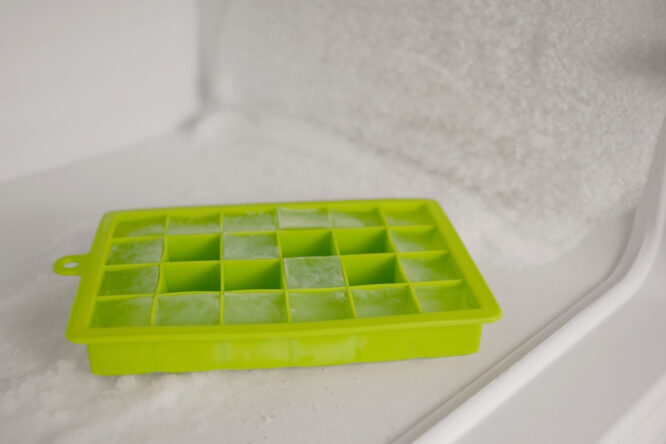
There’s also the unglamorous topic of what’s actually dissolved in your kitchen tap water. Depending on where you live in the UK, your tap water is packed with harmless minerals like calcium, magnesium, and fluorides. They’re totally fine to drink, but as water freezes, those mineral ions don’t blend neatly into the forming ice structure. Instead, they get forced into microscopic pockets between the ice crystals, disrupting the way light passes through the cube and giving it a murky, milky look.
Commercial ice makers usually run their water through serious, multi-stage filtration systems to strip out as much of that mineral content as possible before the freezing process even begins.
On top of that, industrial machines don’t just pour water into a square mould and let it sit dead still. They actively circulate the water, running a continuous waterfall or spray over super-chilled freezing plates. The constant liquid movement washes away air bubbles and loose mineral deposits before they can stick to the growing ice layer, giving the commercial cube a massive head start before it ever turns solid.
The speed at which ice freezes is an important consideration.
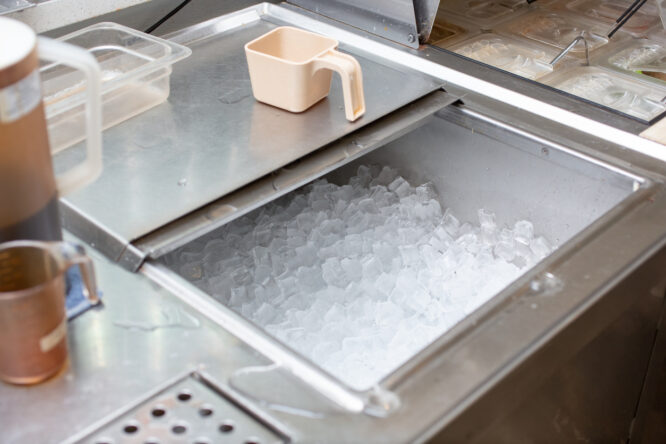
You might reckon that freezing water as fast as humanly possible would yield cleaner, sharper ice, but it’s actually the exact opposite. Home freezers are designed to blast cold air continuously to keep your frozen peas solid, which forces tap water to freeze rapidly. That sudden drop in temperature creates a chaotic, rushed arrangement of tiny, mismatched ice crystals. Those erratic crystals scatter light in every direction, which makes the whole cube look dull and opaque.
Industrial clear-ice makers take things much slower. By dropping the temperature gradually, they give the water molecules enough time to align themselves into large, perfectly uniform crystal lattices. That slow-growth process leaves you with ice that looks as smooth and transparent as a sheet of glass.
Going slow also prevents those internal stress cracks you get in home ice trays. Every time someone opens the kitchen freezer door to grab an ice lolly, the temperature spikes slightly and then drops again. That constant swinging back and forth causes the ice to partially thaw and refreeze, creating tiny microscopic fractures inside the block. A commercial ice machine keeps the environment tightly controlled, producing a cube that’s far denser simply because there are no air pockets or internal cracks hiding inside it.
Why restaurant ice melts more slowly

That extra density isn’t just a party trick to make a £12 cocktail look good on Instagram. Because cloudy home ice is riddled with air pockets, microscopic fractures, and uneven crystal structures, it’s structurally weak. The moment it hits room temperature liquid, it starts melting at speed. That means it dilutes your drink almost immediately, turning a good malt whisky, a craft spirit, or even a simple glass of cola into a watery disappointment within five minutes.
Pub ice, being much denser and free from internal air gaps, holds its structural integrity for far longer. It keeps the liquid properly chilled without melting rapidly, meaning your drink actually tastes the way the maker intended from the first sip right down to the bottom of the glass. It’s one of those small details you don’t think about until it’s missing, but it makes a massive difference to the actual flavour of what you’re drinking.
Can you actually make clear ice at home?
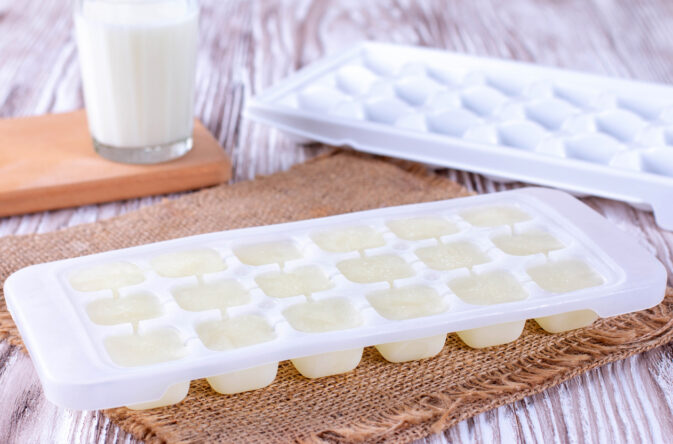
There’s a persistent myth on the internet that boiling tap water before pouring it into your ice trays will magically produce crystal clear ice. Honestly, don’t bother wasting the electricity on the kettle. While boiling water does drive off a tiny fraction of dissolved gasses, it does nothing to get rid of the minerals, and it doesn’t solve the core issue: your home freezer is still going to freeze that boiled water from all sides at once, trapping whatever air is left right in the middle.
If you want pub-quality clear ice for a night in, cocktail bartenders use a clever workaround called directional freezing. The easiest way to do it at home is with a small, insulated cool box—the kind you’d take on a picnic.
You take the lid off the cool box, fill the interior with normal tap water, and clear out enough shelf space to put the entire open box inside your freezer. Because the thick plastic and foam insulation on the sides and bottom block the cold air, the freezer cold can only penetrate through the open top. This forces the water to freeze very slowly from the top down, exactly like a commercial machine.
The top few inches of water freeze into a slab of pure, crystal clear ice, while all the trapped air bubbles, white cloudiness, and mineral sediments get pushed down toward the bottom of the cooler into the liquid water below.
There’s a catch with the cooler method.
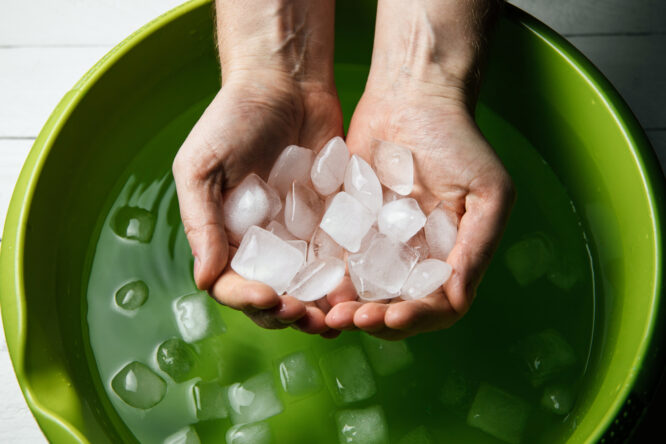
After about 24 hours in the freezer, you pull the cool box out before it freezes solid all the way to the floor. You dump out the remaining unfrozen, cloudy water at the bottom, flip the box upside down, and let a solid block of crystal clear ice slide out onto a chopping board.
Then comes the noisy part. You have to take a serrated bread knife, score lines across the clear slab, and gently tap the back of the knife with a rolling pin or mallet to split the slab into individual cubes. It’s a bit messy, you’ll get ice chips all over the kitchen counter, and you end up with rustic, hand-carved shapes rather than identical little squares.
It is a bit of a faff, to be fair, but if you’re hosting friends for a proper occasion and want your drinks to look top-tier, it works remarkably well. Otherwise, you’re looking at dropping £150 or more on a dedicated worktop clear-ice maker, or just doing what most people do: popping down to the local supermarket and grabbing a £1 bag of commercially manufactured ice from the freezer aisle.