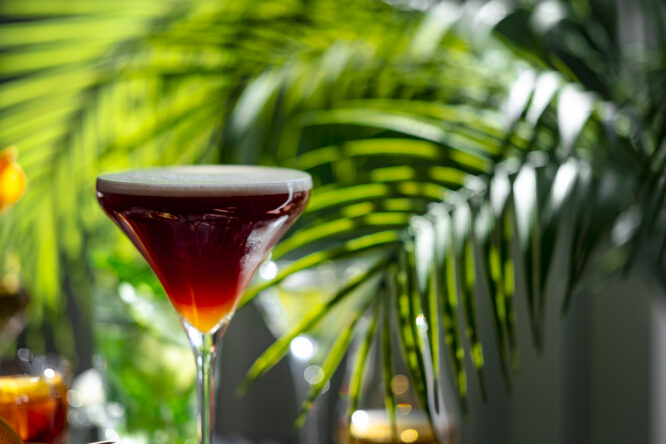
There’s a new coffee cocktail creeping onto bar menus across the UK, and it’s threatening to knock the trusty espresso martini off its top spot. Meet the carajillo, Spain’s boozy, punchy answer to your after-dinner coffee fix, which is suddenly everywhere and proving surprisingly hard to resist. While we’ve spent years shaking up vodka, Kahlúa, and fresh espresso until our arms hurt, Spanish drinking culture has been keeping things far simpler, and arguably way more delicious, for generations.
Combining a strong shot of espresso with a sweet, aromatic Spanish liqueur, this drink delivers all the rich caffeine kick of your usual order with a smoother, vanilla-spiced edge that makes it go down a bit too easily. If you’re bored of the same old cocktail order and want to know why everyone from city bartenders to casual drinkers is making the switch, here’s everything you need to know about the drink taking over your local haunt.
What exactly is a carajillo?
Pronounced caah-raah-hee-yo, this is a two ingredient cocktail made from equal parts Licor 43 and espresso, shaken over ice and finished with a twist of orange zest. It sits alongside other European boozy coffee traditions like Irish Coffee, Norwegian Karsk and Italy’s Caffe Corretto, essentially a coffee with a shot of something stronger mixed in.
Part of the appeal is how straightforward it is to put together. It’s a lot easier to make well than a proper espresso martini, which goes some way to explaining why bartenders and drinkers alike are warming to it so quickly.
View this post on Instagram
How to make one at home
You’ll need 50ml of Licor 43 and 50ml of freshly pulled espresso, along with a good handful of ice. Pour everything into a shaker with the ice, shake it properly, then strain into an ice filled tumbler rather than a martini glass.
Finish with a ribbon of orange zest expressed over the top of the drink before adding it as garnish. Some people like to drop in three coffee beans too, said to represent health, wealth and happiness, though that part’s entirely optional if you’re not the superstitious type.
The cocktail’s name has a surprising origin.
The more family-friendly explanation traces the name back to the Spanish word “coraje”, meaning courage, with legend suggesting Spanish soldiers stationed in Cuba would spike their coffee with spirits for a bit of liquid bravery before heading into battle.
There’s a less polished theory too, suggesting the drink originated in Andalucia, where morning drinking was fairly common, and that the name might actually be a shortened version of a Spanish curse word. Either way, the drink eventually made its way to Mexico through trade and migration, and today it’s one of the country’s most widely ordered drinks alongside tequila and mezcal, particularly as something to round off a meal.
How does it differ from an espresso martini?
The most obvious difference is the glass. A carajillo is served in a tumbler rather than a martini glass, giving it more of an old fashioned look than a cocktail bar staple. Licor 43 itself is named after the 43 botanicals used to make it, including vanilla, orange peel and cocoa, which gives the drink a rich, gently spiced character.
Paired with espresso, the result comes out lighter and more delicately sweet than an espresso martini, with clear notes of orange, vanilla and chocolate running through it rather than the punchier coffee liqueur flavour most people associate with the classic version.
View this post on Instagram
Where you can actually try one in the UK
In London, tapas restaurants are your safest bet right now, with venues like Camino and Las Iguanas already serving them. For something a bit more elevated, some venues make theirs with cooled espresso alongside a cold brew coffee liqueur and Licor 43 for extra depth.
Other spots serve theirs with a sugar rim, priced at a fairly reasonable amount for London standards. Outside the capital, it’s still catching on, but expect to start seeing it appear on more bar menus across the country soon.
Why this could be the next big thing
The carajillo has clear crossover appeal with the crowd that already loves espresso martinis, which makes a wider takeover entirely plausible. Britain’s appetite for boozy coffee is already well established, with the espresso martini ranking as the country’s most searched cocktail back in 2024, pulling in around 74,000 average monthly searches and landing at number four globally.
That obsession with coffee runs deeper than recent trends too. Coffee houses first started replacing taverns as social hubs in Britain back in the seventeenth century, with London home to 83 of them by 1663, though back then they were exclusively spaces for men to talk business. Given how saturated the country now is with coffee shops on every high street, adding alcohol into the mix was arguably always the next step.