Sweet, chewy gummies probably aren’t the first thing that comes to mind when you think about looking after your gums.

That’s for good reason, since sugary snacks usually work against your teeth rather than for them. However, a new study out of Japan has tested something different: gummies loaded with helpful bacteria specifically designed to support healthier gums. The results suggest this odd sounding snack might actually make a real difference for people dealing with early gum problems. Here’s what researchers found, and why it could be a useful addition to everyday oral care.
Scientists tested gummies packed with helpful bacteria.

Researchers wanted to find out whether there was a simple way to help protect gums beyond just the usual brushing and flossing routine most of us already try to stick to. They landed on the idea of a chewy gummy containing beneficial bacteria, designed to be eaten a couple of times a day.
Over a six-week trial involving just over a hundred people with early signs of gum disease, roughly half were given the bacteria loaded gummies, while the other half unknowingly received a plain placebo version instead. Nobody involved knew which group they’d been placed in, which helped keep the results fair and reliable.
Gum disease often comes down to an imbalance of bacteria in the mouth.
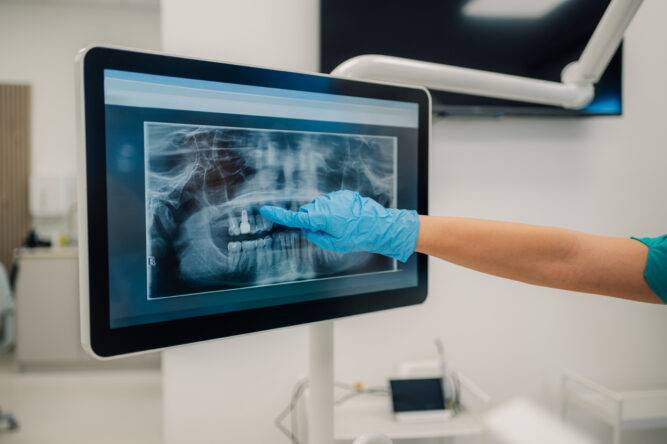
It’s become increasingly clear that gum problems like gingivitis are often linked to an unhealthy mix of bacteria living in the mouth, rather than simply poor brushing habits alone. Scientists have been exploring whether adding in more beneficial bacteria, rather than only trying to wipe out the bad ones, might offer a better way to manage this.
Rather than aiming to completely eliminate bacteria in the mouth, the current thinking has shifted towards restoring a healthier overall balance instead. This gummy trial was built around exactly that idea, testing whether adding helpful bacteria could shift things in a more positive direction.
The bacteria used were actually dead, not alive.

Rather than using live bacteria, which can be tricky to keep stable inside a chewy sweet, researchers instead used bacteria that had been deliberately deactivated using heat before being added to the gummies. Even without being alive, these bacteria still appeared able to interact with the mouth’s natural ecosystem and potentially calm down inflammation.
This approach also comes with a practical bonus, since heat treated bacteria tend to be easier and cheaper to manufacture and store compared to keeping live bacteria stable inside a snack. That makes this kind of product far more realistic to actually produce and sell at scale.
People actually stuck with the gummy routine.
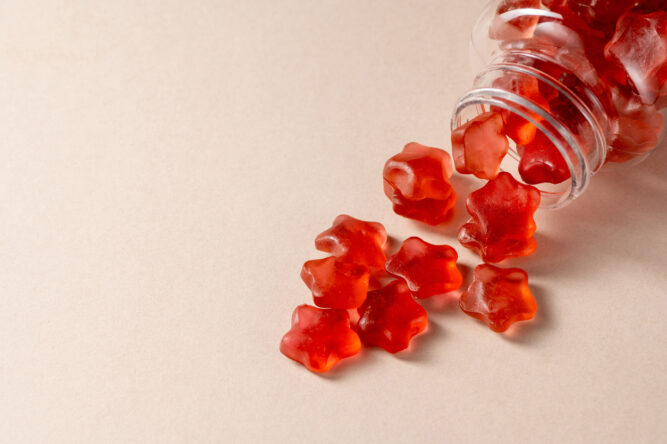
One of the practical advantages of testing something as simple as a gummy is that people are far more likely to actually remember to take it consistently. Popping a chewy sweet twice a day is a lot easier to stick with than a more complicated daily routine.
This mattered a lot for how reliable the study’s results actually were, since a treatment only helps if people keep using it as intended. Choosing a format people would realistically stick with gave researchers a much clearer picture of how well this approach might work outside of a lab setting.
Gum bleeding noticeably improved in the bacteria group.
Researchers measured gum health using a standard test that checks how much of the mouth shows signs of bleeding when gently probed, a common marker of gum inflammation. In the group eating bacteria loaded gummies, this bleeding measurement dropped meaningfully over the six-week study.
The placebo group also saw a smaller improvement, though notably less than the group receiving the real bacteria treatment. This suggested the chewing action itself, which increases saliva flow, likely played some small role too, but the actual bacteria clearly made an additional difference on top of that.
This worked even without reminding people to brush properly.

One particularly interesting part of this study is that participants weren’t given any specific instructions about brushing or flossing during the trial. This makes the results more realistic, since it reflects how people actually behave in everyday life, rather than a perfectly controlled scenario where everyone’s following ideal habits.
Seeing real improvement even without reinforcing good brushing habits suggests these gummies could offer real benefit as an easy add-on, rather than needing to be paired with a complete oral care overhaul. That makes it a much more realistic option for people who might not always remember to brush and floss perfectly every single day.
The improvement was real, but fairly modest.

It’s important to be upfront by pointing out that the difference between the two groups wasn’t dramatic. Bleeding levels in the bacteria gummy group dropped from around eighteen percent down to roughly twelve percent, while the placebo group only dropped slightly, from around 19% to 17%.
So, while the bacteria gummies clearly outperformed the placebo, this is a modest improvement rather than some kind of major gum health transformation. Still, for something as simple and low effort as eating a gummy twice a day, even a modest, reliable improvement is an encouraging result.
This could be a game-changer for millions of people worldwide

Gum disease affects an enormous number of people globally, with estimates suggesting well over a billion people could be at risk of severe gum problems in the coming decades. Against that backdrop, even a simple, easy to stick with snack that offers a modest improvement could make a meaningful difference at a population level.
Researchers now want to dig deeper into exactly how these bacteria are helping reduce gum bleeding at a more detailed level, and whether the benefits continue to build over a longer period than six weeks. For now, though, this study offers a promising, low effort option worth considering alongside your regular brushing and flossing routine.