The moment a heatwave hits the UK, everyone suddenly turns into a self-appointed expert on how to stay cool.

We’ve all heard the classic bits of advice passed down through the years, whether it’s drinking a piping hot cuppa to sweat it out, leaving the desk fan running in an empty room, or keeping every window in the house wide open. However, while these traditional hacks are well-meaning, a lot of them are actually complete rubbish, and some can end up making your home feel even hotter.
Before the next warm spell has you freezing your bedsheets or stripping off, it’s time to separate the old wives’ tales from the actual science so you can keep your cool when the mercury rises.
“Can’t we just get used to this as the new normal?”

The idea of simply adjusting to hotter summers misses something important: what counts as hot today will likely feel mild compared to what’s coming. The ten warmest years ever recorded have all happened within the last decade alone, and that trend shows no sign of slowing down.
A global average rise of just one or one and a half degrees might not sound dramatic, but that’s not really how a changing climate actually plays out day to day. Extreme temperatures tend to change much faster than the overall average, and heatwaves in places like southern England have already become around three degrees hotter, even though the wider global average has only risen by one.
“Scientists disagree on how much humans are affecting the climate”

This simply isn’t true. There’s no real disagreement among climate scientists that global warming is being driven by human activity, primarily the burning of fossil fuels like gas, oil, and coal.
Every heatwave happening today is hotter than it would have been without those greenhouse gas emissions building up in the atmosphere. That’s the consistent, shared conclusion of climate experts around the world, not a matter of ongoing scientific debate.
“Isn’t there still room for doubt, given how complex this is?”

The basic science behind this is actually far simpler than people often assume. The more greenhouse gases we release into the atmosphere, the more the climate warms, and that relationship has been understood since the 1850s.
An English engineer first demonstrated back in 1938 that the world had already warmed measurably, directly linking it to rising carbon dioxide levels and the amount of coal being burned. That’s over 80 years ago, and the evidence supporting it has only grown stronger and more overwhelming since.
“Isn’t this just down to El Niño?”

Natural weather patterns like El Niño have always existed and always will, occasionally lining up to produce extreme weather such as heatwaves and floods. What’s changed is that these natural events now play out against the backdrop of a considerably warmer world, making the consequences far more severe.
El Niño is a naturally occurring change in temperatures across the tropical Pacific that affects weather patterns globally, particularly across South America, the US, Africa, Australia, and parts of Asia. The current El Niño has only just begun and isn’t expected to peak until around Christmas, meaning it can’t fully explain heatwaves that have already been breaking records.
“Could this be caused by the Earth’s orbit moving closer to the sun?”

The Earth’s orbit does influence climate, but only over extremely long timescales, stretching across tens of thousands of years. Around the time the steam engine was invented, the Earth’s orbit was actually nudging the planet toward a slightly cooler period.
Instead, what’s actually happened is a very rapid warming trend, and that simply isn’t something orbital changes can explain. The real driver has been the Industrial Revolution and the dramatic increase in fossil fuels burned ever since.
“How is this any different to the 1976 heatwave?”
Plenty of people still remember the 1976 heatwave as the benchmark for extreme British weather, but the climate has changed substantially since then. Back in 1976, the intense heat was largely confined to northern Europe, surrounded by regions experiencing a fairly normal summer.
This year’s June heatwave was around two degrees hotter than June 1976 in the UK, and it shattered records across a much wider stretch of Europe. The 1976 heatwave came at the end of a year-long drought and led to around 250 extra deaths each day during its peak. If a heatwave with those same characteristics happened again today, in today’s hotter climate, it would likely be considerably more dangerous.
“Is it even possible to link a single heatwave to climate change?”

Climate change doesn’t actually create the weather patterns that lead to extreme events, those have always occurred naturally. What climate change does is make the consequences of those patterns noticeably worse once they do happen, whether that means hotter heatwaves or heavier rainfall.
Scientists use something called attribution studies to estimate exactly how much climate change has intensified a particular event. Different methods exist, and while they might disagree slightly on the precise numbers, they consistently point to the same overall picture: heatwaves are getting hotter because of human activity.
“Aren’t human weather records too short to really show a trend?”
Temperature records actually stretch back to the early 1800s, and they show clearly that the world has warmed substantially since then. The last time global temperatures were this high was roughly 125,000 years ago.
Beyond direct temperature records, scientists also have ice core samples dating back hundreds of thousands of years, revealing exactly how much carbon dioxide was in the atmosphere throughout that time. Current CO2 levels have now risen higher than anything found in those ice cores, driven mainly by burning fossil fuels and clearing forests.
“Why can’t we just enjoy the sunshine?”

Plenty of people actually do enjoy hot weather, and there’s nothing wrong with that. However, for others, a heatwave is a much harder experience, particularly those with health conditions like heart disease or diabetes, elderly people, young children stuck in overheated classrooms, and anyone working in an overheated environment.
Even people who are generally fit and healthy can be put at real risk once temperatures climb high enough. It’s important to remember that behind every cheerful beach photo, there are plenty of people for whom extreme heat is dangerous rather than enjoyable.
“Other countries cope fine with this heat, why can’t Britain?”

British homes, offices, and infrastructure were largely built with cold winters in mind, not increasingly hot summers. Unlike many Mediterranean countries, Britain doesn’t widely have air conditioning or external shutters designed to keep homes cool during extreme heat.
Because of this, British society needs to adapt if it wants to avoid suffering serious consequences as summers continue getting hotter. Infrastructure designed decades ago for a cooler climate simply isn’t built to handle what’s now becoming increasingly common.
“Aren’t heat warnings just unnecessary government overreach?”

Heat warnings do save lives, and the evidence for that is fairly stark. Back in 2003, an extreme heatwave across Europe and the UK is estimated to have caused between 40,000 and 70,000 deaths, a moment that made it painfully clear the continent simply wasn’t prepared for that kind of heat.
Since then, far better warning systems have been put in place, along with clearer guidance on looking after elderly and vulnerable people during hot spells. Simple advice, like drinking enough water, keeping curtains closed during the day, and avoiding the hottest part of the day outdoors, has helped reduce the number of deaths even as temperatures have continued rising.
“Won’t higher CO2 levels at least help crops grow better?”
It’s a common assumption, but it doesn’t reflect what’s actually happening in the real world. While a small number of plant species can grow slightly better under carefully controlled high CO2 conditions in a lab, that’s not the environment most crops are actually grown in.
In reality, farmers are still entirely at the mercy of the weather, and harvests are increasingly suffering because of hot, dry spells and disrupted rainfall patterns. Any theoretical benefit from extra CO2 is being outweighed by the practical damage caused by more extreme weather.
“Isn’t it already too late to do anything about it?”
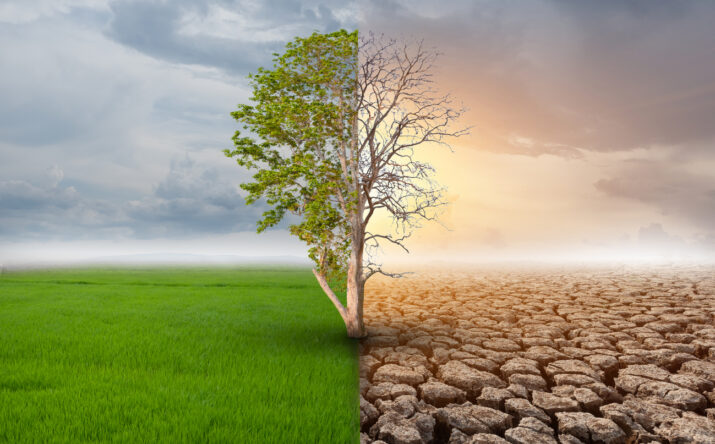
It’s not too late. Since human activity is what’s causing this problem in the first place, that also means human decisions have the power to solve it. Continuing to burn large amounts of fossil fuels will keep pushing temperatures higher, making heatwaves increasingly severe over time.
Alternatively, working toward global net-zero emissions could stabilise the climate and prevent things from getting significantly worse, a truly difficult challenge, but one that’s important to be taken seriously for the sake of future generations.