Most of us have done it without really thinking.
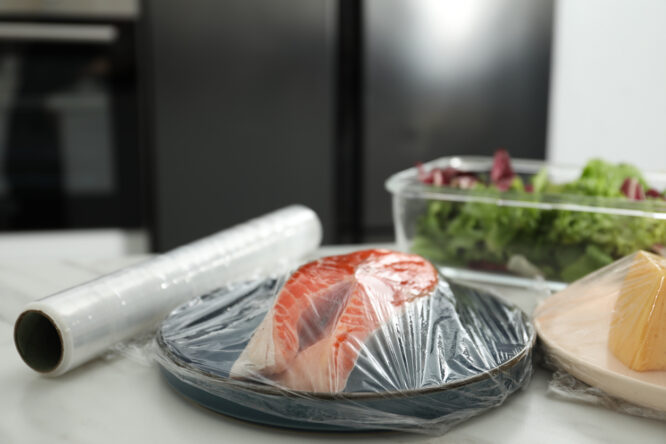
You’ve got leftovers in the fridge, you pull the bowl out, and the cling film’s already on it, so you just bung it straight in the microwave. It takes about three seconds of effort, and then you’re done. However, there’s been a lot of chat lately about plastics and chemicals and what heat does to them, so you should know what’s going on when you microwave cling film. As it turns out, the answer is a bit more complicated than yes or no.
It doesn’t automatically mean disaster.
Cling film isn’t inherently dangerous in the microwave. The problem is that it depends heavily on the type you’re using and how you’re using it. Some cling film is made to handle the steam that builds up during reheating, and if it’s labelled microwave-safe, it’s been tested for exactly that. The issue starts when it isn’t labelled that way, or when it ends up in direct contact with the food itself.
When cling film touches hot food, especially something fatty or oily, it hits higher temperatures than it would just sitting above the surface. That’s when the material can soften, warp, or in the worst cases melt slightly onto whatever you’re eating. Even if it doesn’t visibly melt, there’s a process called migration where tiny amounts of the plastic’s chemical components can move into the food. It’s not dramatic or visible, it just happens quietly.
The chemicals aren’t great for you.
Modern cling film in the UK is generally made without phthalates, which are the chemicals that used to cause most of the concern. That’s good news, but the materials used instead are often chemically similar, and researchers aren’t entirely sure yet whether they behave differently when heated. The honest answer is that the science is still catching up with the products on the shelves.
What we do know is that heat increases the likelihood of chemical transfer from any plastic into food. A quick 30-second blast to warm something up is lower risk than running something on full power for five minutes. Fatty foods are more of a concern than watery ones because fat draws chemicals out of plastic more readily. So the risk isn’t fixed, it scales with how long and how hot you’re going.
The direct contact rule is the important one.
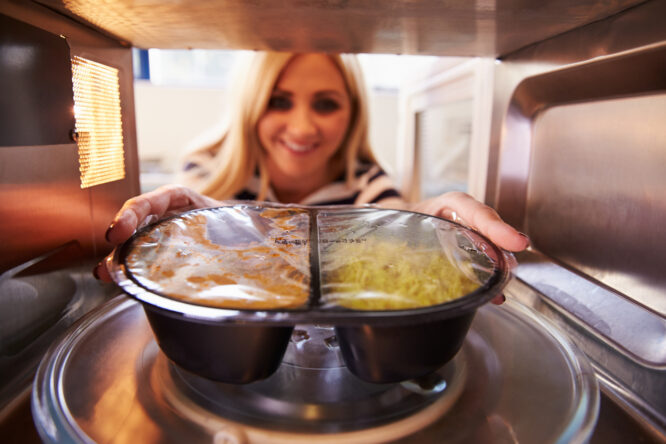
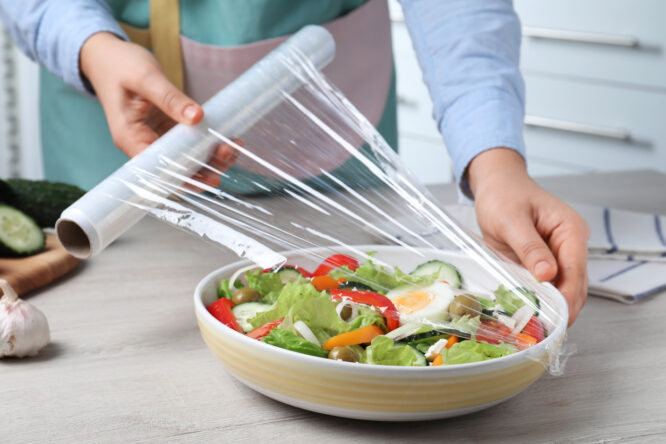
If you’re going to use cling film in the microwave, the main thing to get right is keeping it off the food. It should be stretched over the top of the bowl or dish with some space between the film and the surface of whatever’s underneath. That gap means the film is only dealing with steam rather than direct heat from the food, which keeps the temperature it reaches much lower.
You also need to leave a vent. If cling film is sealed completely around a dish, steam builds up underneath and has nowhere to go, which increases pressure and temperature. Leaving a corner loose or making a small hole before you start solves that. It lets steam escape, stops the film from puffing up and pushing down onto the food, and generally makes the whole thing safer.
What does microwave-safe actually mean?
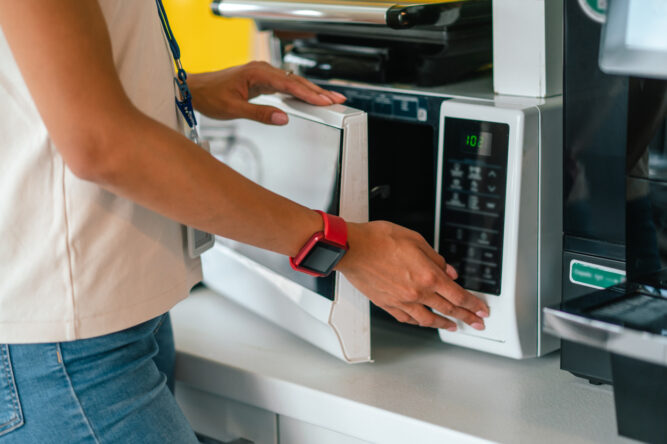
It’s a label that gets thrown around a lot and doesn’t always mean what people assume. Microwave-safe doesn’t mean the material is inert or that nothing whatsoever transfers into food. It means it’s been tested and approved to handle the steam and temperature of standard microwave use without melting or breaking down in ways that are considered an immediate problem.
So when you see microwave-safe on cling film packaging, it’s a useful indicator, but not a guarantee of zero risk. If you’re using cling film that doesn’t carry that label, or you can’t find one on the box, it’s safer to assume it’s not suitable for the microwave. Some cling film, particularly cheaper own-brand versions or stuff from takeaway containers, really isn’t designed for it.
The easiest alternative is probably already in your cupboard.
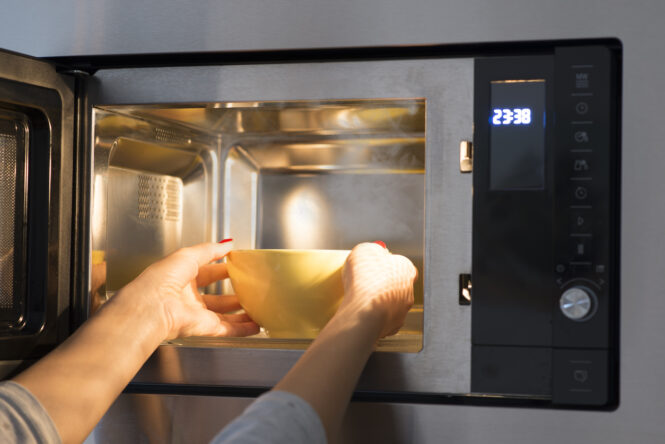
The simplest fix, if you’d rather not think about any of this, is just to stop using cling film in the microwave altogether. A microwave-safe plate placed upside down over a bowl does the same job. A damp piece of kitchen paper laid loosely on top works too, keeps moisture in and stops things drying out without any plastic involved at all.
If you’re reheating something in a bowl, transfer it to a glass or ceramic dish first. Glass and ceramic don’t interact with food when heated, so there’s truly nothing to worry about. It’s one more thing to wash up, but it’s also just a cleaner option all round. Most people who make the switch don’t really miss the cling film.
Fatty and oily foods need more care.
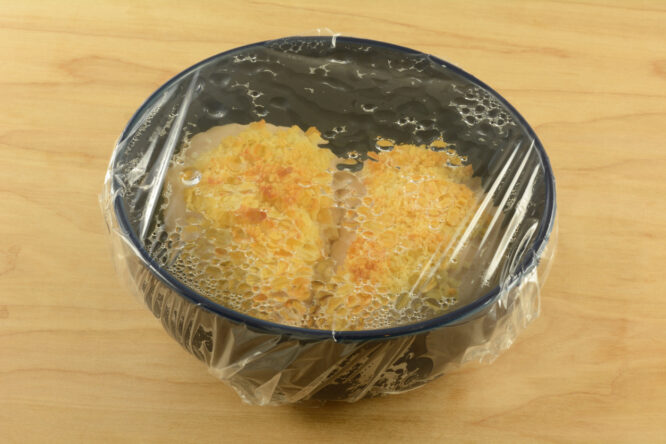
This comes up a lot in the research, and it needs to be clarified. Things like leftover pasta with a creamy sauce, meat dishes, cheese-heavy food, anything with a high fat content heats differently in the microwave compared to something like soup or rice. The surface temperature climbs faster and higher, and if cling film is in contact with that surface, it’s being exposed to more heat than it would be with a less fatty food.
So if you’re reheating a pasta bake or last night’s curry with a lot of oil in it, that’s the moment to be most careful. Either switch to a glass dish, use a non-plastic cover, or at the very least make absolutely sure the cling film has a decent gap above the food and a vent for steam. It’s not that fatty food becomes a crisis, it’s just that the conditions that raise risk are more likely to be present.
Takeaway containers are a separate issue.
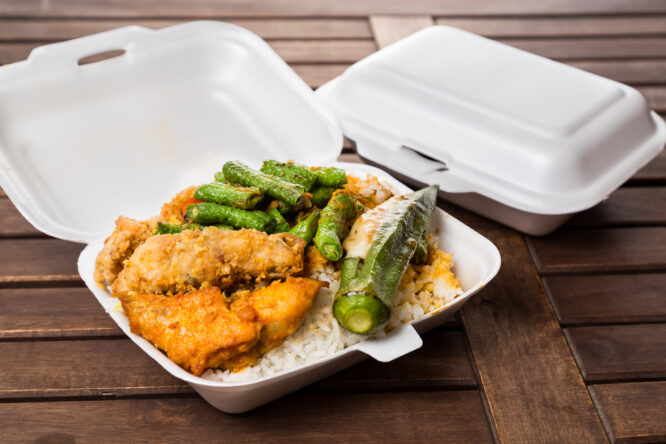
A lot of people also reheat food straight in the plastic tubs it came in, and that’s generally a worse idea than using cling film. Those containers aren’t designed for microwave use. They’re meant to carry cold or room temperature food from a restaurant to your house, not to handle the heat of reheating. Some of them warp visibly, and even the ones that don’t warp can still be releasing things you’d rather weren’t in your food.
If you order a lot of takeaways, get into the habit of decanting into a bowl before you reheat. It takes an extra 30 seconds and removes a variable that’s harder to control than cling film. The containers might say they’re food-safe, and they are, but for cold storage rather than microwaving.
Generally speaking, plastics and food shouldn’t mix if you can avoid it.
There’s been a lot of coverage recently about microplastics and the fact that we’re all probably ingesting tiny amounts of plastic from various sources. It’s a real concern and research is ongoing. Microwaving cling film is one small part of a much bigger picture, and obsessing over it specifically while ignoring other sources probably isn’t the most useful approach.
That said, making small swaps where they’re easy and don’t cost much is a reasonable thing to do. Switching to a plate or glass dish for microwaving isn’t a hardship. It’s one of those changes that takes minimal effort and removes at least one source of avoidable exposure from your routine. You don’t need to throw out all your cling film or feel anxious about the times you’ve already done it, just adjust going forward if it feels right.
What to actually do from here
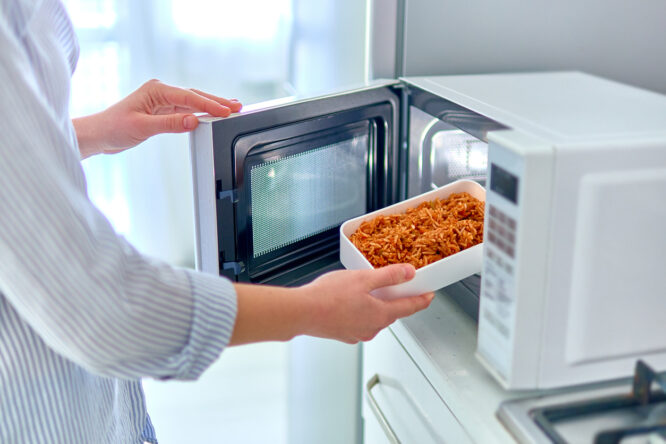
If you want a simple set of habits that covers most of the risk without overcomplicating your life: use a glass or ceramic dish when reheating, cover with a plate or damp kitchen paper instead of cling film, and if you do use cling film make sure it’s microwave-safe, vented, and not touching the food. That covers most situations without requiring you to rethink everything in your kitchen.
For the times when cling film is already on something, and you just want to warm it up quickly, check whether it’s touching the food, lift it slightly if it is, peel back a corner for ventilation, and keep the heating time short. It’s not a long list, and none of it requires buying anything new. Sometimes the sensible option is just knowing the few things that actually matter and doing those.