Most of us treat happiness like the weather: something that shows up when conditions are right and disappears when they’re not.
However, that couldn’t be more misguided. Research from the last decade paints a pretty different picture. Happiness turns out to be less about how you feel in any given moment and more about how your life is actually structured. That means the choices you make repeatedly, the things you prioritise, and the environment you put yourself in day after day are what you should truly value, as they have the biggest impact on your overall satisfaction.
Your relationships matter more than almost anything else in your life.

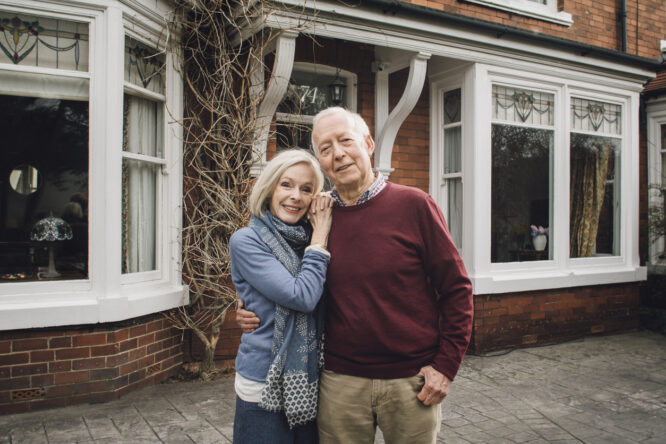
If there’s one finding from modern happiness research that carries real weight, it’s this: the quality of your close relationships is probably the single strongest predictor of how happy and healthy you’ll be over your lifetime. Not your income, not your career success, not how productive you are. The people you’re close to, and how those relationships actually feel, consistently comes out on top.
One of the longest-running studies on adult life ever conducted tracked participants for over 80 years and kept arriving at the same conclusion: relationship quality predicts not just happiness but physical health, cognitive resilience, and how long people live. It outperformed wealth and career success as a predictor of a good life by a large margin. That’s worth sitting with, especially in a culture that spends so much energy telling you to focus on your career and your finances above everything else.
Time is worth protecting as carefully as money, and arguably more so.

There’s a strange contradiction at the heart of modern life where people earn more than previous generations and yet constantly feel behind, rushed, and like there aren’t enough hours in the day. Researchers call this “time poverty” and it turns out to be harmful to wellbeing. People who feel chronically short of time, with little control over how their days actually unfold, consistently report lower life satisfaction and worse mental health across the board.
What’s interesting is that spending money to buy back time by outsourcing things you hate doing, paying for convenience, or cutting obligations that drain you tends to do more for your happiness than spending the same money on things. A study found that people who made this trade-off reported much higher life satisfaction, yet most people don’t actually do it. The practical takeaway is worth applying to any big decision: don’t just ask what something pays, ask what it costs you in time and freedom. Those two things aren’t the same calculation.
Comfort is good, but it’s not enough on its own.

Most people aim for a life that feels happy and meaningful, which makes sense. However, research published in 2022 introduced a third dimension that changes the picture a bit: psychological richness. A psychologically rich life isn’t necessarily easy or even particularly comfortable. Rather, it’s one that’s characterised by novelty, growth, challenge, and experiences that change your perspective.
When people across multiple countries were asked what kind of life they’d want to have lived, a notable portion chose the psychologically rich option over the simply happy or meaningful one. The researchers found that people who spend years optimising purely for comfort often look back on memories that feel thin and interchangeable, while those who accepted difficulty and novelty along the way tend to feel their life had more texture and depth. One concrete way to apply this is to build in at least one experience a month that stretches you—something unfamiliar, demanding, or perspective-changing. The short-term discomfort tends to be worth it in retrospect.
Spending on other people does more for you than spending on yourself.

It sounds counterintuitive given how much modern wellness culture is focused on the self, but the research on giving is some of the most consistent in the entire field. A large systematic review looking at data across dozens of studies and multiple cultures found that spending on other people, whether that’s donating money, buying something for a friend, or volunteering time, reliably produces better wellbeing outcomes than spending the same resources on yourself.
The reason seems to be fairly deep-rooted. Human psychology evolved in a context of interdependence, where contributing to others wasn’t just nice but necessary. Giving activates reward systems in the brain, reinforces social bonds, and creates a sense of purpose that passive consumption simply can’t replicate. Accumulating things for yourself runs into diminishing returns pretty quickly, while contribution tends not to. You don’t need to overhaul your finances to feel this. Even small, consistent acts of generosity build into something meaningful over time.
Two hours a week in nature is apparently the threshold that actually works.

This one is specific enough to be useful. A study analysing data from nearly 20,000 people found that those who spent at least 120 minutes per week in natural environments reported considerably better health and psychological wellbeing than those who spent little or no time outdoors. The interesting detail is that the 120-minute mark seems to be where the benefits really kick in. Less than that produced noticeably weaker results.
The good news is that you don’t need to find two consecutive hours. The time can be spread across the week in smaller chunks, so 20 minutes of walking each day covers it. The mechanisms behind it include reduced stress responses, less mental rumination, and restoration of the kind of focused attention that everyday cognitive demands wear down. Researchers increasingly treat nature exposure not as a leisure activity, but as something the nervous system actually needs. Not only that, but it’s free, requires no equipment, and works regardless of where you are or what your life looks like.
These habits work better together than they do individually.

The broader picture that emerges from a decade of wellbeing research is that happiness isn’t really something you optimise inside your own head. It’s something that comes from the shape of your life as a whole: strong relationships, a sense of control over your time, experiences that challenge you, contributing to others, and regular time outside. None of those are quick fixes or tricks, and none of them are primarily about how you think or feel in the moment.
That makes the project slower and less satisfying in the short term than most advice you’ll read. However, the evidence is fairly clear that a life deliberately structured around these things generates wellbeing in a way that mood management, positive thinking, and accumulation simply don’t. The question worth asking isn’t how to feel happier today; it’s whether the actual shape of your life is one that naturally tends in that direction.