Nine out of 10 Brits apparently think they’re perfectly well-behaved when they stay in a hotel, according to a recent survey.
That’s a nice thing to believe, until you look at what the same people actually admitted to doing. Over a third have sneaked in an extra guest after booking to avoid paying more. About the same number have helped themselves to breakfast buffet food to eat later in the room, so the self-assessment is maybe a little generous. The people who actually work in hotels have been pretty vocal recently about where hotel guests tend to go wrong, and some of the worst behaviours are more common than you’d expect.
The single worst thing you can do is be rude to the people serving you.
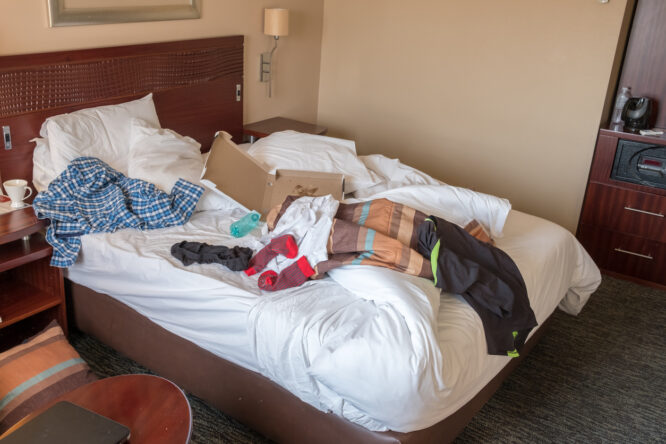
There’s plenty of competition for the title of worst hotel behaviour, and plenty of things that make the list. Leaving your room in an absolute state for housekeeping is one, but the thing hotel staff and etiquette experts alike consistently put at the top is treating staff as though they don’t exist, or as though they’re somehow beneath you.
It’s not usually dramatic. It shows up in small things. Snapping fingers to get attention. Not making eye contact. Asking for something without a “please” or a “thank you.” That kind of low-level dismissiveness is what hospitality workers find most wearing, and it’s unfortunately very common.
The point experts make again and again is that paying for a service doesn’t change the basic rules of how you treat people. Hospitality is a profession, not servitude, and the two are very different things. A simple test worth applying: if you wouldn’t speak to a colleague that way, you’ve got no business speaking to hotel staff that way either.
The kettle situation deserves its own section.
This might comes as a surprise, but some hotel guests apparently use the in-room kettle to wash their underwear. It’s as unpleasant as it sounds, and the reason it matters beyond the obvious is that the same kettle is used by every single person who stays in that room. Whoever comes next has no idea what it’s been used for. It’s one of those things that seems like it wouldn’t need saying, and yet here we are.
The general rule with in-room equipment is pretty simple: use things for what they’re designed for. The kettle is for hot drinks. The bath is for bathing. The towels are for drying yourself. None of this requires a rulebook, but apparently the reminders are still needed.
The sun lounger situation causes major drama.

If you’ve ever watched someone put a towel on a lounger at 7 a.m. and then disappear until noon, you already know why this comes up so often. Leaving a towel on a sun lounger to reserve it while you go back to bed, have a long breakfast, and take your time getting ready is one of those habits that feels harmless when you’re doing it and really irritating when someone else is doing it to you.
The straightforward position is that a lounger is secured by being there, not by leaving something on it. If you want one for the day, be present for it. Most hotels have policies against towel-reserving, though enforcement varies wildly. It’s also worth knowing that this is one of the things other guests notice and silently judge, which might be reason enough to reconsider it.
The breakfast buffet has unwritten rules too.

A breakfast buffet is a shared resource, and the way people treat shared resources says a lot about them. Queueing properly, not piling your plate higher than you could possibly eat, and giving other guests a fair go at what’s on offer are all just basic considerations. One in three people admits to taking food away from the buffet to eat later, which sits in a grey area depending on the hotel’s policy, but treating the whole spread as a personal food store for the day is a step too far.
Remember that the staff running the buffet are watching. How you behave there is just another version of the same basic courtesy that runs through everything else on this list. The people who approach the buffet with a bit of patience and awareness tend to have a much better experience than the ones who treat it like a race.
Corridor noise is a big problem, especially very late at night or early in the morning.
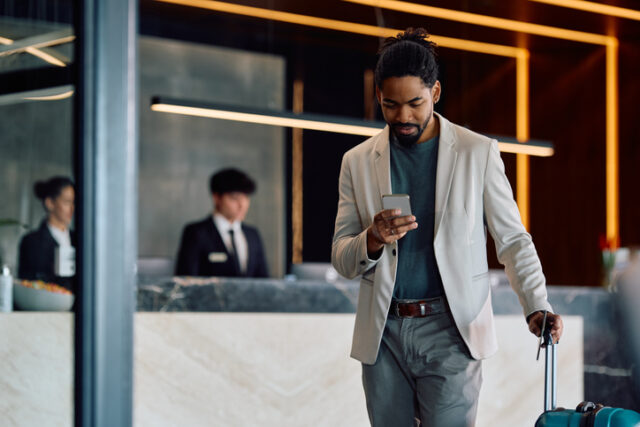
Hotel corridors feel like a neutral zone between your room and wherever you’re going, so it’s easy to forget that the people behind all those closed doors are trying to sleep. Voices carrying, doors slamming, and shoes on hard floors at midnight all travel in ways that feel much louder from the inside of a room than they do to the person making the noise in the hallway.
Keeping your voice down, moving through corridors without stomping, and closing doors gently takes almost no effort and makes a difference to other guests. The people who are worst at this are usually the ones having the best time, which is understandable, but a bit of awareness at the end of the night goes a long way for everyone else on the floor.
Leaving the room in a state is a no-no.
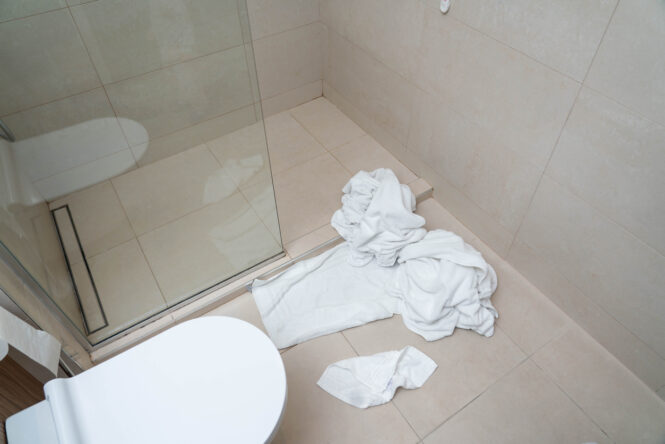
Nobody expects a hotel room to look pristine when housekeeping comes in. People stay in rooms, things get moved around, that’s normal. But there’s a pretty large gap between lived-in and totally trashed. Housekeeping teams work through a lot of rooms in a tight timeframe, and a room that’s been left in chaos takes longer and is harder to sort out, which affects their whole schedule.
Putting rubbish in the bin, keeping wet towels off the carpet, and not spreading your belongings across every surface don’t take much effort. It also means your room gets a more thorough clean when there’s actually space to clean it, which benefits you when you come back to it. It’s one of those situations where the courteous option and the practical option happen to be exactly the same thing.
It all comes back to the same basic idea.
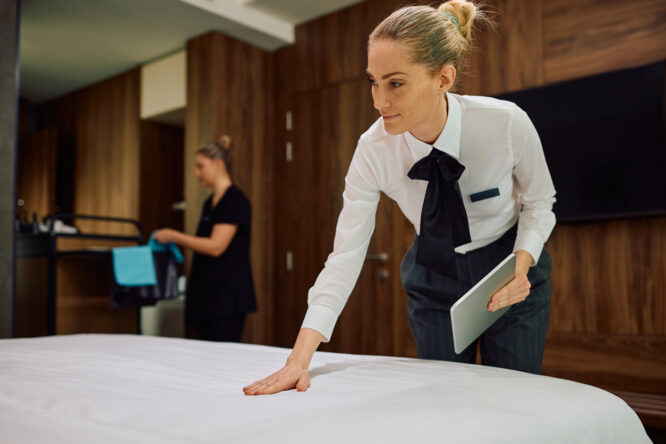
Most of this advice connects to one simple thing: other people are around. Other guests, staff, housekeeping teams, people trying to sleep or eat in peace. A hotel stay is a shared experience even when your room is private, and how you behave in shared spaces has a knock-on effect on everyone else’s experience. None of it requires you to be stiff or overly formal or to stop enjoying yourself.
The staff treatment point is still the one worth coming back to, though, because it’s the one that tends to say the most about a person. It’s easy to be polite when there’s something in it for you. Being courteous to people who are serving you, looking at them when you speak, saying thank you and meaning it, is a better reflection of character than almost anything else you do during a stay.