Knee arthritis is one of the most common joint problems in the UK.

In fact, millions of people are putting up with daily stiffness, pain and gradually worsening mobility every day. New research has just turned up something genuinely encouraging, though. It turns out that making a small change to the way you walk could slow down how fast your knee arthritis progresses, ease the pain, and possibly even put off the need for surgery. Here’s what the science actually shows and what it could mean for anyone living with early-stage knee arthritis.
Walking is incredibly beneficial for those suffering from arthritis.

When your joints hurt, the natural instinct is to rest more. The truth is that movement is genuinely one of the best things you can do for arthritis, even when it doesn’t feel that way at first. Walking and gentle exercise strengthen the muscles around your joints, which gives your bones better support, while keeping the joints themselves lubricated and less stiff over time.
The trouble is that not all walking is equal when you’ve got arthritis. The way you place your feet, the angle of your knees, your stride length and your posture all affect how much stress goes through your joints with every step. Walking the wrong way can quietly speed up the damage, while walking the right way can slow it down. That’s the bit recent research has been looking at in detail.
New research has experts excited.

A new study out of NYU Langone Health followed 68 people with mild knee osteoarthritis, the most common form of arthritis. Researchers carried out detailed gait analysis on each person to work out their best walking foot position, then trained half of them to actually adjust their feet to that optimal angle while walking. The other half were left to walk as they had been.
The results were striking. The people who adjusted their foot angle saw slower breakdown of their knee cartilage, which is the cushioning tissue inside the joint that typically wears away in arthritis. Their pain scores also dropped by 2.5 points, which is roughly the same level of relief you’d get from taking pain-relieving medication. The people who didn’t adjust their walking only saw a one-point drop in pain.
A tiny foot change makes such a big difference.
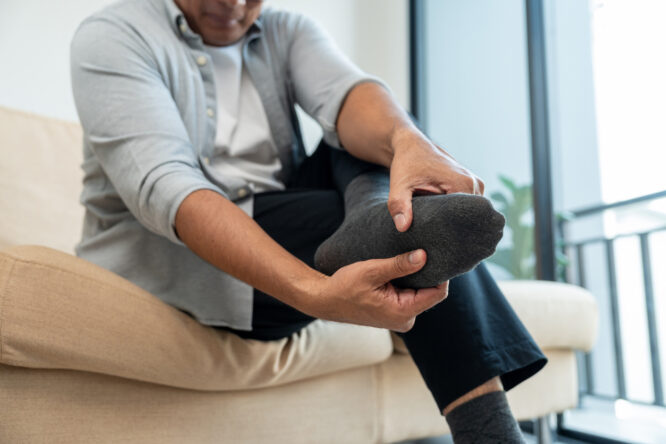
The clever bit of this research is in the maths. Advanced MRI scans showed that the people who adjusted their foot angle experienced 4 per cent less load on their knees while walking. Those who didn’t adjust saw a 3% increase in load over the same period. So, the change was small in terms of foot position, but significant in terms of how much stress was going through the joint.
When you’re walking around 5,000 to 10,000 steps a day, even small reductions in joint load add up quickly. Over weeks, months and years, the difference is enormous. By contrast, walking with the wrong foot position is essentially repeating the same damaging movement thousands of times a day, which is why arthritis tends to get worse without intervention.
The right foot angle means everything.

The researchers were careful to point out that there isn’t one single foot angle that works for everyone. The best position for one person might be slightly different to the best position for someone else, depending on their natural anatomy, the way they walk, and where the wear is happening inside their knee. That’s why the participants had personalised gait analysis before being given their optimal angle.
For most people, the change involved either turning the toes slightly more inwards or slightly more outwards than they naturally would. The adjustments were small, often just a few degrees, but they made a measurable difference. Once trained, the participants got used to the new angle quickly, and it became part of their normal walking style.
Personalised treatment matters a lot.

The bigger message from this research is that one-size-fits-all advice doesn’t always work for arthritis. What helps one person can have little to no effect on another, depending on the specific way their joints have worn. That’s why personalised gait analysis, while not yet widely available on the NHS, could become an increasingly useful tool over the coming years.
In the meantime, there are still plenty of general principles that help most people with knee arthritis. Walking with good posture, keeping your weight centred over your feet, taking even strides, and wearing supportive shoes all help reduce strain on the joints. A specialist physiotherapist can also analyse your gait and suggest tailored adjustments, even without high-tech motion-capture equipment.
This could delay the need for surgery.
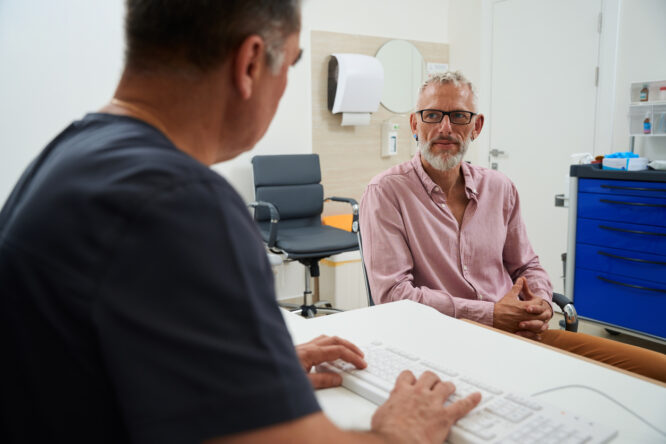
One of the most exciting parts of the new research is the possibility that simple foot angle changes could push back the point at which surgery becomes necessary. Severe arthritis sometimes requires major procedures like knee replacement, which are major operations with long recovery times. Anything that slows down the progression of the disease in the early stages could mean people can avoid or delay those interventions.
The early findings are encouraging enough that researchers hope these small adjustments could become part of standard arthritis care. While more studies are needed to confirm the long-term effects, the underlying principle is solid. Reducing daily joint load by even a small amount, multiplied across thousands of steps every day, can quietly add years of better mobility to someone’s life.
There are other walking habits that help as well.

Foot angle is just one piece of the puzzle when it comes to walking with arthritis. Wearing supportive trainers or walking shoes makes a huge difference, and old worn-out shoes can quietly worsen knee strain without you realising. Trainers with good cushioning, decent arch support and a slight rocker sole tend to be particularly helpful for arthritic knees.
Walking on softer surfaces like grass, dirt paths or running tracks puts less strain on your joints than walking on concrete or hard pavements. If most of your walking is on hard surfaces, swapping in one or two softer-surface walks a week can help. Using walking poles for longer walks can also reduce the load on your knees by transferring some of the work to your arms and upper body.
Strength training matters, too.

The muscles around your knees, particularly your quads and glutes, act like natural shock absorbers for your joints. When those muscles are strong, they take some of the load off your knees and reduce how much stress goes through the joint itself. When they’re weak, all that stress goes straight into the cartilage, which speeds up arthritis progression.
Simple exercises like wall sits, sit-to-stand movements from a chair, gentle squats and step-ups can all build the muscles around your knees without putting too much strain on them. Resistance bands are also brilliant for arthritis-friendly leg work. A short routine three or four times a week makes a real difference over time, and most exercises can be done at home with no equipment.
Other lifestyle changes could boost the benefits.
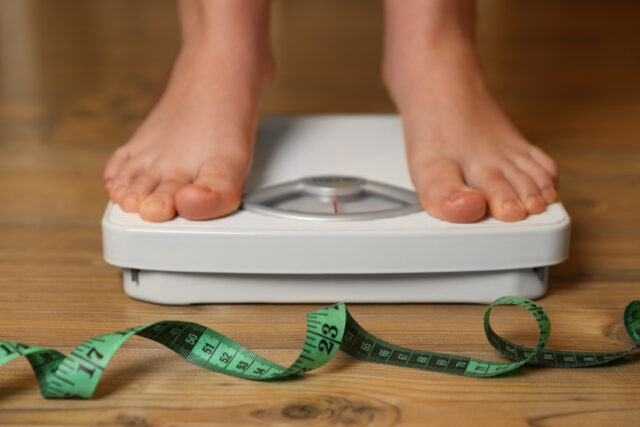
Maintaining a healthy weight is one of the most powerful things you can do for knee arthritis. Every extra kilogram of body weight adds roughly four kilograms of pressure on your knees with every step. So even modest weight loss can lead to big reductions in joint pain and slow down how quickly arthritis gets worse.
Diet also plays a role. Eating plenty of vegetables, fruits, oily fish, nuts, and seeds can help reduce inflammation in the body, while cutting back on ultra-processed foods and excess sugar can also help. Some people find supplements like omega-3 or turmeric beneficial, though the evidence varies, and it’s worth speaking to your GP before starting anything new, particularly if you’re already taking medication.
When to see a doctor about your knees

If your knee pain is interfering with your daily life, getting in the way of activities you enjoy, or steadily getting worse, it’s worth booking in with your GP. Early diagnosis and intervention can make a huge difference to how arthritis progresses, and there are now more treatment options available than ever before, including physiotherapy, lifestyle programmes and medication.
Don’t dismiss persistent knee pain as just a normal part of ageing. Many people quietly live with manageable symptoms that could be far more comfortable with the right support. A short course of physiotherapy, in particular, can teach you techniques and exercises that protect your knees for years to come.
Making a bit of effort could make a very big difference to your pain levels.

The most encouraging thing about this research is just how small the change actually is. Adjusting your foot angle while walking sounds like a tiny tweak, but the effect on your knees can be impressive over time. Combined with regular gentle exercise, strength work, sensible weight management and good footwear, it adds up to a powerful approach to looking after your joints.
You don’t need expensive equipment, a complicated routine or a massive overhaul of your life. A few mindful adjustments to how you walk, plus a few simple daily habits, can make a real difference to how comfortable and mobile you stay over the coming years. For anyone living with early-stage knee arthritis, that’s a pretty hopeful piece of news.