Retirement sounds like the finish line, and in many ways it is.

However, for a surprising number of couples, it turns out to be the beginning of something they didn’t see coming. The Office for National Statistics has recorded a rise in divorces among people aged 65 and over, and some predictions suggest that by 2037, nearly one in 10 divorces in the UK will involve couples in this age group. Family lawyers are already noticing it, with more retirees than ever seeking advice about ending marriages that lasted decades.
So, what’s actually going on? It’s not always anything major, strangely enough. Sometimes it’s just that two people who’ve spent decades mostly apart during working hours suddenly find themselves together all day, every day, with no structure, no routine, and nowhere to escape to. Little things that were once easy to ignore become impossible to overlook, and bigger things that were quietly shelved for years tend to resurface when there’s finally time to think about them.
When routines disappear, so does balance.

A huge part of it comes down to roles. When one person retires and the other doesn’t, or when both do at different times, the whole shape of the relationship changes. Who does what around the house? Who handles the money now that there’s no salary coming in? Who decides how the days are structured? These aren’t small questions, and couples who never had to negotiate them before suddenly find they need to. Without honest conversations early on, resentment tends to build gradually rather than all at once, and by the time it becomes obvious there’s a problem, it can feel too entrenched to fix.
The dynamic gets more complicated when one partner has been running the household for years while the other worked. Suddenly having a second person home full-time, with opinions about how things should be done and nowhere else to be, can feel intrusive even when it isn’t meant that way. It takes real adjustment on both sides, and not every couple manages it without friction.
Money becomes a much bigger conversation.

Moving from a salary to a fixed income, whether that’s a pension, savings, or a combination, requires a completely different mindset. There’s less room for spontaneous decisions, and the future feels more finite in a way it perhaps didn’t before. If one partner is cautious and the other wants to spend freely and enjoy retirement while they’re healthy enough to, that tension can quietly erode a relationship that felt solid for years.
Disagreements about money are one of the most common reasons couples struggle in retirement. It’s not just about how much there is, it’s about what it represents. One person might see retirement savings as security; the other sees them as finally being able to live. Neither view is wrong, but without compromise, they can pull a couple apart.
Losing your work identity is harder than it looks.

Work gives people purpose, structure, and a sense of who they are. When that disappears overnight, some people genuinely struggle to know what they’re for. That can show up as withdrawal, irritability, or a low-level restlessness that’s hard to name but exhausting to live around. A partner watching someone they love go through that can feel helpless, and the person going through it often can’t explain it either.
It’s one of those things that nobody warns you about when you’re counting down to retirement. People spend years planning the financial side and very little time thinking about what they’ll actually do with themselves, or how they’ll feel when the structure that shaped their whole adult life suddenly isn’t there anymore. That gap catches a lot of people off guard, and it puts real strain on the person closest to them.
Health changes the shape of everything.

As couples get older, illness and physical limitations become part of daily life in a way they simply weren’t before. Sometimes that brings people closer together, but it can also mean one partner gradually takes on a caregiving role they weren’t prepared for and never signed up to. That changes the nature of a relationship in ways that are hard to articulate, and harder still to adapt to when you’re in the middle of it.
It’s also worth acknowledging that health anxiety affects both people. Watching a partner slow down, or dealing with your own changing body, brings a new awareness of time that can either push couples to make the most of what they have or expose fault lines that were always there. Either way, it rarely leaves a relationship unchanged.
Family life changes at the same time.

Retirement rarely arrives on its own. It often coincides with grandchildren appearing, elderly parents needing more support, or grown-up children going through their own major life changes. Couples who haven’t talked about how they want to handle any of this can find themselves pulling in completely different directions. One partner might want to be hands-on with grandchildren every day; the other had plans that didn’t involve that. Neither is being unreasonable, but without communication those differences create distance.
Becoming a carer for a parent while also navigating your own retirement is particularly tough. It adds emotional and physical strain on top of an already major life transition, and it often leaves little time or energy for the relationship itself. Couples who get through it usually say they had to be deliberate about making time for each other, which sounds simple but takes real effort when there’s so much else pulling at you.
Some couples don’t survive the adjustment.
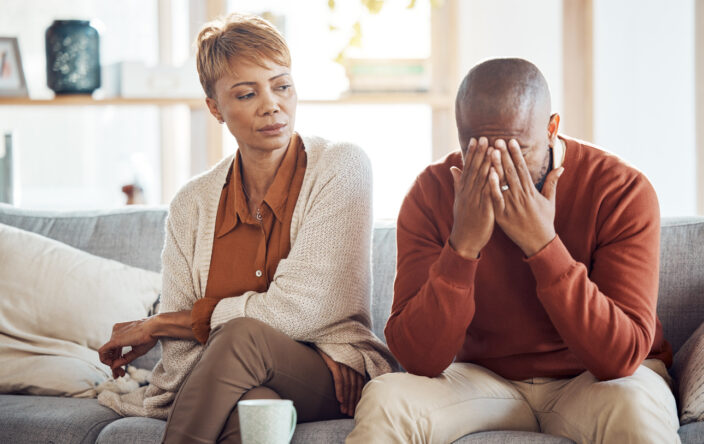
The honest answer is that retirement removes almost every external structure that kept a relationship ticking along without too much examination. Work, school runs, busy weekends, careers to focus on; all of it creates a kind of forward momentum that means couples don’t always have to confront what’s actually between them. When it stops, there’s nowhere to hide from it.
Some couples discover they’ve been living largely parallel lives for years and simply hadn’t noticed. Others find that the person they were when they got married has changed so much that the relationship no longer fits either of them. Neither of those things is anyone’s fault, but they do explain why so many splits happen not in the difficult early years of a marriage but decades later, when life finally slows down enough to take stock.
The practical side of splitting up later in life is more complex.

Divorcing later in life is genuinely more complicated than a younger split in almost every practical way. Pensions, property, and long-term financial security all need careful untangling, and it’s worth getting proper legal and financial advice rather than trying to work it out between yourselves. Wills, powers of attorney, and beneficiary arrangements on savings or insurance policies all need updating after a divorce, and overlooking any of these can cause serious problems further down the line.
Where children are involved, even grown-up ones, it helps to keep communication as calm and respectful as possible. Adult children often have strong feelings about their parents splitting, and the fallout can ripple through the wider family for years. Being clear, honest, and as collaborative as possible with a former partner isn’t just better for everyone emotionally; it also tends to make the legal and financial process significantly less painful.
Starting over when you didn’t expect to is a challenge.

The emotional side of a later-life split is just as important as the practical one, and it often gets less attention. Starting over after decades with someone is genuinely disorienting, and loneliness is a real risk, particularly if the marriage was also the main source of daily company and social life. Building new routines, staying connected to people you care about, and making time for physical health all sound straightforward, but they’re what actually helps most people through it.
It doesn’t happen automatically, and giving yourself time to adjust rather than expecting to feel settled quickly is something most people wish someone had told them sooner. Some find that life on the other side of a difficult marriage is genuinely better than they expected. Others take longer to find their footing. Both are normal, and neither means you’ve done anything wrong.