The spice rack is one of those bits of the kitchen that somehow manages to turn into a graveyard over time.
There are always half-empty jars from recipes you only made once, ancient supermarket bottles with faded labels, and that mystery powder you can’t quite identify. A proper spring clean of your spice collection isn’t just satisfying, it’s the easiest way to make your everyday cooking taste noticeably better. Here’s how to give yours a fresh start without making a project of it.
Your old spices might be ruining your food.

Spices don’t really “go off” in the way fresh food does. They won’t make you ill, they just quietly lose their flavour. Old, tired spices have lost most of their aroma and punch, which means every recipe you cook with them tastes a bit duller than it should. If your homemade curries, stews, and traybakes have been a bit lacklustre lately, your spice rack is the most likely culprit before your cooking technique.
The general rule for shelf life is that whole spices like peppercorns and cloves stay good for around three to four years, ground spices for two to three years, and dried herbs for just one to two. Anything older than that is going to be a shadow of its former self. Heat, light, air, and moisture all speed up that decline, which is exactly why a spice rack above the cooker is the worst possible place to keep them.
Empty everything out first.
The job starts with pulling every single jar, bag, and tin out of the cupboard or rack. Lay them all out on the worktop or kitchen table so you can see exactly what you’re working with. You’ll almost certainly discover three jars of cumin, two of ground ginger, and a forgotten little tub of allspice you bought for one Christmas trifle six years ago.
While the shelves are empty, give them a good clean. A spray of warm soapy water and a wipe down does the job, and a quick once-over with a bit of white vinegar helps cut through any sticky spice residue and grease. Leave the cupboard door open for a few minutes so it can air-dry completely before you start putting anything back in.
How to spot which spices need to go
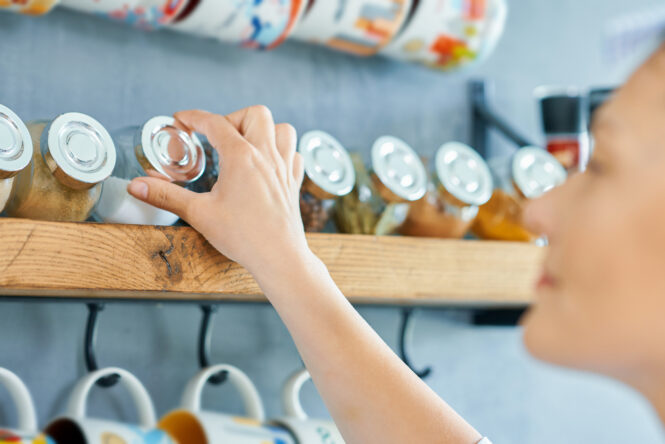
The easiest way to check whether a spice is still worth keeping is to use your nose. Open the jar and have a good sniff. If you get a strong, bright hit of the spice, it’s fine to stay. If the smell is faint, dusty or barely there at all, it’s done its time and needs to be tossed. Faded colour is another giveaway, since vibrant reds, greens and golden yellows are signs of life, while grey and beige usually mean the spice is past it.
Check the texture, too. Dried herbs that have gone brown, crumbly, and brittle have lost their oils. Spices that have clumped into a rock-hard lump have absorbed moisture and aren’t doing you any favours either. Don’t feel guilty about binning anything that fails these checks. A jar with no flavour isn’t saving you money—it’s sabotaging every meal you make.
Combine duplicates and consolidate the keepers.
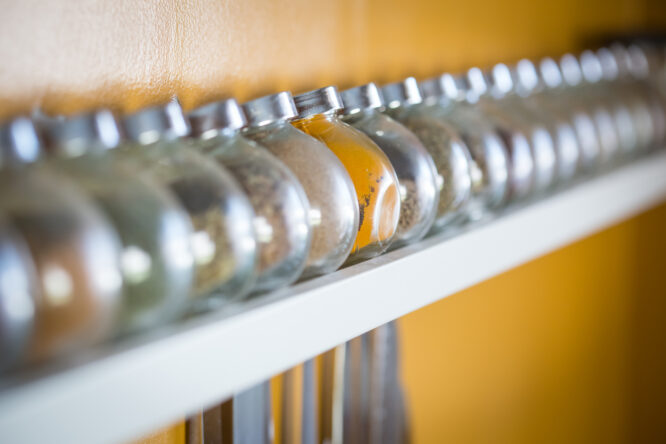
Once you’ve split the spices into keepers and toss-outs, deal with the duplicates. If you’ve got two jars of paprika and both still smell strong, pour them into one. Always add the older spice on top, since it’ll be used up first, and label the jar with the freshest expiry date.
This step on its own usually frees up a surprising amount of space. Plenty of people end up with rows of half-filled jars taking up valuable shelf room, when one fuller jar would do the job. Pop any nearly empty jars somewhere visible so they get used up rather than forgotten at the back again.
Decant and label for a tidier look.
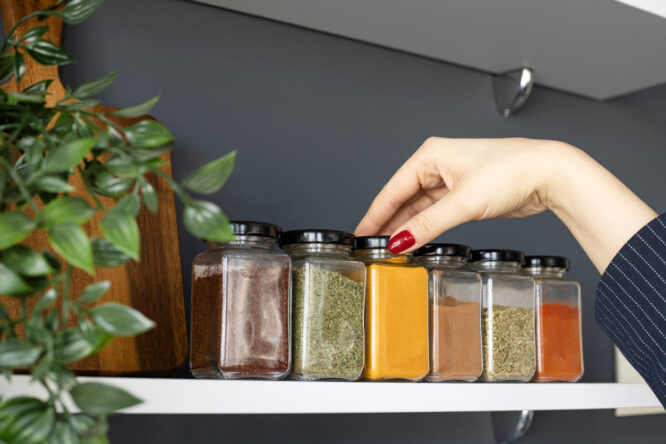
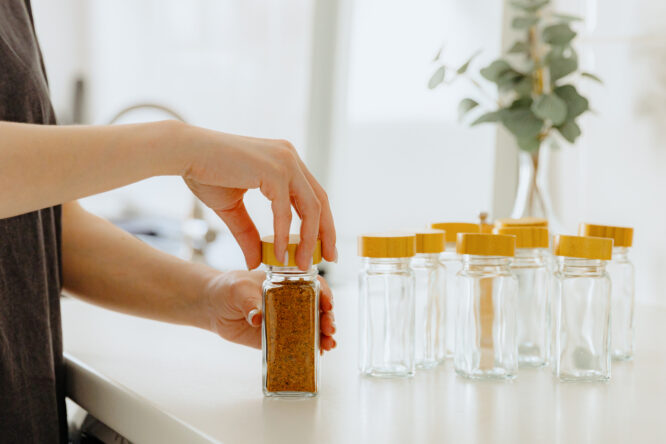
If you’re feeling extra motivated, decanting your spices into matching jars makes a huge difference to how the cupboard looks and works. Clear glass jars with airtight lids are ideal, since you can see the colour and contents at a glance. You don’t need to splash out on a fancy set, recycled jam jars, old mustard pots and small kilner jars do the job perfectly well.
Whatever you put your spices in, label them clearly. A simple sticker on the lid works if you store them in a drawer, or on the side if they’re on a tiered shelf where you’ll be looking at them from the front. Including the date you opened the jar or filled it makes it dead easy to check freshness next time you do a tidy.
Decide on your organising system.
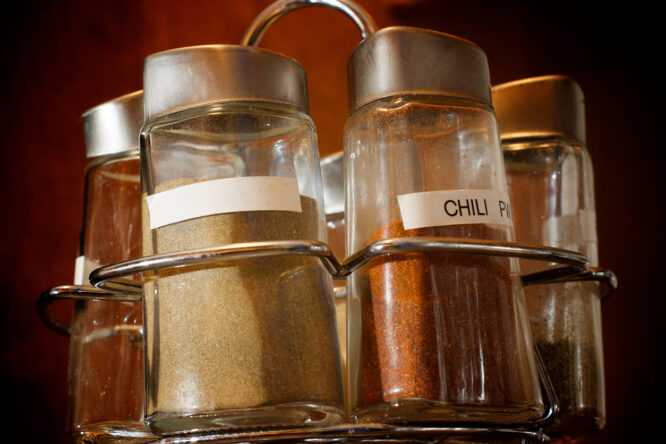
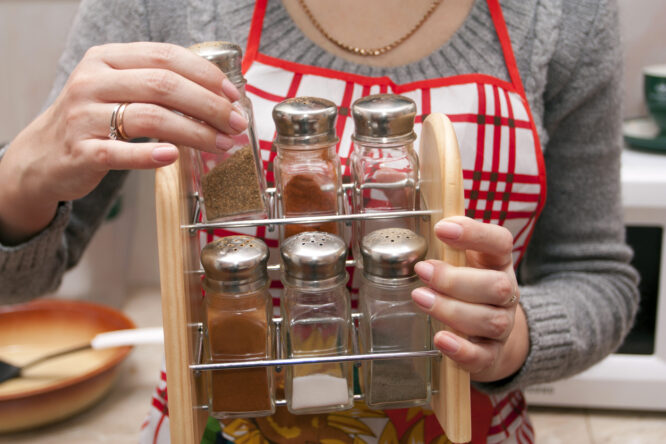
Once you know what you’ve kept, you need to decide how to store it. Alphabetical order is the classic option, since you can find anything in seconds without thinking. Grouping by cuisine is another popular choice, with all your Indian spices in one place, your Italian ones together, your baking spices in another cluster. Pick whichever feels most natural for the way you cook.
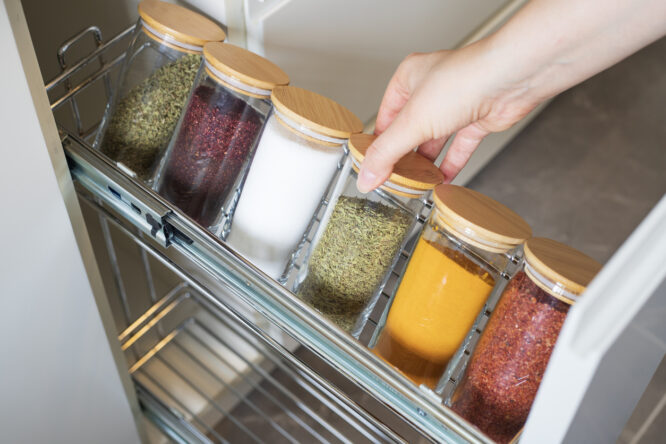
Tiered shelves, lazy Susans, magnetic strips inside cupboard doors and dedicated spice drawers all work brilliantly depending on your kitchen layout. The trick is making sure every jar is visible without having to dig past others, since spices you can’t see are spices you won’t use. Keep the ones you reach for daily at the front, and the more occasional ones behind.
Where to actually store your spices
Spices love a cool, dark, dry spot. The worst possible place is above the hob or next to the oven, where heat and steam quietly cook the life out of them every time you fire up dinner. Direct sunlight is also bad news, since UV light breaks down the oils that give spices their flavour.
A drawer, a closed cupboard away from the cooker, or a pantry shelf is ideal. If you’ve got a wall-mounted spice rack on display, make sure it’s not in a sunny window or right next to a radiator. The fridge isn’t recommended, either, since the moisture inside can cause condensation in jars when you take them out and put them back, which speeds up the decline.
Restock with what you’ll actually use.
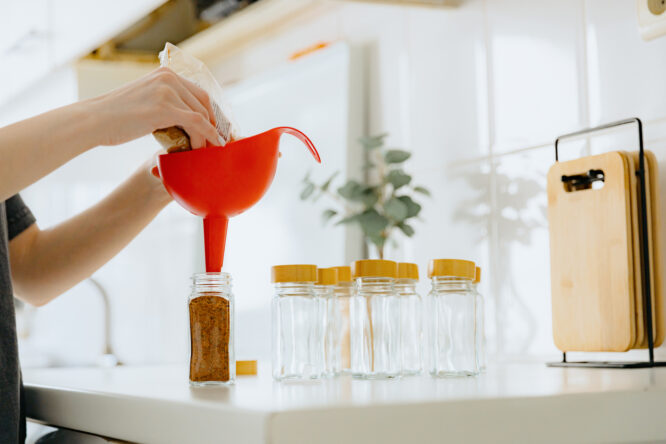
With the cupboard cleared, cleaned and reorganised, you’ll have a clear picture of what’s missing. Make a quick list of the spices you cook with most often but don’t have any decent stock of. Salt, black pepper, paprika, cumin, garlic powder, mixed Italian herbs, cinnamon, and chilli flakes are the most-used in plenty of UK households, so make sure those are all topped up.
When you do restock, buy smaller jars rather than giant ones unless it’s something you genuinely use in big quantities. A massive tub of fenugreek looks like a bargain on the shelf, but if it sits in your cupboard for three years losing its punch, it isn’t a bargain at all. Whole spices like cumin seeds and peppercorns hold onto their flavour for far longer than ground versions, so it’s worth picking up a small grinder if you fancy fresher-tasting cooking.
How to keep it tidy beyond spring
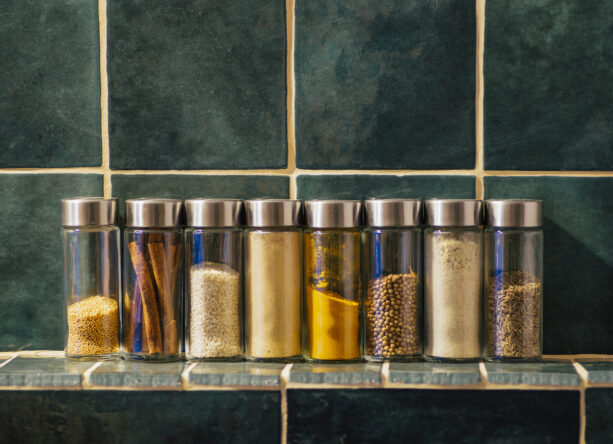
Once you’ve put in the effort, a few quick habits will keep your spice rack in good shape for the rest of the year. Have a quick sniff-check every few months, particularly after a big batch of cooking like Christmas or a special meal. Wipe up any spills as soon as they happen, since spilt turmeric and paprika leave yellow and red stains if they sit for weeks.
Avoid the temptation to keep buying new spices for every new recipe you see online, since this is exactly how cupboards turn back into chaos. Stick to a core set of spices you actually cook with, and only buy something more unusual when you’ve got a clear plan to use it up. A well-stocked but edited spice rack is one of those tiny kitchen wins that quietly lifts everything you cook, which is more or less the whole point of bothering in the first place.