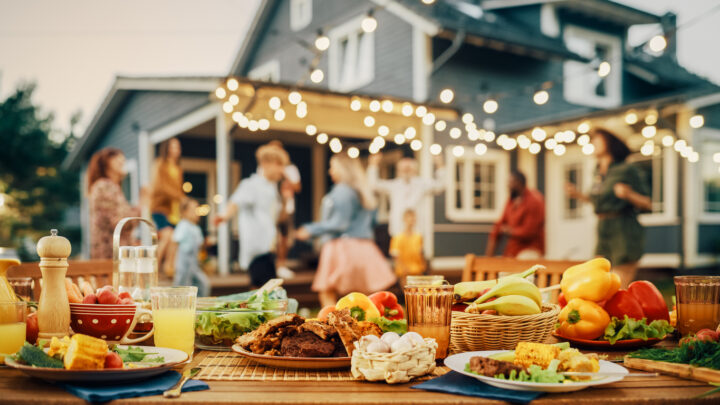
There’s absolutely nothing better than firing up the grill on a sunny afternoon, but nothing ruins the party faster than the distinct buzz of a wasp circling your paper plate.
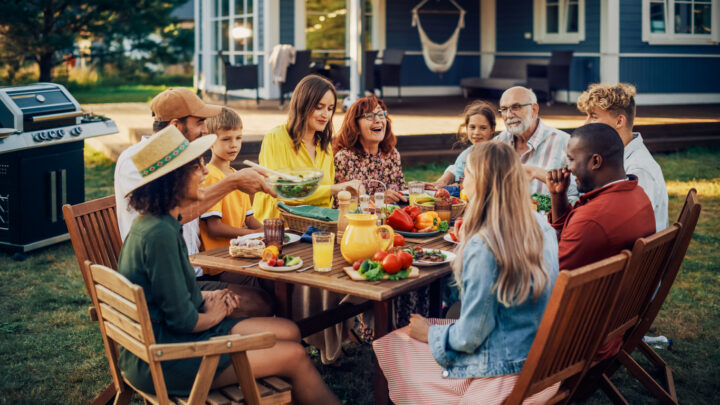
Whether you are trying to flip burgers or just enjoy a cold drink in the garden, dealing with aggressive yellowjackets and inquisitive bees can turn a relaxing afternoon into a stressful game of hide-and-seek. Most people default to swatting frantically with a tea towel, but that usually just makes the insects angry and increases your chances of getting stung. If you want to claim back your patio without harming the local wildlife, you need a few clever, scent-based tactics to keep them well away from your food.
Why bees turn up to your BBQ in the first place
The sounds of sausages sizzling, drinks clinking and friends chatting in the garden are some of the best parts of a British summer. But the moment someone spots a bee circling the food, panic spreads through the group faster than the smoke from a charcoal grill. People can’t decide whether to stay still, run inside, abandon their drink or just give up and call it a day.
The thing is, bees aren’t trying to ruin your afternoon. They’re simply doing what they’ve been doing for millions of years, which is searching for sugar to fuel themselves and bring back to the hive. In early summer in particular, when wasps are still in their relatively quiet phase, the buzzing visitors at your barbecue are usually honeybees rather than the more aggressive wasps people often blame.
You shouldn’t kill them, no matter how tempting that might be.

Before reaching for a rolled-up newspaper or a glass to trap them, it’s worth remembering that bees are one of the most important species on the planet. Honeybees pollinate around a third of all the food we eat, and without them, our gardens, crops and ecosystems would be in serious trouble. UK bee populations have already been under considerable pressure for years thanks to habitat loss, pesticides, and climate change.
Thankfully, you don’t need to harm a single bee to keep them away from your BBQ. With a few simple tricks, you can deter them gently and let them get on with their day while you enjoy yours. Here are the most effective methods, all of which work brilliantly in a typical British garden.
Cover up your sweet food and drinks.
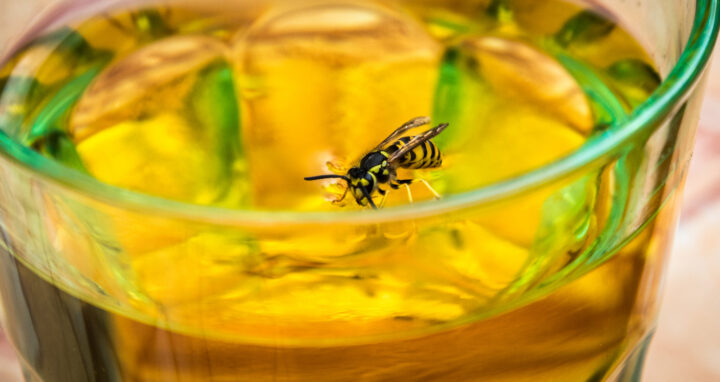
The biggest attraction at any barbecue is sugar. Fizzy drinks, fruit salads, ice creams, lollies, sticky desserts and sugary cocktails are all magnets for foraging bees, since they’re constantly hunting for sources of sugar to convert into honey. A glass of lemonade sitting in the sun is essentially a neon sign for any bee within a mile.
The most effective fix is to keep sweet foods and drinks covered when they’re not being eaten or drunk. Mesh food covers that pop up over plates are widely available from supermarkets and garden centres, usually for just a few pounds, and they’re a brilliant way of keeping insects off without making your food look fussy.
Sealed containers work even better, particularly for things like sliced watermelon, strawberries, and pasta salads that tend to sit out for ages. For drinks, reusable cups with lids and straws can stop curious bees from crawling inside, which is a particularly good idea for kids who might otherwise end up with a nasty sting on the lip.
Why this stops the problem at the source

The reason covering food works so well is down to how bees communicate. Once a foraging bee finds a good food source, it heads back to the hive and tells the rest of the colony exactly where to find it using a famous movement called the waggle dance. If the original bee doesn’t manage to get a proper feed, it can’t pass on the location, which means the rest of the colony never turns up.
Stopping that first bee from finding your food is the most effective way to reduce the number of bees buzzing around your garden in the hours that follow. If you can only cover food some of the time, try to limit how long sugary things are out in the open. Serve the pavlova and the iced drinks just before everyone tucks in, rather than leaving them out for half an hour beforehand.
Keep doors and windows closed.
It sounds obvious, but it’s surprisingly easy to forget during a relaxed garden gathering. Bees can fly up to a mile in their hunt for food, and if you’ve got open patio doors or windows along the way, you’re providing a very convenient access point. Before you know it, there’s a bee trapped against the kitchen window, panicking and bumping into things, which makes it more stressed and more likely to sting.
Try to keep doors closed when you’re not actively going in and out. If you’ve got young children running back and forth grabbing snacks, this can be a bit of a battle, but it makes a real difference. Mesh fly screens that fit over doorways are widely available in UK shops like B&M, Wilko and Dunelm, often for under £15, and they let you keep the door open without inviting every insect in the neighbourhood inside. At night, switching off indoor lights when the door or window is open also helps, since many insects are drawn to bright light.
What to do if a bee gets inside
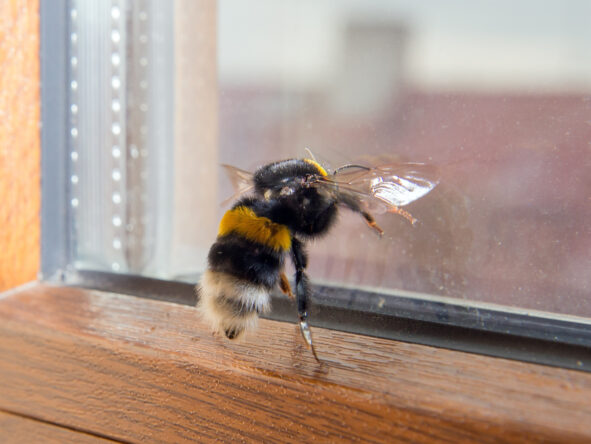
If a bee does end up in your house, the calmest solution is usually to wait for it to land, gently trap it under a glass, then slide a thin piece of card or paper under the rim. You can then lift the whole thing carefully and release it outside without harming it. This works particularly well once the bee has tired itself out from buzzing against the window.
If the bee won’t settle, seal off the room, switch the lights off and open the window wide. Most bees will find their way back outside within a few minutes once they spot the light coming from outdoors. If the bee has landed and looks exhausted, you can help it recover by placing a small spoonful of sugar dissolved in water nearby. Honey shouldn’t be used for this, since it can carry diseases that affect bee colonies. A few drops of sugar water can give a tired bee the energy boost it needs to fly off and rejoin its hive.
Stay calm and avoid sudden movements.

The old advice about not flapping at bees turns out to be genuinely good advice. Bees aren’t aggressive by nature, and they’re not trying to sting you. They’re simply curious about whether you’ve got something tasty. A bee buzzing near your head is usually just investigating before deciding you’re not what it’s looking for.
Flapping, swatting or panicking dramatically increases the chance of being stung because the bee perceives the sudden movement as a threat. You’re also more likely to accidentally make contact with the bee, which can cause it to sting you even if it didn’t intend to. The best response is to stay still or move away slowly and calmly. After a few seconds of being ignored, the bee will lose interest and head off to find a more promising source of sugar.
What to do if you do get stung
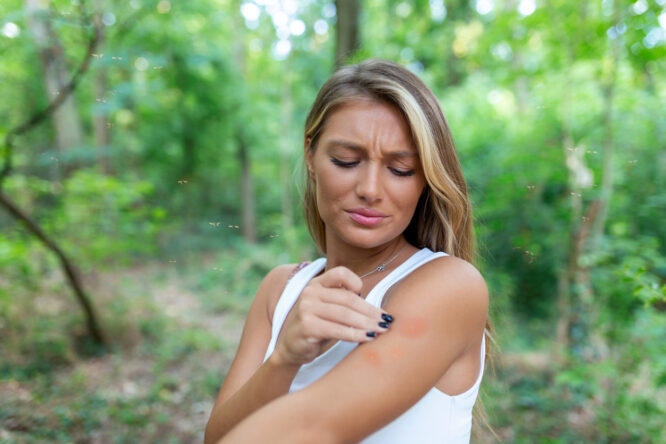
Sometimes bees do sting, particularly if they get trapped in clothing, or you accidentally sit or stand on one. The first thing to remember is that the panic about removing the sting quickly is largely a myth. Unless you can get the sting out within a fraction of a second of being stung, most of the venom will have already been delivered, so frantically scraping at your skin won’t make much difference.
A simple home remedy that often helps is bicarbonate of soda mixed with a little water to form a paste, then applied to the sting site. Most UK kitchens already have bicarb in the back of the baking cupboard, which makes it a cheap and easy first response. Antihistamine tablets like piriton can also help reduce swelling and itching, particularly for people with mild reactions. If you experience any signs of a serious reaction, such as difficulty breathing, swelling of the throat or face, dizziness or a rash spreading across the body, call 999 straight away as this could indicate anaphylaxis.
The alarm pheromone effect
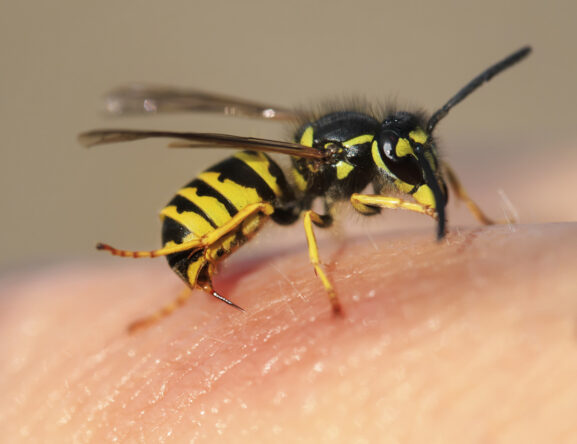
One important thing to know is that bee stings release something called an alarm pheromone, which signals to other nearby bees that there’s a threat. If you’ve been stung in an area where multiple bees are flying around, the pheromone can attract more of them and make further stings more likely.
The best response in this situation is to walk calmly away from the area, ideally to somewhere indoors or behind a closed garden gate. The bees are much less likely to follow you if you remove yourself from the immediate area, and the alarm signal will fade once you’re a safe distance away. Avoid running, since this can stir up the air and signal further panic to the bees behind you.
Wasps versus bees
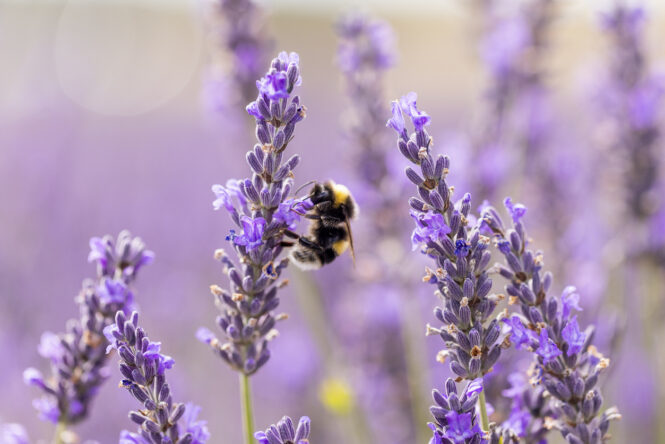
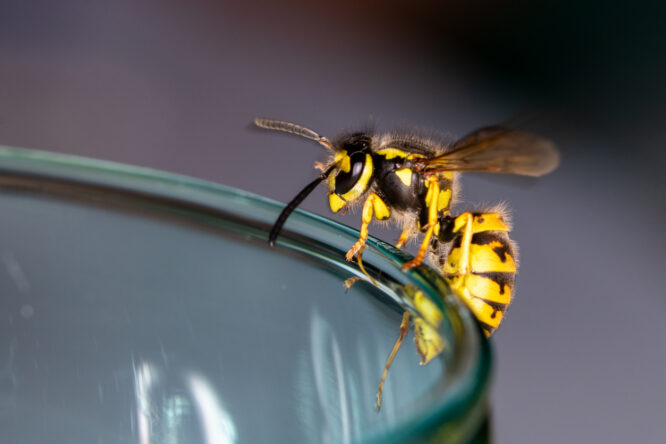
It’s worth knowing the difference between bees and wasps, since the same techniques don’t always apply. Honeybees are fuzzy, brown, and chunky, while wasps are sleeker, yellow and black, with a smoother body and a more defined waist. Wasps tend to be more aggressive, particularly later in the summer when their natural food sources start running out, and they switch their attention to your picnic and pint.
If wasps become a serious problem at your BBQ later in the season, the same general advice applies, although you may want to consider setting up a wasp trap a few metres away from your seating area to draw them away. Hanging a brown paper bag near your eating area is also said to deter wasps, since they mistake it for another wasps’ nest and avoid the territory. Whatever you do, don’t try to swat at a wasp either, since they’re far more likely to sting back than a bee.
A few other simple tricks worth trying
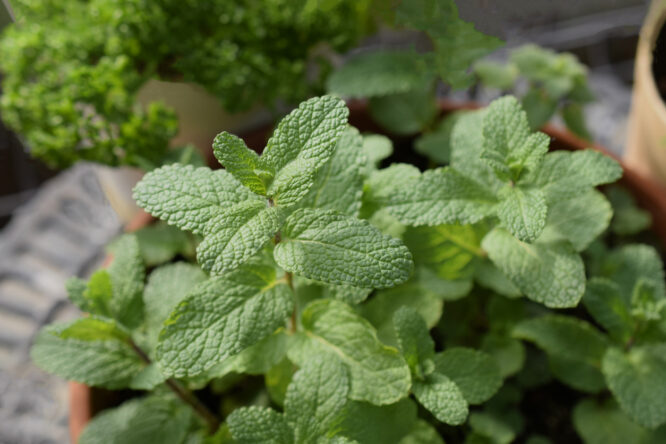
If you want to take your bee-deterring game up a notch, there are a few extra steps that work well. Planting strongly scented herbs like mint, basil, and citronella around your patio can help mask the smell of sweet food. Citronella candles, which most UK garden centres sell for a few pounds, are particularly effective at keeping flying insects away from a small dining area.
Try to avoid wearing strong floral perfumes or aftershaves on barbecue days, since these can attract bees by mimicking the scent of flowers. Bright floral-patterned clothing has a similar effect, so plainer colours can be a sensible choice if you know you’re going to be eating outside. And finally, don’t forget that bees need water too. Putting out a shallow dish of water with a few stones or pebbles in it, placed at the far end of the garden, gives bees a place to drink without bothering your dining area. It’s a small act of kindness that can make a real difference, particularly during hot, dry spells when natural water sources are harder for them to find.