Hanging baskets are perfect for adding a massive splash of colour to your walls, but keeping them looking vibrant through the summer can feel like an uphill battle.
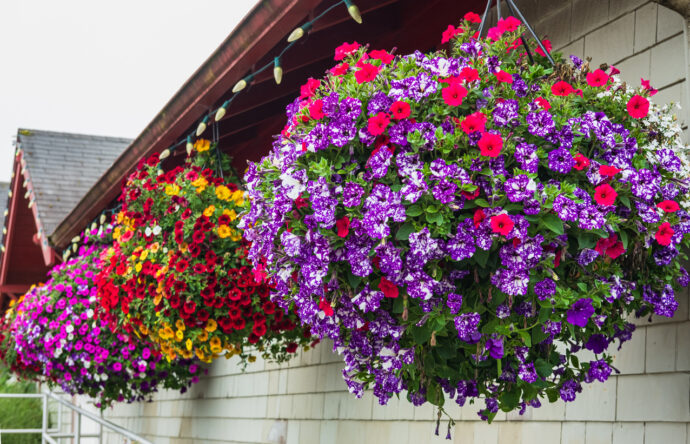
Because they’re completely suspended in the air and have very little soil to hold onto moisture, a couple of hot, breezy days can bake the roots and turn your beautiful petunias into crisp, brown twigs. Most people think just tipping a watering can over them once a day is enough, but when the heat really kicks in, that water often runs straight out the bottom before the plant can take a proper drink.
If you want to keep your displays thriving instead of constantly fighting to keep them alive, you need a few clever tricks to lock that moisture into the compost.
Hanging baskets dry out much more quickly than other methods of planting.
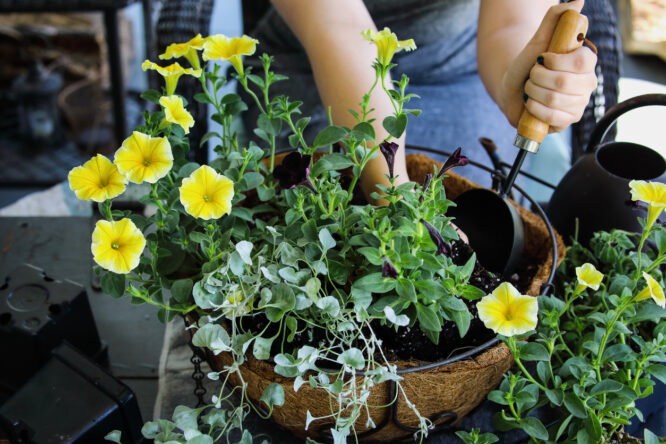
Hanging baskets are working with some serious disadvantages from the moment you put them up. Unlike plants in the ground or even big patio pots, baskets hold a relatively small amount of compost. That limited soil heats up faster, dries out faster and loses moisture from every angle, since baskets are exposed to sun and wind on all sides rather than just the top.
Add to that the fact that most baskets are lined with coir or moss, which lets water drain through quickly, and you’ve got the perfect recipe for thirsty plants. Once the compost dries out completely, it actually becomes water-repellent, meaning new water just runs straight through without being absorbed. That’s exactly why so many hanging baskets that start the season looking magnificent end up looking sad and crispy by July.
Start with the right basket and compost.
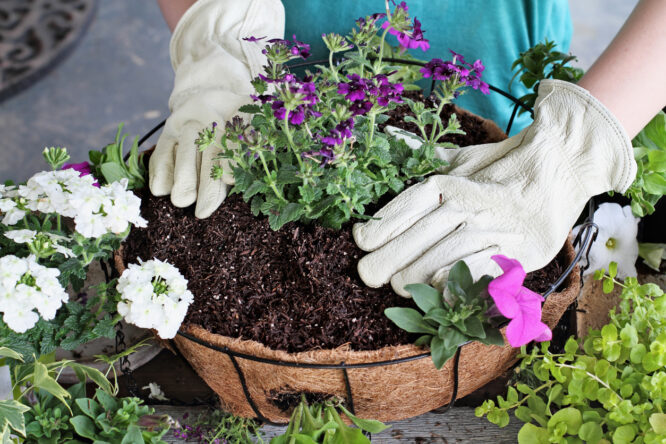
The bigger the basket, the more compost it holds, and the longer it’ll stay moist between waterings. If you have a choice, go for the largest basket you can sensibly hang. The difference between a small 30 cm basket and a chunky 40 cm one is huge when it comes to how often you’ll need to water.
The compost matters just as much. Standard multipurpose compost dries out too fast for hanging baskets. Look for a proper hanging basket or container compost, which often has water-retaining ingredients built in. You can also buy water-retaining gel granules from any garden centre to mix in yourself. Brands like Miracle-Gro Moisture Control work by absorbing huge amounts of water and slowly releasing it back to the roots over the following days, which can dramatically reduce how often you need to water.
Line the basket properly.
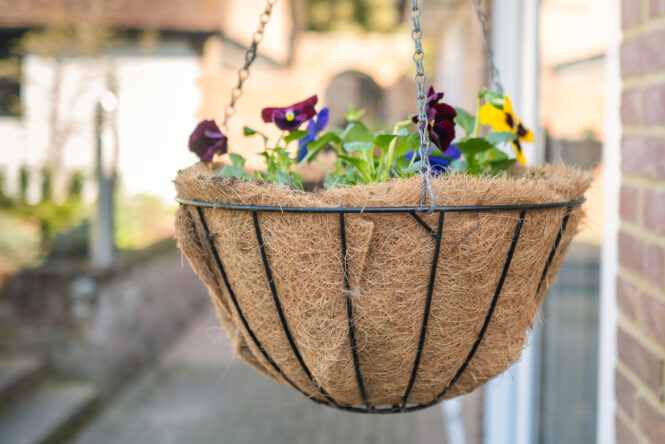
The way you line your basket has a massive impact on water retention. Traditional moss looks lovely but dries out incredibly quickly. Coir liners last longer, but still lose moisture fast. For better water retention, line the inside of the basket with a piece of plastic, like an old compost bag cut to shape, before adding your compost.
Punch a few small drainage holes in the bottom of the plastic, so water doesn’t pool and rot the roots, but leave the sides intact to act as a moisture barrier. Some people even pop an old saucer in the base of the basket to hold a small reserve of water that the compost can wick up between drinks. These little tweaks can extend the time between waterings considerably, which is a lifesaver during a hot spell.
Water properly, not just frequently.
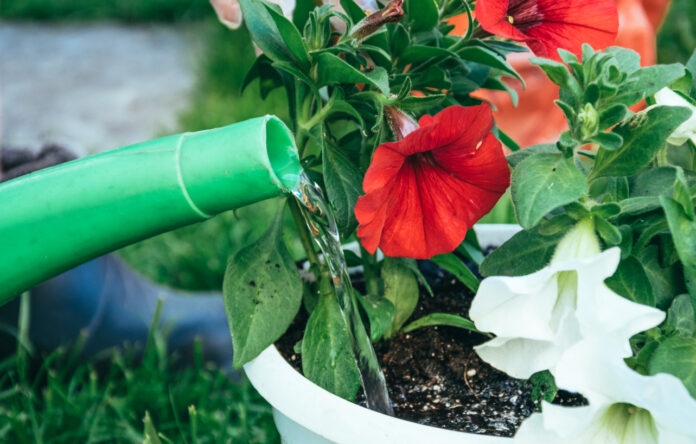
Hanging baskets generally need watering once a day in summer, and during a heatwave, they can need watering twice. The trick is not just how often, but how you actually water them. A quick splash on top isn’t enough, since the water tends to run straight through and out the bottom without soaking the root ball.
The aim is to water slowly and thoroughly until you see water draining from the bottom. A watering wand extension on your hose makes this much easier, since you can reach up properly without spraying water everywhere. Always water in the morning or late afternoon rather than in the heat of midday, since water evaporates too quickly under the strong sun, and you’ll lose half of it before the plants can drink. Morning watering is generally best because the plants have all day to make use of the water before the night chill arrives.
Use the bucket trick for bone-dry baskets.
If your basket has dried out completely and water just runs straight through it, the compost has become hydrophobic. Watering it normally won’t help much, since the water can’t soak in. The fix is to take the whole basket down and submerge it in a bucket or washing-up bowl filled with water.
Let it sit for ten to fifteen minutes, so the compost can rehydrate properly from the bottom up. You’ll often see bubbles rising as the air trapped in the dry soil escapes. Once the basket has thoroughly soaked, lift it out, let the excess water drain off, and hang it back up. This bottom-watering method completely revives plants that look like they’re on their last legs, and it’s worth doing every couple of weeks during very hot weather just to give the roots a really good soak.
Make a DIY drip feeder.
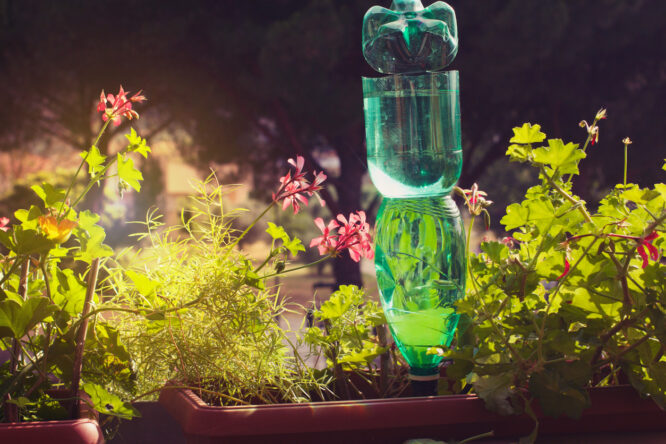
One of the cleverest budget tricks for keeping hanging baskets watered is making your own drip irrigation system from an empty plastic bottle. Take a half-litre or one-litre plastic bottle, cut off the bottom, and drill a few tiny holes in the lid. Push the bottle lid-down into the compost of your basket so it’s firmly anchored.
When you fill the cut-off bottom with water, it slowly drips down through the lid holes into the surrounding compost over the course of hours. This is brilliant if you’re going away for a couple of days, or simply if you struggle to keep up with daily watering. For something more polished, garden centres sell proper drip irrigation kits designed for hanging baskets that connect to a timer and water automatically, which can be a game-changer if you’ve got several baskets to look after.
Group baskets together for a humid microclimate.
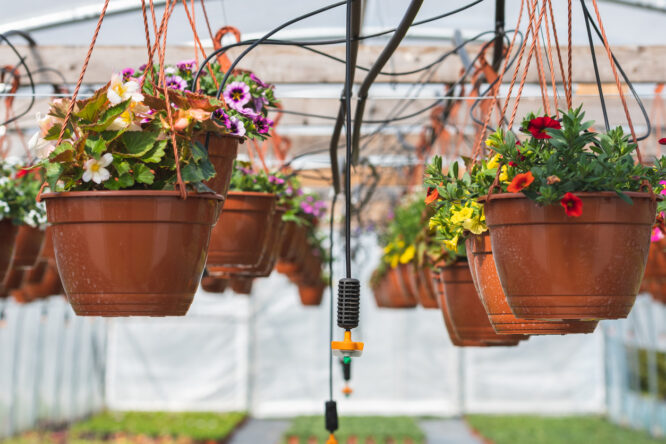
If you’ve got several hanging baskets, try grouping them close together rather than spreading them out. Plants release moisture into the air through their leaves in a process called transpiration. When several baskets are placed near each other, they create a small pocket of humid air around themselves, which slows down how quickly each basket loses water.
During really hot spells, you can even take baskets down and place them on the ground in a shady, sheltered spot for a day or two. They’ll still get light, but they won’t be hit by the relentless sun and wind that hanging up in the open exposes them to. This is also a useful trick if you’re going away for a few days. A group of baskets sitting in dappled shade will survive much longer than the same baskets dangling from a sunny wall.
Pick plants that don’t mind a dry spell.
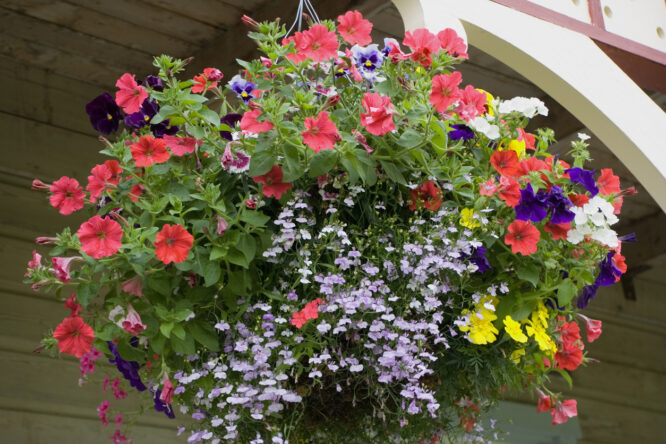
Some plants are simply better suited to hanging basket life than others. Geraniums, petunias, surfinias, and verbena are all relatively drought-tolerant and bounce back well from the occasional dry spell. Succulent-leaved plants like portulaca and trailing sedums hold water in their leaves and are particularly forgiving for forgetful waterers.
If you’re more of a hands-off gardener, lean into these tougher plants rather than picking thirsty divas like fuchsias and busy lizzies, which will turn into crispy disappointments the moment you forget a single watering. Mediterranean herbs like thyme, rosemary, and oregano also make brilliant hanging basket plants and are happy with much less water than most flowering bedding plants. Mixing in a few drought-tolerant plants with your showier ones creates a basket that stays looking decent even when life gets in the way of perfect care.
Feed regularly to keep them blooming.
Watering is only half the battle. Hanging baskets burn through nutrients incredibly quickly because every time you water, you’re flushing some of the goodness out the bottom of the basket. A basket that’s well-watered but never fed will eventually stop flowering and start looking limp, no matter how much you drench it.
The simplest approach is to add a slow-release fertiliser to your compost when you first plant the basket. This keeps a steady flow of nutrients going for a few months. On top of that, give your baskets a weekly liquid feed throughout summer. A high-potash feed like tomato food works brilliantly to encourage more flowers and brighter blooms. You can buy it everywhere, and it costs next to nothing, but the difference it makes to your baskets is genuinely huge.
Deadhead and trim regularly.
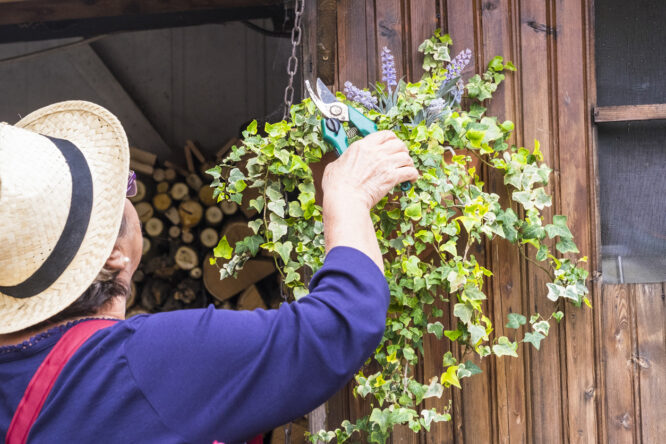
Removing spent flowers, known as deadheading, keeps your basket looking tidy and encourages plants to produce more blooms rather than putting their energy into setting seed. Just pinch off the dead flower heads with your fingers every few days, and your basket will keep flowering for far longer than one that’s left to its own devices.
Don’t be afraid to give straggly plants a proper trim mid-season, either. If something is getting leggy and stringy, cutting it back by a third often triggers a flush of fresh growth and new flowers. Petunias in particular benefit from a chop in late July, which gives you a second wave of blooms running right through August and into September.
Watch for signs of stress.
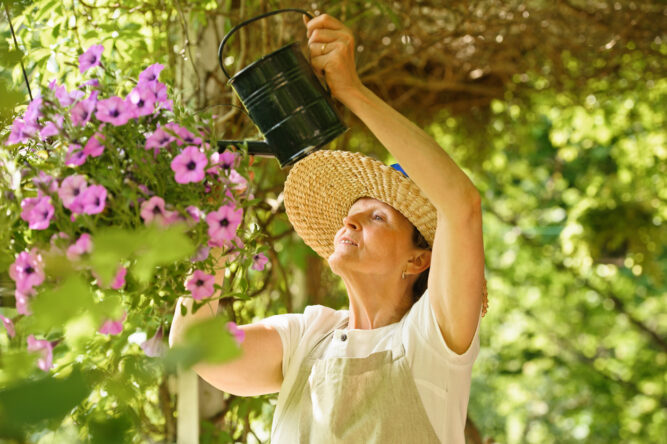
Get into the habit of checking your baskets every morning. If the compost feels dry an inch below the surface, water properly. If leaves are starting to look pale or yellowing, that often means too much water rather than too little, so let things dry out slightly before the next drink. Brown, crispy leaf edges usually point to under-watering or wind damage.
A wilted basket isn’t necessarily a write-off. Most plants will perk up dramatically after a good bottom-watering session, especially if you catch them early. The key is to act before things get really desperate, since plants that have gone through several severe dryouts will struggle to recover and may never look properly lush again. Catching problems early is what separates a basket that looks magnificent all summer from one that peaks in June and goes downhill from there.