If you’ve spent any time on social media lately, you’ve probably seen the eerie, soundless videos of people staring into the camera and letting out a full-throttle scream that never actually makes a noise.

While it looks like a bit of weird performance art, the silent screaming trend is becoming the go-to shorthand for a generation that’s reached a total saturation point with the world. It’s a visual representation of that internal pressure where you’ve got plenty to say, but the sheer volume of global chaos, economic dread, and digital noise has made traditional venting feel a bit pointless.
Instead of a long-form caption or a tearful rant, Gen Z is opting for this muted explosion as a way to acknowledge the burnout without having to find the words for it. It’s a bit of a grim reality check on the current vibe, showing that when everything is dialled up to eleven, sometimes the only way to be heard is to stay completely quiet while your face does the yelling.
Silent screaming isn’t always a bad thing.

Despite how it looks, the silent scream isn’t about panic or distress. Most of the time, it’s used to show excitement, happiness, or emotional overload, just in a quieter, more controlled way. Instead of shouting or reacting loudly, the person performs the idea of screaming without making a sound. The gesture itself becomes the message. If you understand it, it reads instantly. If you don’t, it just looks like an odd pause in the middle of a reaction.
Older people don’t get it, and we’re not meant to.

For people who aren’t used to it, the silent scream feels slightly unnatural. Reactions that would normally be loud and obvious have been replaced with something more contained and a bit performative. That’s why it often gets compared to other Gen Z habits that confuse people, like the blank Gen Z stare, or exaggerated facial reactions. They make sense within the group using them, but can feel off if you’re seeing them from the outside.
These reactions have become a kind of language in their own right.

One of the more interesting things about the trend is what it says about communication. Online, reactions have started to function almost like a language of their own. Everything is faster and more visual now, so gestures that can be understood instantly tend to spread. As time goes on, those gestures become like a secret language, where meaning is carried more by expression than words.
It’s very much a trend that’s tied to the internet.

The silent scream makes more sense when you look at where it came from. Social media has always rewarded big, recognisable reactions, whether that’s shock, excitement, or disbelief. What’s changed is that those reactions are becoming more stylised. Instead of reacting naturally, people are reacting in a way that fits how things look on camera, which is why it can feel slightly exaggerated in real life.
Self-awareness plays a big part in the silent scream.
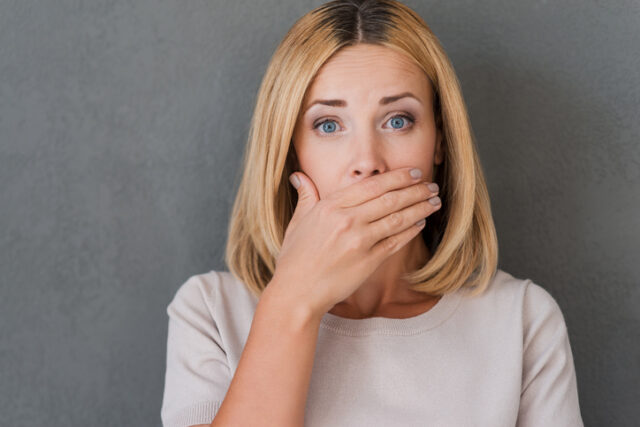
A lot of Gen Z communication carries a layer of self-awareness. There’s often a sense that people know how they look while they’re reacting, and that shapes how they express things. The silent scream fits into that. It shows emotion, but with a bit of distance, like it’s being filtered through an awareness of how it comes across. That balance is part of why it feels different from more direct reactions.
Some people see it as a coping habit.

There’s also an argument that these kinds of gestures make emotional expression feel safer. Saying something out loud can feel more exposing than showing it through a gesture, but using something like a silent scream creates a buffer. It lets people express how they feel without fully committing to it in a direct way, which can feel easier in social situations.
Recent social habits may have shaped the trend.

A lot of Gen Z’s social habits have been shaped by time spent online, especially during periods where face-to-face interaction was limited. When communication happens more through screens, it naturally changes how people express themselves. The silent scream is one example of how those habits have carried over into everyday behaviour.
Why it’s getting criticised

Some people see trends like this as a sign that communication is becoming less direct. It’s often framed as people avoiding real conversation or replacing it with something more superficial. Of course, every generation develops its own way of expressing things. What looks unusual at first often becomes normal once people get used to it.
The silent scream isn’t just a random trend. It reflects a wider transition towards communication that’s quicker, more visual, and shaped by the internet. Instead of relying only on words, people are mixing gestures, tone, and shared references to get their point across. It might look different, but it still works within the context it’s used in.