Launching yourself across a platform the second you hear that rhythmic, high-pitched chirping is a gamble that rarely pays off in the way we think it will.
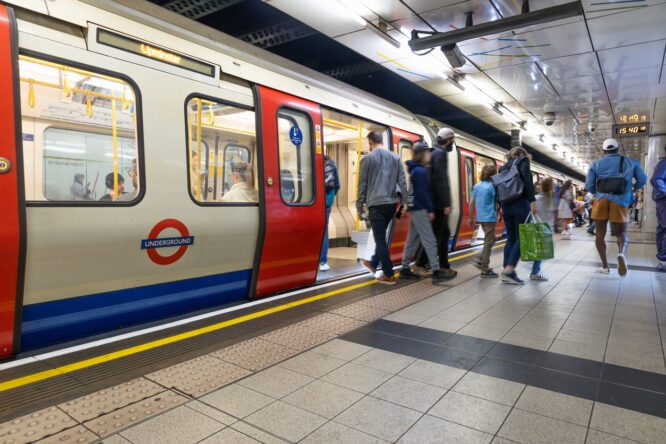
While you might call it a close shave; the internet has dubbed the practice as “gap diving.” It probably feels like a heroic triumph over the clock to the person sliding through the rubber seals, but it’s a massive pain in the backside for the driver, the platform staff, and the 400 people already on board. While a quarter of us admit to seeing someone get caught in the doors, only about 5% of Brits actually confess to doing it themselves, which suggests a lot of us are being economical with the truth about our morning commutes.
The psychology of the last train takes over, even when the next one is 60 seconds away.
There is something about a closing door that triggers a deep, primal panic. It doesn’t matter if the next train is in 90 seconds; in that moment, the lizard brain takes over. We convince ourselves that missing this specific service will ruin our day, make us late for the big meeting, or leave us stranded forever.
In a recent survey by Govia Thameslink Railway (GTR), 32% of people admitted to running for a train, making it the most common dangerous habit on the rails. We do it despite the fact that 79% of us agree that getting stuck in the doors is one of the most embarrassing things that can happen to a human being in public. It’s a classic case of risk versus reward where the logic just doesn’t stack up, as you’re risking a crushed shoulder or a broken phone just to save 120 seconds.
Your fellow passengers are definitely judging you when you force the doors.
If you’ve ever successfully made a gap dive, you’ve probably walked into the carriage puffing for breath, expecting a round of applause for your athletic prowess. What you actually get is a wall of icy stares and a collective rolling of eyes. On subreddits like r/london, the general consensus is that gap diving is selfish, rude, and a bit stupid.
As one TfL driver put it, the beeping sound is a warning, not a challenge. When you force those doors back open, you’re not just getting yourself on the train; you’re triggering a safety mechanism that can delay the entire line. Modern trains are clever; if the doors don’t seal properly, the brakes won’t release. By diving in at the last second, you’re potentially slowing down thousands of people behind you because you couldn’t be bothered to wait for the next one.
The “just this once” fallacy is a dangerous way to navigate a station.

Katerina Krizanova, an onboard supervisor, sees this game play out every single day. The most dangerous part isn’t just the speed; it’s the distraction. We’re often racing for the doors with our eyes glued to a phone or our ears muffled by noise-cancelling headphones. We tell ourselves it’s just this once, but habits have a way of sticking.
Once you’ve successfully gap-dived a few times, you stop seeing the closing doors as a barrier and start seeing them as a target. But the railway isn’t a video game with respawns. One mistimed step, a slippery floor, or a bag strap getting snagged can move the situation from awkward to an emergency room visit in a heartbeat.
There are 800 preventable injuries each year that serve as a massive reality check.
It’s easy to laugh off a close shave, but the numbers are a bit of a reality check. On the Thameslink network alone, there are about 800 preventable injuries every year caused by reckless behaviour. That’s more than two people every single day getting hurt because they were in too much of a rush. Gap diving doesn’t just result in bruised egos—CCTV footage from stations across the UK shows the terrifying reality of what happens when the dive goes wrong.
People have been dragged along platforms, had limbs trapped in doors that don’t immediately bounce back, and in the worst cases, fallen into the actual gap between the train and the platform. When you look at the footage, that two-minute wait for the next service starts to look like the best bargain you’ll ever make.
Philomena Cunk is here to remind us that rail safety isn’t a punchline.
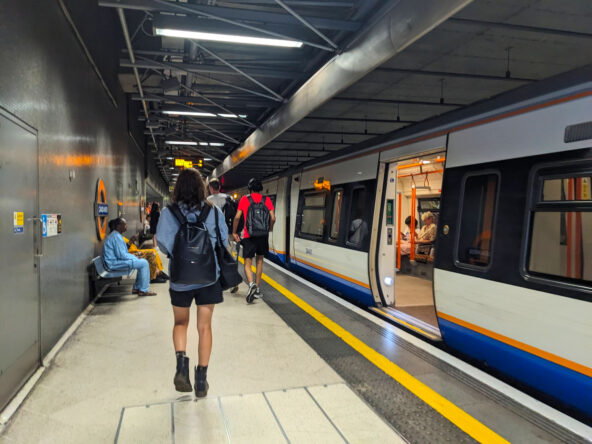
To try and get us to see the absurdity of our rushing, GTR has teamed up with Diane Morgan. In her signature dry, deadpan style, she’s fronting a campaign to remind us that rail safety shouldn’t be ignored. The campaign points out that while some might find the idea of someone getting their head stuck in a door funny in a slapstick sort of way, the reality is anything but.
The message is simple: we know you’re busy, we know you’re rushed, but some habits are so ingrained that we stop seeing them as risks. The beeps are there to keep you on the platform, not to encourage you to do a somersault into the carriage.
You can break the gap diving habit by following a few simple rules.
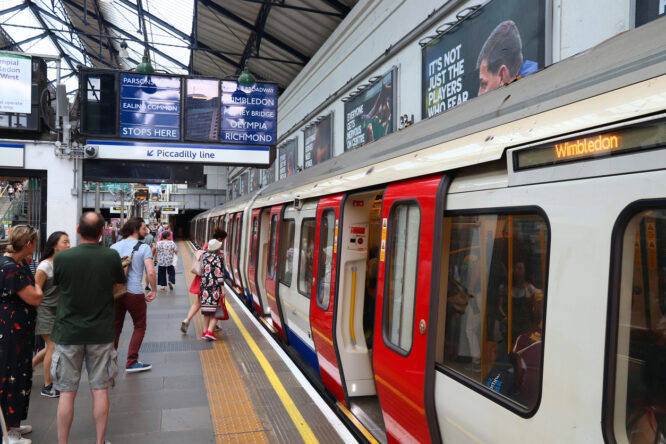
So, how do we stop ourselves from becoming the passenger non grata of the morning commute? It starts with a bit of honesty. Treat the warning sound like a red light. Once it starts, the opportunity has passed. Remind yourself that in a city like London, or on a busy commuter line, the next train is rarely far away. Use those 120 seconds to check your emails or just breathe. Put the phone away when you’re on the platform.
Being aware of your surroundings makes you much less likely to make a panicked, last-minute dash. Sometimes, you’re just going to be late. It’s better to arrive 5 minutes behind schedule than to spend your morning in an ambulance or being filmed by 50 annoyed commuters for a social media compilation.
You’ve got another 60 seconds to wait for the next train.
At the end of the day, gap diving is a gamble where the stakes are your health and the prize is… well, nothing much at all. The next time you hear those beeps, do yourself and the rest of us a favour: stay behind the yellow line, take a breath, and just wait for the next one. Your dignity and your shins will thank you for it.