Council tax is one of those bills most people treat as final: you pay it, move house, and assume everything balanced itself out when you left.
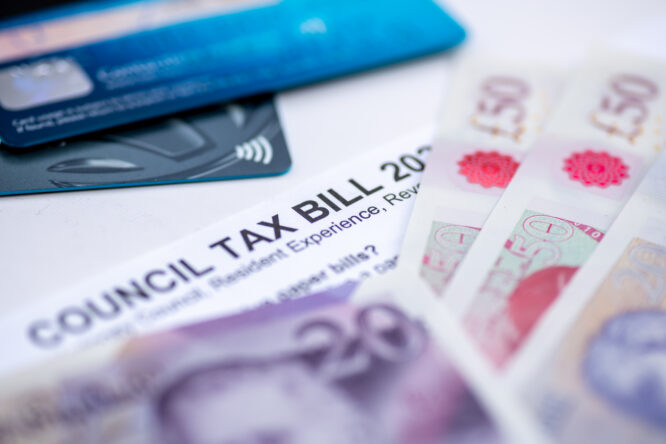
However, that isn’t always what happens behind the scenes. Across the UK, a surprising amount of overpaid council tax still sits in council accounts waiting to be claimed. In many cases, the people owed the money moved years ago and simply never realised their old account closed with a credit left behind. If you’ve changed address at any point over the last few decades, it might be worth having a closer look.
Hundreds of thousands of households are believed to be owed refunds.

When journalists and consumer experts began digging into council records using Freedom of Information requests, the scale of the issue became clear. Across hundreds of local authorities in England, Scotland, and Wales, more than £140 million in council tax overpayments has been sitting unclaimed. That money relates to well over 800,000 individual household accounts, according to MoneySavingExpert.
For individual households, the sums involved are often modest, but they can still make a difference. Some refunds are just over £100, while others reach several hundred pounds depending on the situation. The key point is that many people simply have no idea the money exists because their old account quietly closed with a balance still sitting there.
Council tax accounts can easily end up in credit.

One reason this happens so often is the way council tax payments are structured. Most households pay in instalments spread across the year, but those instalments often cover charges slightly in advance of when the tax is technically due.
That means accounts can temporarily sit in credit without anyone noticing. Normally, this balances itself out by the end of the billing year. But if an account closes while money is still sitting on it, that credit doesn’t always get refunded automatically.
Moving home is the most common trigger for overpayments.

The biggest moment where accounts end up in credit is when someone moves house. Moving day rarely lines up neatly with the billing cycle councils use for council tax payments. For example, if someone has already paid an instalment that covers the next month and then moves out halfway through that period, part of that payment may technically be an overpayment. If the council doesn’t catch it and return it, the account can close with that credit still attached.
Leaving one council area for another makes refunds easier to miss.

People who move within the same council area often have a smoother transition. When you register a new address with the same authority, they can sometimes spot that your old account still has a balance and transfer or refund it.
However, when someone moves to a completely different council area, that connection becomes much harder to trace. The old council may no longer have up-to-date contact details, especially if no forwarding address was given at the time of the move.
Forgetting to stop a payment can leave money behind.

Moving house involves dozens of different admin jobs, from energy suppliers to internet providers. It’s easy for one payment to slip through the cracks. If a standing order or other payment continues briefly after someone moves out, the council tax account may receive money it no longer needs. Once the account closes, that extra payment can become a credit that sits there unnoticed.
People who didn’t pay by Direct Debit may be more likely to be owed money.

Councils often attempt to refund credit automatically where possible, but that process is much easier if the original payment method was Direct Debit. If the council still has the account details used for those payments, they can sometimes send money back automatically. However, many households paid by other methods such as cheque, cash, or standing order in the past. In those cases, councils may have no clear way to return the money without contacting the former resident directly.
Rebanding can create refunds years later.

Another situation that can create refunds involves changes to a property’s council tax band. Occasionally, a property is reassessed and moved into a lower band after a successful challenge. When that happens, the council may need to adjust past bills. If previous occupants paid at the higher rate before the change, they may technically have overpaid during the time they lived there.
This means former residents could still be owed money.

What makes rebanding unusual is that it can create a refund for someone who moved out years earlier. A person who lived in the property before the band was corrected may still have an account that ends up with a credit applied to it. Unless the council can easily contact them, that money may sit on the closed account waiting for someone to claim it.
Older addresses can still be linked to refunds today.

Council records often stretch back a very long time. Because of that, some refunds are linked to homes people lived in decades ago. Anyone who moved house during the 1990s or early 2000s may still have accounts that were closed in credit without their knowledge. It sounds unlikely at first, but the numbers show it happens more often than people expect.
Shared households can complicate refunds.

In homes where several people shared responsibility for the bill, things can become less straightforward. If a property had multiple occupants contributing to the council tax, councils sometimes struggled to determine who should receive a refund once everyone moved out. In those cases, the credit may simply remain attached to the closed account until someone comes forward and requests it.
Many councils now offer simple ways to check.

For people who suspect they might be owed money, the process of checking is usually straightforward. Many councils now offer online forms where former residents can request a review of their old council tax account. These forms typically ask for details such as the previous address and, if possible, the council tax account reference number. Once submitted, the council can review the records to see whether a credit remains.
Old council tax paperwork can help locate the account.

If you still have paperwork from your old property, it can make the process much easier. Old council tax bills usually include the account reference number needed to track the records quickly. Without that number, the council can still search using your name and address, but it may take a little longer to find the correct account.
Even modest refunds can still be worth claiming.

For many people, the amount involved is not life-changing, but that doesn’t mean it isn’t worth claiming. A refund of £100 or £200 might cover a weekly shop or help with an unexpected bill. More importantly, the money was already paid by the household in the first place. If it is sitting with the council simply because nobody asked about it, there is no reason not to check.
Most people never think to check old council tax accounts.

The main reason so much money remains unclaimed is surprisingly simple. Once people move house, they rarely think about the council tax account attached to their old address ever again. Life moves on, new bills arrive, and the old property fades into the background. But as the figures show, that old account may still have a balance waiting quietly in the system.
Checking could reveal money linked to a home you left years ago.

If you have moved several times over the years, particularly between different council areas, it may be worth thinking back through your old addresses. Each of those moves created a separate council tax account that eventually closed.
In most cases those accounts ended exactly as they should have. However, occasionally, one closes with a credit that was never returned. Taking a few minutes to check could reveal that one of those old addresses still has money attached to it that belongs back in your pocket.