Cutting off family is never simple, regardless of how clear-cut the situation seems.

From the outside, it can look like a clean break or a dramatic choice, but for the person doing it, it’s rarely the end of anything. If anything, it marks the start of a harder, quieter journey: one that’s full of second-guessing, grief, and learning how to live without the people who were supposed to love you unconditionally. Here are some of the ways things get even more challenging after walking away from your flesh and blood, even when you know it’s for the best.
You don’t just lose a person; you lose the idea of them.

When you cut off a family member, it’s not just their presence that disappears. It’s the version of them you hoped would show up one day. The version who would change, apologise, or finally treat you the way you needed. Letting go means accepting that this version might never exist, and that’s where the real grief begins.
People talk about grief like it only happens after death, but it hits just as hard when you finally accept that someone won’t become the person you needed them to be. It’s the kind of loss that’s quiet and invisible, but it lingers.
There’s no script for the aftermath.

When you go no-contact with a family member, there’s no roadmap, no set of rituals, and no socially accepted language to explain what you’ve done. Unlike other kinds of breakups, this one doesn’t come with closure or community support. You’re often left to make sense of it alone. People might not understand, or worse, they might judge. That silence around family estrangement makes it feel even heavier, like you’re navigating a kind of grief no one else wants to talk about.
People will question your decision, sometimes harshly.

“But they’re still your mum.” “Blood is thicker than water.” These kinds of responses can hit hard, especially when you’ve already agonised over your decision. People who haven’t lived through the dynamics will often see your boundary as cruelty instead of survival.
It can feel isolating to defend your choice over and over, especially when other people paint you as cold or unforgiving. But the truth is, most people who cut off family do it as a last resort, after years of trying to make it work. Not everyone will understand that, and that’s part of the pain.
It forces you to rebuild your sense of identity.

Family shapes so much of who we believe we are—our roles, our stories, even our sense of worth. So when you step away from that system, it can leave you feeling a bit unmoored. Who are you when you’re no longer someone’s child, sibling, or caretaker?
It’s a chance to start fresh, but that doesn’t mean it’s easy. You have to redefine yourself without the labels that used to be attached to you. It’s liberating, but also lonely at times. Letting go of toxic roles means stepping into unknown territory, and that takes courage.
5. You still catch yourself missing them.

Even if someone treated you badly, there are still moments where you miss them. It might not make sense, but the ache is real. You miss the version of them that felt good sometimes, or the comfort of having a family connection, even if it was an absolute mess. Missing someone doesn’t mean you made the wrong decision. It means you’re human. It’s okay to feel both relief and sadness at the same time. Both can exist without cancelling each other out.
Milestones hit differently.
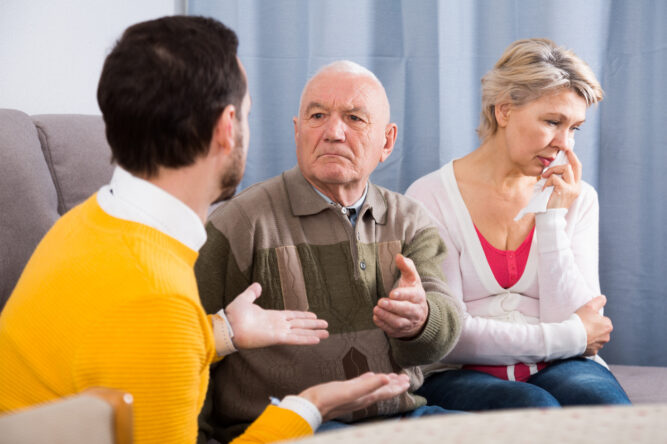
Birthdays, weddings, and big life moments all carry a weird weight when someone close is no longer in the picture. You imagine how it could have been, how it should have been, and you’re reminded all over again that things didn’t work out that way. Even happy moments come with a bit of grief. You might find yourself celebrating something big, only to feel the tug of who’s not there. It doesn’t mean the joy isn’t real. It just means part of you still remembers what’s been lost.
You start noticing healthier patterns elsewhere.

Once you get out of a toxic family dynamic, other relationships start to feel different. You might notice that you’re less reactive, more grounded, or just less willing to tolerate behaviour that doesn’t sit right. That’s a sign of healing. even if it feels unfamiliar at first.
Being around healthier people can actually feel a bit uncomfortable in the beginning. You’re so used to tension and unpredictability that calmness might seem strange. Eventually, though, you start trusting it, and it starts feeling more like home.
8. There’s guilt that doesn’t go away easily.

Even when you know the decision was right, guilt can still creep in. You wonder if you could’ve handled it differently. You question whether you gave up too soon. You feel bad for the silence, for the holidays missed, for breaking the narrative of “family first.”
That guilt doesn’t mean you were wrong; it just means you cared. You cared enough to try, and you care enough now to feel the weight of it. Of course, protecting yourself isn’t selfish, and in the long run, that truth starts to sit a little more firmly in your chest.
You realise how much you tolerated for way too long.

Distance gives you perspective. Once you’re out of the fog, you start looking back on things you brushed off or downplayed, and suddenly, they seem glaring. The way they dismissed your feelings, twisted your words, or expected you to bend every time. It can be shocking to realise just how much you put up with in the name of keeping the peace, but that clarity is powerful. It’s painful, yes, but it also shows just how far you’ve come in recognising your own worth.
10. You learn the difference between absence and peace.

At first, the silence might feel unbearable. No texts, no phone calls, no familiar voice on the other end. Slowly, though, that quiet starts to feel like something else, like peace. That’s not because you don’t care, but because you’re no longer absorbing their chaos.
There’s a deep kind of stillness that comes when you’re no longer managing someone else’s moods or waiting for the next blow-up. That peace doesn’t erase the sadness, but it gives you space to breathe, and that’s worth holding onto.
11. You stop expecting an apology that won’t come.

One of the hardest parts is letting go of the idea that they’ll suddenly understand, reach out, and say the words you always needed to hear. That fantasy can keep you stuck—waiting, hoping, hurting. Eventually, you realise that closure isn’t coming from them.
It has to come from within, from the decision to stop waiting, and from the choice to move forward anyway. It’s not fair, and it’s not easy, but it’s freeing. That’s because once you stop needing them to see what they did, you get to start living for yourself again.
12. You start building family on your own terms.

Family isn’t always about blood. When the people you were born to aren’t safe or supportive, you start building chosen family instead. Friends who show up, partners who listen, mentors who guide you—they become the ones who fill those spaces.
It takes time to trust that kind of love, especially if your earliest experiences of connection were tied to pain. But bit by bit, you start finding people who feel like home. Strangely enough, those bonds are often stronger because they’re based on choice, not obligation.
13. You become fiercely protective of your peace.

Once you’ve cut off someone who used to have that much access to you, you don’t hand it out so easily anymore. You think twice before letting people get close. You pay attention to red flags. You’re not jaded; you’re just done with chaos disguised as love. That change doesn’t make you cold. It makes you careful. You’ve learned that peace isn’t guaranteed—it’s something you have to protect. And if that means keeping your distance from certain people, even ones with shared DNA, so be it.
14. You start living for you, not for their version of you.

Stepping away from family often means stepping away from their expectations, their criticisms, their version of who you were supposed to be. That leaves space—scary space, but space nonetheless—to figure out who you are without all the noise.
You stop trying to prove yourself. You stop trying to earn love that should’ve been given freely. And slowly, you start making choices based on what actually feels right to you, not what keeps you in good standing with people who never really saw you clearly in the first place.