Watching our parents talk about their childhoods can sometimes feel like they’re describing a completely different planet, especially when you realise how much of their fun had absolutely nothing to do with a glowing rectangle.

These days, it’s easy to forget that “boredom” used to be the starting point for some of the most creative and social parts of daily life, rather than a problem to be solved with a quick scroll. From the marathon board game sessions that lasted until the early hours to the simple joy of a hobby that actually required using your hands, there was a tactile, present quality to how people spent their downtime.
It had nothing to do with disconnecting, especially because they were never plugged in to begin with; it was just about finding ways to fill the silence with something meaningful. Before you reach for your phone to kill another 10 minutes, consider some of the analogue habits that kept the previous generation perfectly happy without a single bit of battery life.
1. They went dancing.

Before nightclubs took over, the local dance hall was where you went on a Friday or Saturday night. Ballroom dancing, northern soul, skiffle nights, and later disco all had their moment in towns and cities across Britain, and the local palais, or town hall dance was a genuine social institution.
You didn’t need to know someone to go—the whole point was meeting people. For many people of that generation, the local dance is where they met their partner, made their best friends, and spent the best nights of their lives. It was accessible, affordable, and as social as entertainment gets.
2. They read obsessively.

Libraries were genuinely central to British community life in a way that’s hard to fully appreciate now. They were free, they were warm, and they were packed. Borrowing books wasn’t a niche hobby; it was how millions of working-class families accessed fiction, knowledge, and escapism without spending money they didn’t have.
Paperback novels circulated between neighbours, reading groups formed naturally among friends, and children were expected to have their own library card as a matter of course. Without anything competing for attention in the evenings, people simply read more, and read for longer.
3. They played board games and cards as a family.
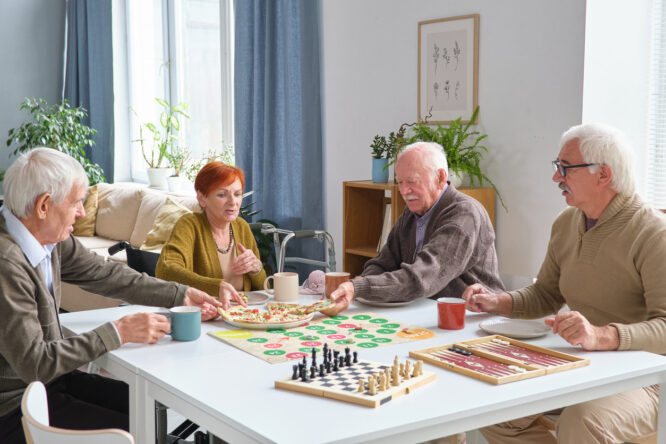
Before everyone retreated to their own devices after dinner, the evening was often shared. Scrabble, Monopoly, draughts, dominoes, and card games like rummy, snap, and cribbage were regular fixtures in British households across the social spectrum.
These weren’t rainy-day fallbacks, either. They were how families spent their evenings together week in and week out. The games themselves mattered less than the fact that everyone was in the same room, talking, competing, and spending time together without any particular purpose beyond enjoying each other’s company.
4. They had allotments and grew their own food.
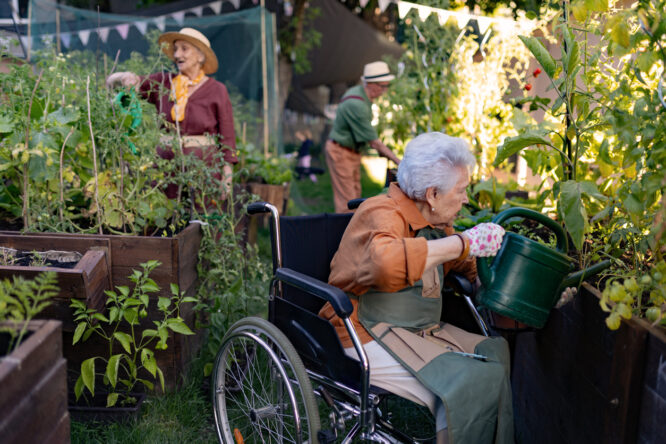
Allotments have been part of British life since the 19th century, but they really came into their own in the decades following the Second World War, when the grow-your-own culture took hold across the country. Tending a plot wasn’t just a hobby — it was practical, it got you outdoors, and it gave you something to be genuinely proud of.
The social side of allotment life was just as important as the gardening itself. Neighbouring plot holders became friends, advice, and seeds were exchanged freely, and the allotment site became its own small community within a community. Many people spent entire weekends there across the spring and summer months.
5. They went to the pub as a social hub.

The local pub in Britain was once far more than somewhere to drink. It was a community centre, a place to hear local news, watch sport on the one television in the room, join a darts team, play dominoes, and see the same familiar faces week after week.
The regulars at a good local genuinely knew each other’s lives in a way that’s become much rarer. Pub quizzes, meat raffles, lock-ins, and amateur darts and dominoes leagues kept people coming back not just for the beer but for the belonging. The pub gave people somewhere to be, which is something screens have never quite managed to replace.
6. They made their own entertainment at home.

Before recorded music was everywhere, plenty of households made their own. Someone played the piano, someone else played the guitar, and on a good evening someone would sing. There was nothing unusual or remarkable about it; it was just what people did. Knitting, sewing, embroidery, and craft projects filled the quieter evenings, and many people took genuine pride in making things rather than buying them.
Home baking was a serious pursuit rather than a weekend project, and the results were shared with neighbours and brought to community events rather than photographed for social media.
7. They went to the pictures regularly.

The cinema was once the most popular form of paid entertainment in Britain, and it was a weekly habit for enormous numbers of people rather than an occasional treat. At their peak in the late 1940s, British cinemas sold over a billion tickets a year. Going to the pictures meant dressing up slightly, queuing outside, watching the B-film and the newsreel before the main feature, and talking about it on the way home.
Films were an event in a way they stopped being once television arrived and later when home video made them accessible any time. The social ritual around the cinema was as much a part of the experience as the film itself.
8. They joined things.

The sheer variety of clubs, societies, and organisations that people belonged to in postwar Britain is striking compared to today. Women’s Institutes, working men’s clubs, church groups, amateur dramatic societies, choral groups, sports clubs, and community associations all had active memberships that met regularly and did things together.
Joining something was pretty much expected back then. These organisations gave people a sense of identity and belonging outside the home and the workplace, and they created friendships that lasted decades. The slow decline of these institutions is one of the more significant social changes of the past 50 years.
9. They spent time outside without needing a reason.

The idea of going out simply to be out for a walk, a cycle ride, a wander around the market, or an afternoon on the beach was just part of life rather than something you had to schedule. Children were sent outside after breakfast and expected to find their own fun until dinner, which they reliably did.
Adults took Sunday walks as a matter of habit. Day trips to the coast, countryside rambles, and afternoons in the park required no planning, no equipment, and no particular goal. Being outdoors was its own entertainment, and the simplicity of that is something plenty of people are only now starting to properly appreciate.