There’s nothing quite like the unique horror of lifting your wheelie bin lid on a scorching July afternoon and being hit by a wall of absolute stench.
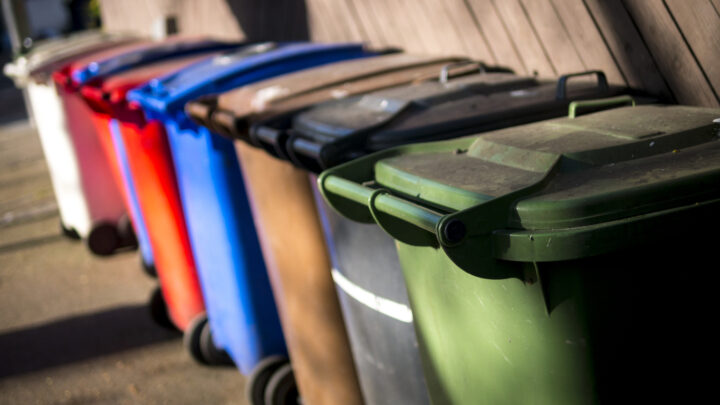
When the summer heatwaves roll in, our outdoor bins essentially turn into giant plastic ovens, cooking weeks of food scraps and household waste until the entire driveway smells like a landfill. Besides making you hold your breath every time you step outside, that baking heat is an open invitation for flies to move in and leave you with a bin full of maggots.
Fortunately, you don’t need to spend hours scrubbing or buying expensive chemicals to fix it. With a few simple, everyday tweaks to how you bag and store your rubbish, you can keep your bins completely fresh and odour-free all summer long.
Blast away dirt with a pressure washer.
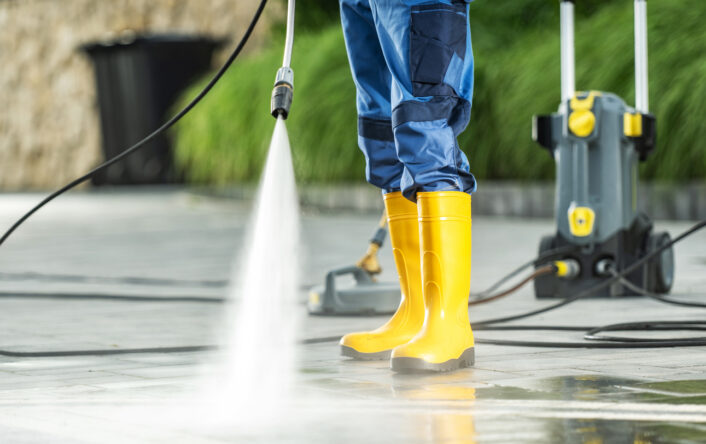
If you have access to a pressure washer, it can make cleaning a grimy wheelie bin much quicker and far less unpleasant, especially when food residue has dried hard onto the inside walls. It’s particularly useful for loosening stubborn marks around the base and under the lid, two spots where smells tend to build up most over time.
Empty the bin completely first and move it somewhere with good drainage so you’re not flooding your lawn with dirty water, and wear waterproof gloves along with old clothes to avoid getting splashed during the process. Lay the bin on its side and start on a low pressure setting to loosen caked-on dirt before gradually increasing the pressure, working from the top down so dirty water drains away more easily, and don’t forget the corners, lid hinges, and wheels, which trap grime just as easily as the main body of the bin.
Scrub it by hand with a long-handled brush.
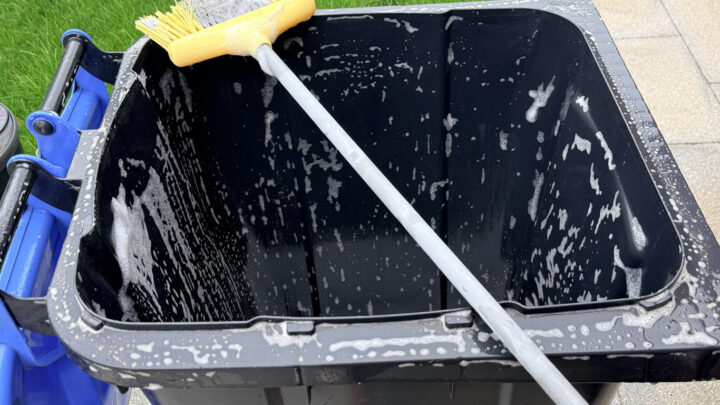
No pressure washer? A long-handled brush works just as well for tackling greasy residue and dried-on food waste clinging to the bottom and sides of the bin. Pour boiling water into the bin first and let it steam for a few minutes, which loosens dirt and also kills off any maggots or larvae that might have already settled in during warm weather.
Once the water’s cooled slightly, scrub using a long-handled broom or mop so you don’t have to bend or lean awkwardly into the bin itself, with stiff bristles generally working best on sticky, compacted grime. Pay extra attention to the lid handle and top edge, since these get touched constantly throughout the week and dirty fast, then rinse thoroughly with clean water and leave the lid open afterwards, so the inside can dry completely rather than staying damp.
Finish off with an all-purpose cleaner.
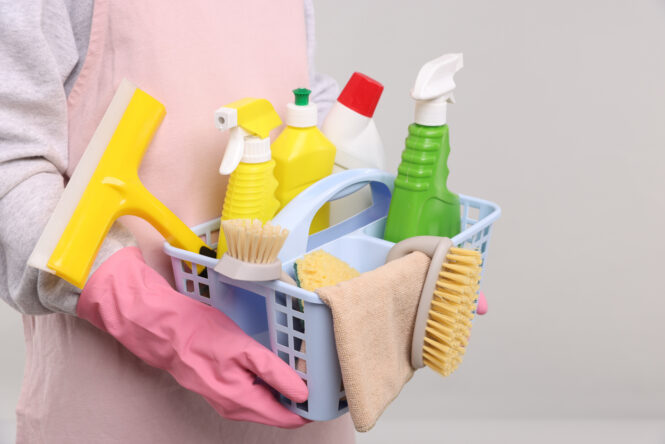
Even after a thorough scrub, smells and greasy patches can still linger, particularly if food waste has leaked out or sat baking in the heat for a few days before collection. An all-purpose cleaner or antibacterial spray can lift these remaining marks effectively, with diluted washing-up liquid working as a cheap and perfectly good alternative if you don’t have anything specialist to hand.
Spray directly onto problem areas and leave it to work for a few minutes before wiping or rinsing away, scrubbing any tougher spots with a cloth or sponge if needed for a more thorough finish. Avoid mixing different cleaning products together, especially bleach and anything containing ammonia, since combining the two can create genuinely dangerous fumes, and check that whatever product you’re using is safe for outdoor use before spraying it anywhere near patios or planted areas nearby.
Get rid of the dirty water properly.
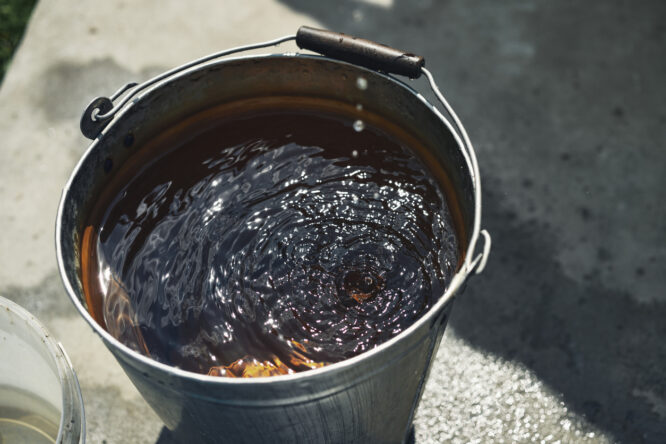
Once you’ve finished cleaning, how you dispose of the dirty water actually matters more than most people realise. It can contain food residue, bacteria, grease, and leftover cleaning chemicals, so pouring it down the wrong drain risks contributing to pollution in local rivers and waterways.
Avoid tipping it into a rainwater drain or roadside gutter, since these often flow straight into nearby waterways completely untreated. Instead, look for an outdoor foul drain connected to the sewage system, the same kind typically used for sinks or washing machines, and if you’re genuinely unsure which type of drainage your home has, pouring the water into a bucket and tipping it down the toilet is always the safest option to fall back on.
Avoid splashing nearby plants and surfaces.
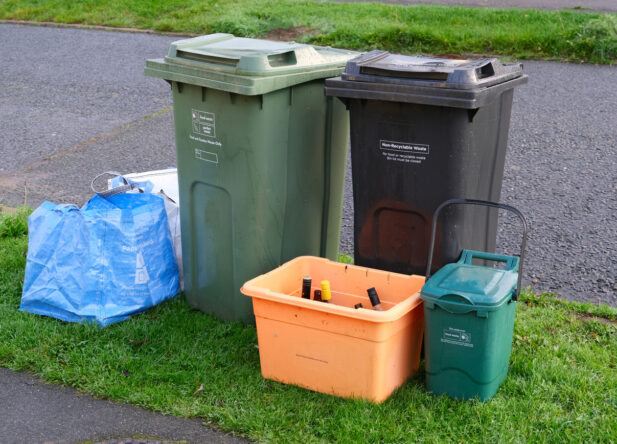
While you’re cleaning, it’s worth being mindful of where the dirty water actually ends up landing, especially if you’ve used something stronger like a bleach-based spray. Splashing this onto lawns, flower beds, or patio surfaces can damage plants or leave unwanted marks behind that are tricky to remove later.
Once you’ve finished rinsing the area down with clean water, give the bin time to dry fully before putting the lid back down. This small step helps stop any leftover moisture turning into a breeding ground for bacteria before the next time you need to use it.
Keep smells from coming back.
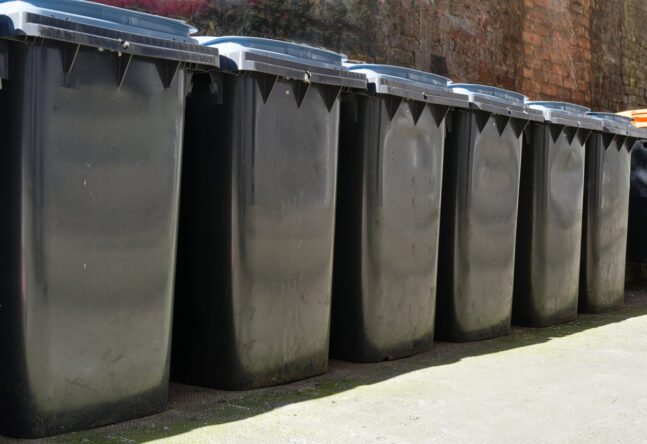
Once your bin’s properly clean, a few small daily habits can stop smells building up again quite so quickly between collections. Keeping it out of direct sunlight helps a great deal, since heat speeds up bacteria growth and makes any lingering odours noticeably stronger, while keeping the lid shut at all times stops smells escaping and flies getting inside in the first place.
Wrapping food scraps tightly or using compostable liners for food waste caddies reduces leaks and general mess, while emptying food waste regularly during particularly hot spells limits the chance for flies to settle and lay eggs before the next collection day arrives. A quick rinse or wipe-down every few weeks throughout summer also stops residue building up gradually before it turns into a much bigger cleaning job later on.
Try a dedicated bin freshener if smells persist.
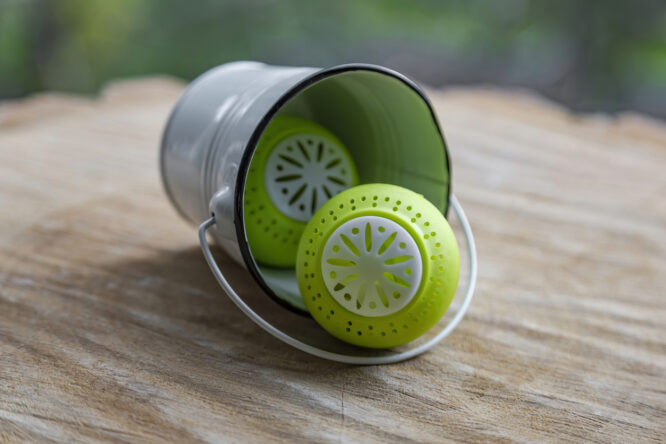
If odours are still hanging around between collections despite regular cleaning and good habits, a dedicated bin freshener product might help finish the job. These are designed specifically to absorb excess moisture and neutralise smells inside the bin, with many also scented to help mask unpleasant odours during the warmer summer months when smells tend to be at their worst.
They’re best thought of as a cheap, simple addition to your usual cleaning routine rather than a replacement for it, working