Everyone has the right to believe in whatever higher power they choose, and no one should be attacked for their faith.

That being said, atheists and scholars are quick to point out the more dubious elements of belief. Religion has shaped how people explained the world for centuries, but as science advanced, many old theories started to crumble. Things once seen as divine or mystical now have clear explanations that leave those older ideas shaky. These are some of the things that could never hold up under scrutiny.
1. The Earth being the centre of the universe
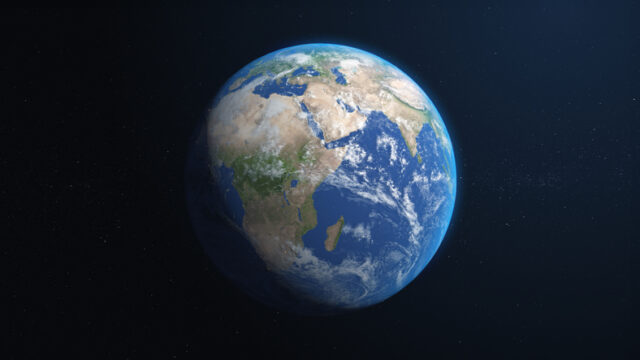
It feels intuitive: the world we live in looks stable, fixed, “at the centre” of experience. For centuries, that was exactly how people saw it. The sun rose and set; stars moved overhead; everything seemed to revolve around us.
But the Copernican revolution flipped that. Telescopes and mathematics showed that Earth orbits the Sun (heliocentrism). Eventually, with Newtonian physics, it became clear that there’s no privileged “centre” in space, just orbits, gravity, and motion. The old geocentric view, once sacred, collapsed under observation and calculation.
2. Creation in seven literal days

Numerous religious traditions teach that the world was made in a week (or some variation thereof). But geology, cosmology, and biology tell a different story. Our planet is around 4.5 billion years old. Life evolved gradually over eons.
That doesn’t mean faith can’t coexist with evolution and deep time. Many modern believers accept that scriptural “days” can be metaphorical or symbolic. Still, the literal seven-day narrative fails to match the evidence: fossil layers, radiometric dating, genetic change.
3. The Great Flood covering the whole world

Flood stories appear in many traditions. But the idea that the whole planet was submerged at once, destroying all life except a few survivors, is geologically implausible. Sediment layers, fossil sequencing, and the sheer scale of required water movement don’t line up with a literal “all-earth” flood.
Local floods, river overflows, and tsunamis are real occurrences that could inspire grand mythical retellings. In many cases, stories of destruction and renewal might be symbolic ways to reckon with catastrophe and change.
4. Diseases as punishment from gods

Back when medicine was little more than guesswork, it seemed logical (in its context) to think disease was a punishment from the gods. But microbiology, germ theory and modern medicine replaced that with a better model: pathogens, immunology, public health.
If you believe prayer or ritual cures illness, that’s a faith claim. In practice, medical treatments based on evidence save lives far more reliably than ritual. Science doesn’t deny spiritual coping, but it gives us tools that work in the material realm.
5. The Earth being only a few thousand years old
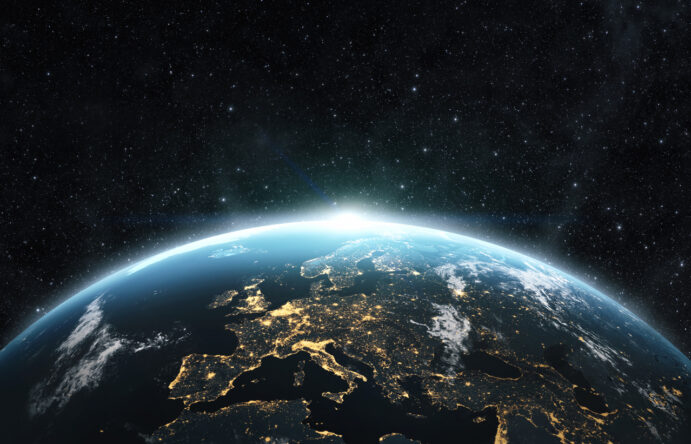
Some religious timelines place Earth’s age in the thousands, not billions. However, the geological record—rocks, fossils, radiocarbon dating, ice cores—overwhelmingly shows a deep-time Earth. The sheer weight of that evidence forced a rethinking of literalist chronology in many religious circles.
6. Stars and planets as divine beings

Across many cultures, celestial bodies were worshipped: the Sun, Moon, planets, and stars were seen as gods, messengers, or deities. However, astronomy and astrophysics show they’re physical bodies (gas, rock, plasma) governed by physical laws.
That doesn’t strip them of beauty or mystery. We can still stand in awe, but seeing them as something from a higher power (or as a higher power themselves) is no longer needed to explain them.
7. Miracles defying natural laws

It’s common to think a miracle is something supernatural stepping in, overriding physical law. However, many events once thought miraculous have natural explanations: solar eclipses, comets, tsunamis, rare recoveries from disease, or just coincidences.
That said, “miracle” can also mean meaningful coincidences, or events people interpret spiritually. The philosophical question is: are there gaps where we can’t eventually explain, or should we always assume an unknown cause, not a divine one?
8. Mental illness as possession

Historically, odd behaviour, psychosis, depression, epilepsy and other conditions were often seen as evidence of demonic possession. That led to exorcisms, shame, and ostracism.
Today, we understand mental health in terms of brain chemistry, trauma, social environment, psychology. Treatment supports people with therapy, medication, care. Science brings compassion where supernatural blame often brought fear.
9. Fixed heavens above the sky
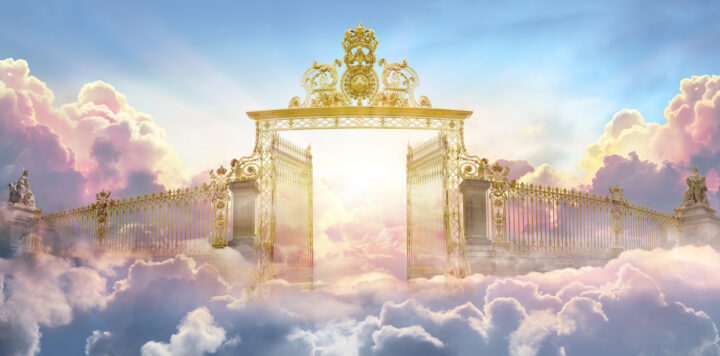
In many ancient cosmologies, the heavens were imagined as firmament, like a dome above Earth, with the divine realm beyond. Space exploration shattered that: there is no ceiling, no layer where gods live physically above us, no solid dome.
We now see the universe as vast, expanding, full of galaxies, with no obvious “roof.” The heavens are no longer a fixed realm, but part of the cosmos we can explore.
10. Human life as instantly created

Some beliefs taught humans appeared suddenly, fully formed. Evolutionary science shows humans developed slowly, shaped by adaptation and change, with shared ancestry linking us to other species.
This reshapes human identity. Instead of being dropped in place, we’re part of a much longer story of life, showing both our fragility and resilience across time.
11. The Sun as a god

Ancient civilisations worshipped the Sun as a divine being. Science later showed it’s a giant ball of nuclear fusion, fuelling life not through intention, but through physics and energy.
While the Sun remains vital, it’s no longer seen as a god’s presence. Science transformed it from deity to star, making clear it’s natural energy, not conscious will, that sustains Earth.
12. Natural disasters as divine anger

Earthquakes, storms, and volcanoes were once blamed on gods. Modern science explains them through tectonic plates, weather systems, and natural processes, removing the idea of punishment or supernatural control.
That doesn’t make disasters less frightening, but it changes perspective. Instead of seeking forgiveness, we look to preparedness and safety, with science saving lives where ritual never could.
13. Prayers influencing the weather

Communities once believed prayer could bring rain or stop storms. Meteorology proved weather runs on patterns of pressure, heat, and moisture, unaffected by human words or rituals, no matter how heartfelt.
While prayer still comforts, science showed it doesn’t move clouds. Real change comes from forecasting, planning, and adaptation, which deliver results where divine appeals never did.
14. The universe being fixed and unchanging
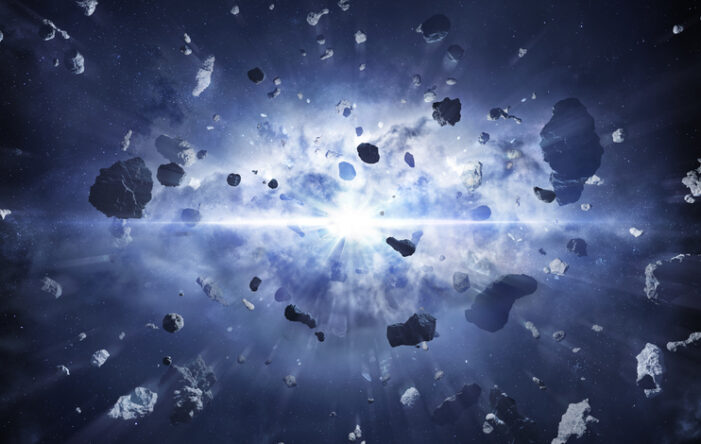
Old beliefs held that the universe was eternal, steady, and unchanging. Science, however, revealed an expanding cosmos, with galaxies moving apart and stars being born and dying constantly.
The collapsed the idea of a fixed creation. Instead, the universe is dynamic, always changing, leaving little space for claims of a permanent, unaltered design.