Spending decades together used to be the marker of a successful marriage, and it’s certainly impressive.

However, more and more couples are calling it quits after 25, 30, even 40 years—one in four divorces in the UK are people over the age of 50, for reference—and it’s not always because of scandal or betrayal. These breakups aren’t sudden. They’re usually the slow result of things that went unspoken or unresolved for too long. If you’ve ever wondered how a long marriage can unravel after a lifetime together, these are some of the most common reasons.
They grew into completely different people.

People don’t stay the same over the decades, and that’s normal. However, sometimes, two people evolve in completely separate directions until they’re basically strangers under one roof. What worked in their twenties doesn’t necessarily fit in their fifties or sixties.
Eventually, small differences in priorities, values, or lifestyles can create a major emotional divide. There’s no single explosive moment. You just wake up one day and realising you don’t even recognise the life you’ve built together anymore.
One person did all the emotional work for years.

In many long-term relationships, one partner becomes the emotional caretaker: managing the conflict, keeping the peace, and carrying the mental load. It can take years before that subtle sense of burnout turns into resentment or distance, but eventually, it does.
When someone finally realises they’ve been doing the heavy lifting for decades with little in return, it hits hard. Sometimes it’s only in later life, when the kids are grown and life slows down, that the imbalance becomes impossible to ignore.
They stayed “for the kids,” and now the kids are gone.

Some couples push through years of disconnect because they didn’t want to break up the family while the kids were still at home. However, once the nest empties, the structure holding the relationship together disappears. Without the routines, distractions, and shared parenting roles, the cracks become clearer. Many people reach this point and realise they no longer have anything meaningful tying them together, beyond shared history.
Retirement changed the dynamic.

Retirement can bring couples face to face in a way they haven’t experienced in decades. Without work as a buffer, the daily rhythms of life change, and sometimes highlight just how little the couple actually enjoys each other’s company anymore. Spending more time together doesn’t always mean growing closer. For some, it magnifies long-standing frustrations or makes it harder to avoid the tension they’ve been sidestepping for years.
They never learned how to talk about the hard stuff.

Good communication isn’t something that just happens with time. It has to be built. Some couples make it decades without ever truly addressing resentment, unmet needs, or emotional distance. They just keep sweeping things under the rug. Eventually, that pile gets too big to ignore. If there’s no shared language for conflict, disappointment, or change, then there’s no real foundation to rebuild on when the relationship starts to crack.
Physical intimacy slowly but surely disappeared.

Sex and affection can naturally ebb and flow in a long relationship, but when physical connection disappears entirely and no one talks about it, it becomes another source of emotional disconnection. Many couples lose that part of their relationship without ever addressing why. It becomes taboo even between them. Eventually, the lack of closeness turns into emotional distance, which slowly destroys the feeling of being wanted or seen.
One person started to want more from life.

In later life, some people feel a strong pull toward new experiences, personal growth, or emotional fulfilment. If their partner isn’t interested, or even holds them back, it can create tension that eventually leads to a split. It’s not a midlife crisis cliché. People simply start realising that time is limited and wondering, “Is this it for me?” When that question keeps coming up and the answer feels disappointing, some choose to walk away rather than keep settling.
Financial stress finally caught up with them.
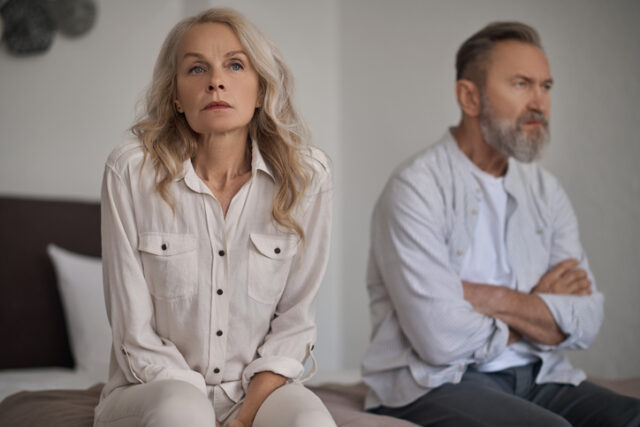
Money problems are one of the top causes of relationship breakdowns, and they don’t magically disappear with age. In fact, retirement, debt, or differing spending habits can bring old financial disagreements to the surface. What people could once sweep under the rug during busy years often becomes a source of major stress later. Financial incompatibility creates long-term tension that wears down the relationship, even if everything else looks stable on the outside.
They were never truly compatible to begin with.

Some couples got married young, during a time when expectations were different, or when they didn’t fully know themselves. Years later, they realise they built a life with someone who never really understood or supported who they are. Compatibility isn’t just about getting along. It’s about sharing values, emotional rhythms, and ways of being in the world. When those don’t line up, even decades of habit can’t fill the emotional gap.
They tolerated things they shouldn’t have.

Some people look back after years of minimising disrespect, control, or neglect and finally admit, “I shouldn’t have put up with that.” It can take a long time, especially when the behaviour was subtle or consistently downplayed. Late divorces often stem from long-term patterns that weren’t openly abusive, but still deeply damaging. It’s not weakness that keeps people in it for years; it’s conditioning, fear, or simply not knowing they had other options. Then, one day, they do.
One of them stopped trying a long time ago.

Sometimes it’s not both people who grow apart. Instead, it’s one person slowly checking out emotionally while the other keeps holding things together. As time goes on, the imbalance becomes too heavy to carry alone. It could be subtle: no more date nights, little interest in conversation, or a refusal to engage in anything meaningful. Eventually, the partner who’s been showing up realises they’re alone in the relationship, and decides not to keep pretending.
Therapy or reflection changed one person’s perspective.

Increased self-awareness can change everything. Therapy, personal growth, or even a major life event can open someone’s eyes to the emotional patterns they’ve been stuck in, and help them realise they don’t want to keep repeating them. That sort of inner change can create space for honest reflection, and sometimes that leads to hard decisions. It’s not always about walking away from the partner, but from the version of the relationship that no longer feels right.
They finally stopped being afraid to start over.

Leaving a long-term marriage is scary. The idea of starting over later in life comes with real risks—financial, emotional, social. However, sometimes the fear of staying stuck becomes heavier than the fear of change. More people are realising that it’s never too late to choose peace, freedom, or emotional safety. Divorce after 30 years isn’t always a tragedy. Sometimes, it’s a powerful act of self-respect, and a new beginning that finally feels honest.