There’s a reason so many of us find ourselves drawn to the garden as the years roll by, and it goes far beyond just keeping the flowerbeds looking tidy.
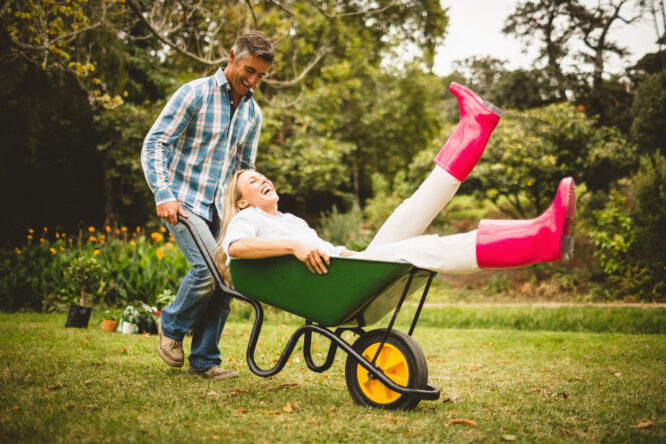
Pottering about in the garden is one of the best ways to keep your mind and body in top gear as you get older. Far from being a gentle pastime, a bit of regular digging, weeding, and planting packs a serious punch when it comes to healthy ageing—offering a low-impact workout that protects your joints, lifts your mood, and keeps your brain sharp.
Whether you’ve got a sprawling allotment or a few pots on the patio, getting your hands dirty might just be the most enjoyable, down-to-earth medicine around for staying fit, independent, and full of life.
Your brain actually gets a workout when you garden.
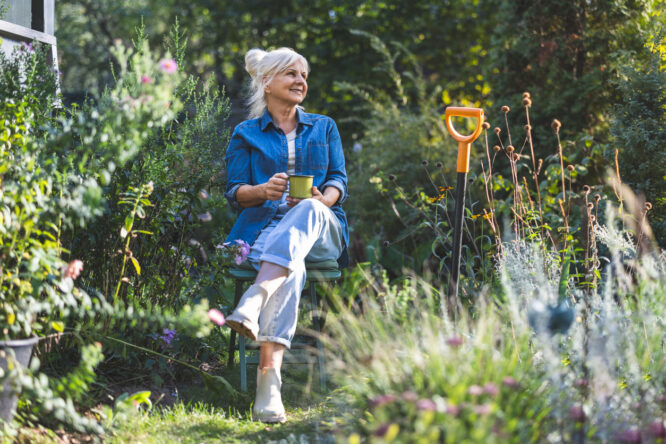
Gardening involves more thinking than it looks like from the outside. You’re planning, problem-solving, remembering what you planted where, noticing what’s not working and adjusting your approach. All of that keeps different parts of the brain active in ways that straightforward exercise doesn’t quite replicate. The more you use those mental muscles, the better they tend to hold up as the years go on.
Studies comparing people who garden regularly with those who don’t have consistently found meaningful differences in cognitive function over time. One long-running piece of research tracked people from childhood into their late seventies and found that those who gardened showed greater improvement in mental ability across their lifetime than those who didn’t. That’s a striking result for something most people think of as a hobby rather than a health tool.
It cuts the risk of dementia more than you’d expect.
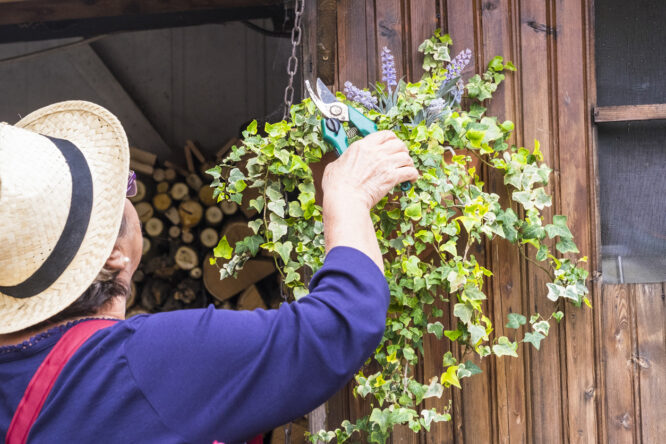
This is the one that tends to stop people in their tracks. Research following adults through their 60s found that those who gardened daily had a 36% lower risk of developing dementia compared to those who didn’t. That’s a large gap, and it held up even after accounting for other lifestyle factors. Gardening on its own wasn’t the whole picture, but it was a strong and consistent predictor of better outcomes.
Part of what’s happening is that the brain produces certain proteins during and after gardening that help neurons grow and survive. These proteins are associated with better memory and stronger cognitive function generally. The body responds to the combination of physical activity, sensory input, and mental engagement in ways it simply doesn’t when you’re sitting still, even if you’re doing something mentally active like reading.
Being outside is doing something too, even when you’re not moving much.
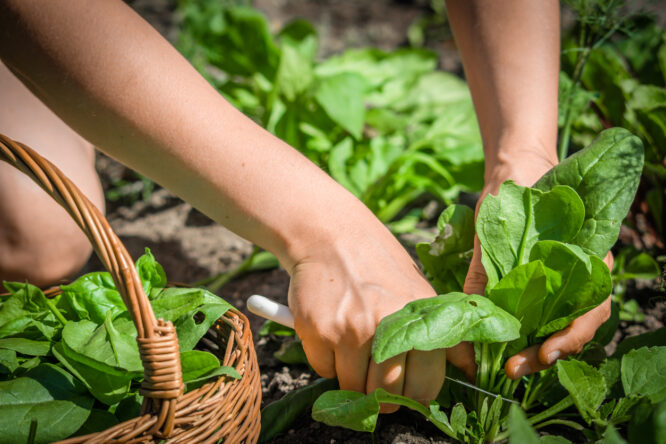
There’s a theory that humans are wired to feel calmer and more focused in natural settings because our ancestors literally survived better there. Whether or not you find that convincing, the practical effect is real. Time spent outside among plants tends to lower stress hormones, improve mood, and restore the kind of focused attention that gets depleted by screens, noise, and busy urban environments.
Even just looking at greenery through a window has been shown in studies to reduce pain perception and improve concentration. When you’re actually out in it, getting your hands dirty and paying attention to living things, the effect is stronger still. Gardening gives you that contact with nature while also keeping you physically and mentally occupied, which is a fairly rare combination.
The physical side is really good for you too.
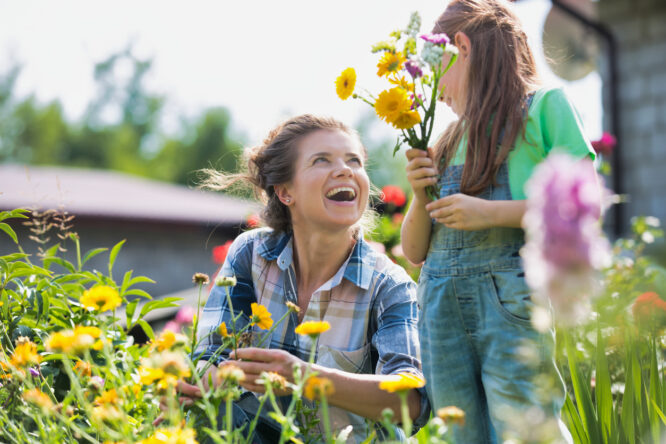
It doesn’t feel like a workout, which is partly why people stick at it when they’ve given up on the gym. But gardening builds grip strength, improves muscle mass, increases aerobic endurance, and keeps joints mobile in ways that matter a lot for staying independent as you get older. Research has found that people who garden for more than an hour a week have a much lower risk of heart attack compared to those who don’t, which is a pretty compelling reason to pick up a trowel.
Bone density is another one. Gardening turns out to be a reliable predictor of stronger bones, which makes sense when you think about the weight-bearing movements involved in digging, carrying, and crouching. Falls become more dangerous as people age, and anything that keeps balance, strength, and coordination in better shape is truly valuable. Gardening does all three without feeling like exercise at all.
For people already living with dementia, it can make a real difference.
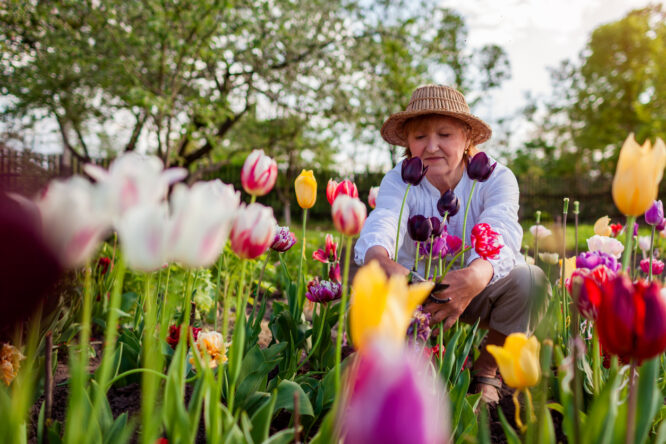
The benefits don’t stop being relevant once someone has a diagnosis. Research into care settings has found that gardening improves mood, behaviour, communication, and daily functioning in people with dementia, often more effectively than other activities on offer. There’s something about the rhythm of the work, and the fact that results are visible, that keeps people engaged even when memory is deeply affected.
In countries like Norway, care farms have been developed specifically around this idea. People with dementia spend time working the land, tending animals, and growing food as part of their care. Those running these spaces describe watching people reconnect with a sense of purpose and capability they’d thought they’d lost. Even when someone can’t recall what they did during the day, they often come home noticeably happier, which says something about what the experience gives them beyond facts and memories.
The social element is a bigger deal than it might seem.
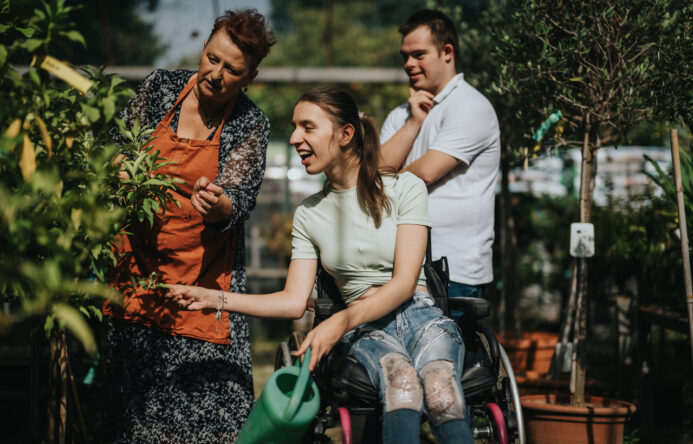
Gardening alongside other people adds another layer to the benefits. Isolation is one of the strongest risk factors for cognitive decline, and community gardening, allotments, or care farm settings bring people together around a shared task in a low-pressure way. You’re not there to perform or compete, you’re just there to grow things, and that shared focus tends to make conversation feel easy rather than forced.
For older adults who’ve retired or lost a spouse, having somewhere to be with other people on a regular basis can matter enormously. The gardening itself is part of it, but so is the routine, the sense of belonging, and the small interactions that happen naturally when you’re working alongside someone. Those things don’t show up in brain scans, but they contribute to wellbeing in ways that are hard to overstate.
You don’t need a big garden to get started.
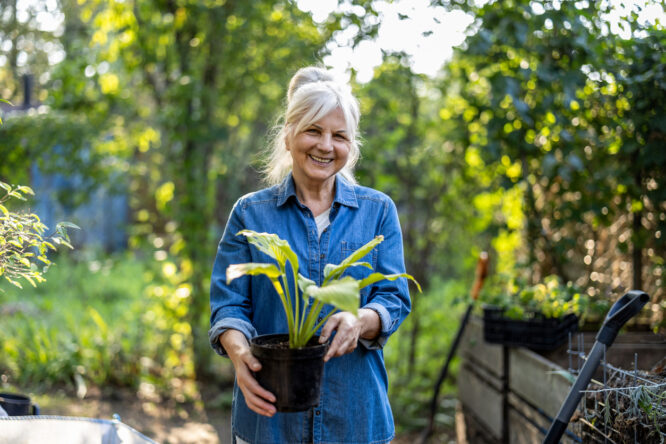
A windowsill of herbs, a few pots on a balcony, or a small patch of outdoor space is enough to begin getting some of these benefits. The research doesn’t suggest you need to be a serious gardener with a vast plot to see results. What seems to matter is the regularity and the engagement, being consistently involved with something growing rather than doing it once and leaving it.
Allotments are worth looking into if outdoor space is limited, as waiting lists have got shorter in some areas and the cost tends to be low. Community garden projects are another option, particularly if the social element appeals. For those who are less mobile, container gardening or raised beds can make it physically accessible without requiring you to get down on the ground. The barrier to starting is lower than most people assume.
Starting later in life still counts.
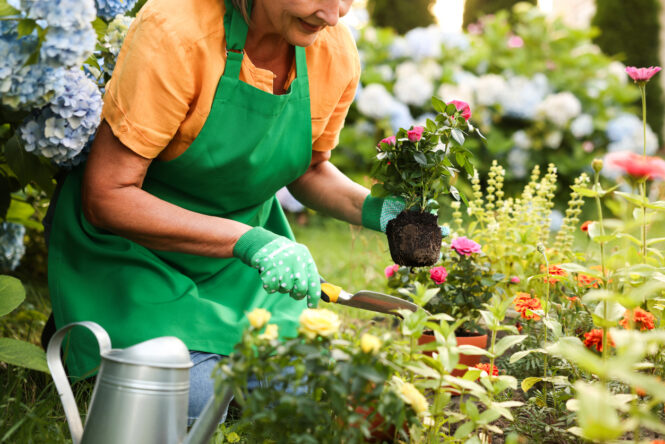
There’s a tendency to assume that if you haven’t been doing something since you were young, the window has closed. With gardening and brain health, that doesn’t appear to be the case. Studies suggest that taking up cognitively stimulating activities in later life still produces meaningful benefits, even if you’re starting from scratch in your sixties or seventies.
The brain retains more adaptability than we used to think, and giving it new things to learn and manage, even something as gentle as figuring out when to water and what needs more sun, keeps that adaptability working in your favour. Starting a garden in retirement isn’t a consolation prize for not having done it earlier. For a lot of people, it turns out to be exactly the right time.