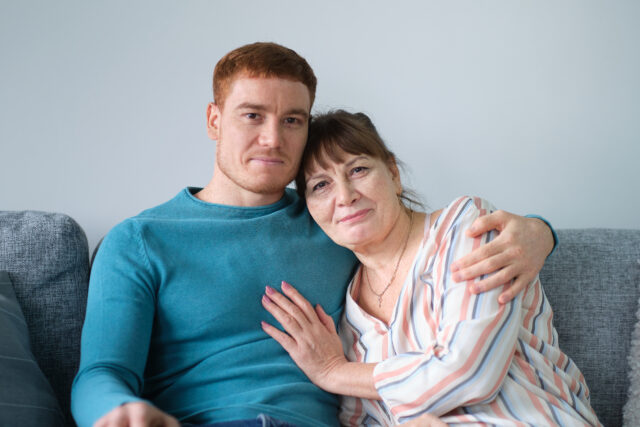
You can usually tell when a couple isn’t as happy as they want people to believe.

It’s not because they have huge blow-ups or make major scenes in front of everyone. Instead, it tends to come down to the small, unspoken gestures that slip through when they forget anyone’s watching. These are the little tells that expose what’s really going on between them. Spoiler alert: it’s nothing good!
Their jokes have a sting in their tail.

Playful teasing can be affectionate, but when the jokes start to sound sharp or uncomfortable, it’s a sign something deeper is wrong. The laughter feels forced, and the comments land harder than they should. It’s often a sign of frustration that’s been bottled up. Instead of talking honestly, one or both partners release it through humour that hurts more than it entertains. People laugh along, but the tone always feels slightly off.
They correct each other in front of other people.

One person jumps in to fix the other’s story or memory, insisting on the “right” version. It sounds harmless, but it’s often about control or irritation rather than accuracy. When it keeps happening, it shows a lack of respect. Instead of letting their partner speak freely, they step in to assert authority. It turns every shared moment into a subtle power contest that other people can sense instantly.
They rarely make eye contact with each other.

Couples who are comfortable together naturally look at each other when they talk. When there’s distance, that connection disappears. They glance elsewhere, stare at their drinks, or direct their comments to the group instead. It’s not always anger that causes it. Sometimes it’s emotional fatigue. When tension lingers for too long, eye contact feels too intimate, so they avoid it to protect themselves from the discomfort of being seen.
Their affection feels like a performance.

You can tell when affection is genuine because it looks easy. Forced affection has a stiffness to it. It happens at convenient moments, usually when someone else is watching, and disappears the moment attention moves elsewhere. They might hold hands for the sake of appearances or kiss quickly at social events to prove they’re fine. Those gestures aren’t about connection. They’re about managing perception.
They talk to each other like flatmates.

Happy couples mix practical talk with warmth and small affection. Unhappy ones sound like colleagues. Their tone turns polite and functional, focused only on logistics or responsibilities. The change in rhythm tells a story. The relationship starts to run on routine instead of emotion. It’s civil on the surface but feels more like partnership out of obligation than real closeness.
One person dominates every conversation.

Sometimes one partner takes control of every conversation, speaking for both, making jokes, or correcting details. The quieter partner often sits back, smiling but saying little, and that imbalance shows where the power sits. It’s not charm, it’s control. When one voice constantly overshadows the other, it suggests the quieter person has learned it’s easier to stay silent than risk another interruption.
They avoid physical closeness.

Touch is one of the simplest signs of comfort. Unhappy couples often sit apart, stand with a small gap between them, or cross their arms when the other gets too close. It’s not always obvious, but the distance becomes easy to spot. The absence of touch is more telling than any argument. It shows how emotionally detached they’ve become, even if they still act polite. The space between them says what words no longer can.
Their compliments sound awkward.

When a relationship loses warmth, even kind words can sound strained. You might hear one partner praise the other in a way that feels rehearsed or slightly condescending, like they’re reading from a script rather than speaking with feeling. Genuine appreciation flows easily. Forced compliments show an effort to seem fine when they’re not. It’s often an attempt to maintain the image of a happy couple rather than rebuild the connection behind it.
They rely on their phones as buffers.

When silence grows uncomfortable, people reach for distraction. Unhappy couples often fill every quiet moment with scrolling or messaging, avoiding the stillness that might expose how far apart they’ve drifted. Phones offer an escape from awkwardness. Instead of sharing thoughts or small talk, they retreat into screens. It looks harmless, but it’s one of the clearest signs that conversation between them no longer feels natural.
They correct each other’s choices.

From ordering food to choosing a topic, one partner steps in with subtle disapproval. “You don’t really want that,” or “We’ll do this instead.” It’s disguised as care, but it comes across as control. That habit wears people down. When someone constantly undermines your decisions, it eats away at dignity and patience. Over time, those small moments become proof that respect has started to fade.
They mock each other’s habits.

A light tease can be affectionate, but when it becomes constant, it turns into resentment disguised as humour. You hear one partner mock the other’s quirks in a tone that feels slightly mean rather than playful. Mockery isn’t harmless when it’s repetitive. It’s a sign of frustration that hasn’t been addressed. It lets irritation leak out while avoiding an honest conversation about what’s really wrong.
They seem disconnected from each other’s emotions.

You’ll notice one partner expressing frustration or sadness, and the other looks indifferent. There’s no comfort, no soft response, just a blank expression that suggests they’ve tuned out. The emotional distance is one of the biggest giveaways. When empathy disappears, the relationship turns transactional. It’s not that they don’t care anymore. It’s that caring has become too tiring.
They compete for attention.
 Source: Unsplash
 In social settings, unhappy couples sometimes treat interactions like subtle contests. They interrupt each other, tell stories over one another, or pull the focus back to themselves whenever the other starts to shine. It’s not confidence, it’s insecurity. They’ve started seeing each other as rivals rather than teammates. That competitive energy reveals that admiration has been replaced by resentment.
They act overly polite with each other.
 Source: Unsplash
 When warmth disappears, couples often replace it with formality. They start saying “please” and “thank you” for everything, not out of genuine care but to keep the peace. It’s civility masking tension. That politeness feels hollow because it’s not kindness, it’s distance. They’re trying to stay controlled rather than connected, and anyone watching can sense the strain beneath the surface.
They seem relieved when they’re apart.
 Source: Unsplash
 At group events, you’ll often notice one partner light up when they drift into separate conversations. Their energy lifts as soon as they’re not together, like they can finally breathe again. That change is subtle but unmistakable. It suggests that being apart feels easier than being together, and that’s rarely a good sign for the state of a relationship.
They always seem tired around each other.

The emotional weight of an unhappy relationship eventually shows. Their faces look tense, their laughter feels rehearsed, and their energy dips whenever they’re side by side. It’s the exhaustion of constantly managing tension rather than relaxing into comfort. Even when they try to hide it, their body language tells the story of two people who’ve stopped feeling at ease together.