There are few places more silently choreographed than a weekday commute through London.
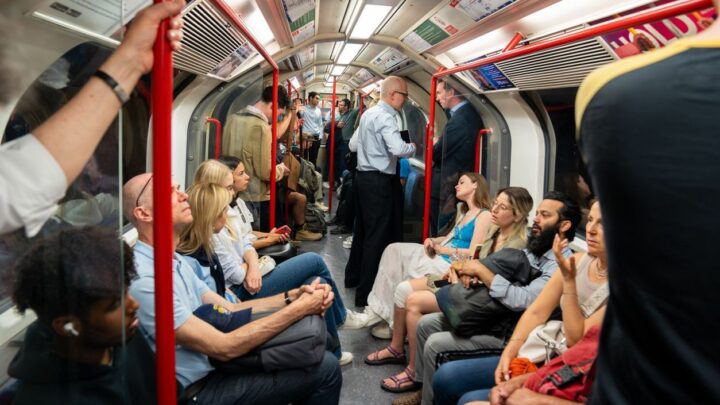
It’s a city full of unspoken systems—behavioural codes that every regular commuter seems to know instinctively but never actually talks about. While locals might not flinch at a 5-minute signal failure or the 7:42 being rammed again, tourists tend to stick out like sore thumbs simply because they don’t know the rules. Here are some things that keep the London commute moving, and the unwritten etiquette that first-timers always seem to miss.
Stand on the right, walk on the left.
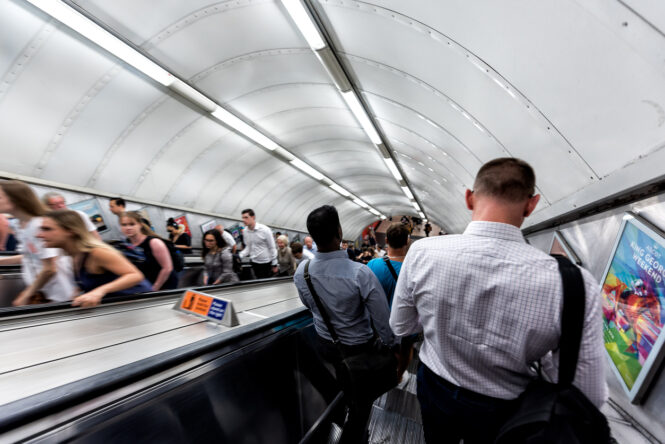
This isn’t polite advice or a friendly tip; it’s the absolute golden rule of the underground. If you’re happy to stand still, glue yourself to the right-hand rail so everyone else can power up the left like their train is pulling away right now. Planting yourself or your massive suitcase on the left side blocks the entire flow in three seconds flat. You’ll immediately hear the sharp intake of breath, an aggressive throat-clear, and someone in a damp mac leaning uncomfortably into your personal space until you shift over.
Keep your voice down on the tube.

Rush hour is definitely not the place to have a loud conversation with your mate, play audio through your phone speakers, or catch up on five-minute voice notes. Most people on that train are either exhausted, running on four hours of sleep, or mentally dreading their 9am meeting, so loud chatter feels like a total intrusion. The Tube operates on an unspoken pact of collective silence. If you need to say something, keep it to a whisper; anyone grinning and talking loudly on the Central line at 8:15 a.m. is instantly marked out as a tourist.
Have your card ready before the barrier.
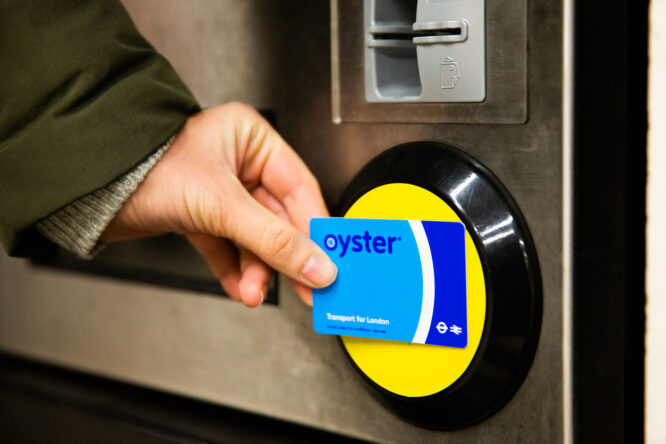
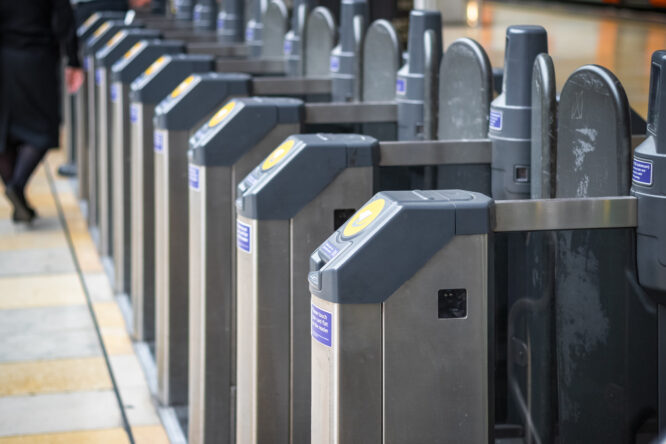
There’s no quicker way to ruin everyone’s morning than strolling up to the barrier and then starting a five-minute rummage through your rucksack for your debit card. Tapping in needs to be one seamless, fluid move without breaking your stride. Regulars have their phone or Oyster card gripped in their hand 20 yards before they reach the gate. Hesitate, tap the wrong card, or get caught behind a red light, and you’ll immediately feel the collective groan of thirty people stuck behind you.
Don’t stop dead at the top of an escalator.
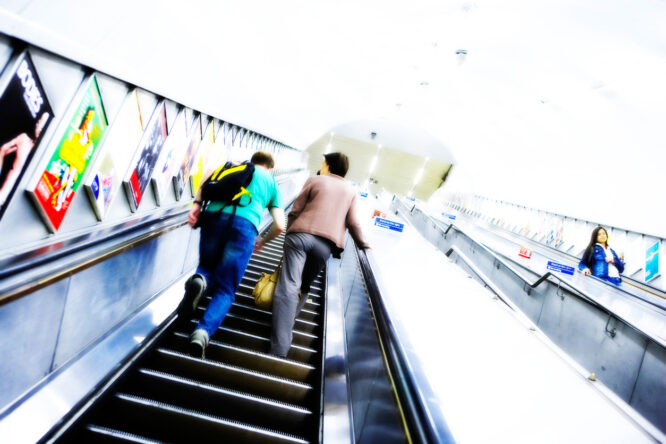
Stepping off the metal teeth at the top of an escalator and stopping dead to check citymapper is a recipe for an immediate pile-up. The machinery keeps spitting out dozens of people behind you every couple of seconds, and they have nowhere else to go. If you need to get your bearings, check your phone, or look for signs, walk at least 15 paces away and pull over against a tiled wall. Stopping in the exit funnel will just get you barged by someone moving twice your speed.
Don’t hold the doors open.
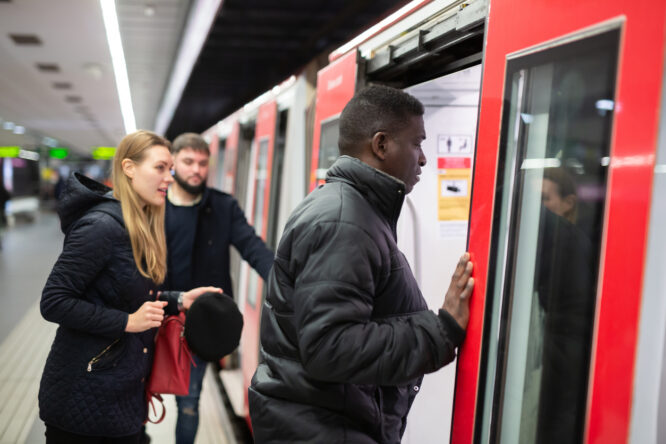
Trying to pry open closing Tube doors or shoving your shoulder through at the last second isn’t heroic; it just delays the entire line for thousands of other passengers. Unlike main-line trains, Tube doors don’t bounce back open gently when they hit you; they slam shut and hold you there until the driver manually resets them. If you miss the train, just let it go. It’s London, not the middle of nowhere; the next one will be rolling onto the platform in two minutes flat.
Know where you’re going before you get to the ticket hall.
Spinning in circles under the big departure board while looking panicked is the classic giveaway. Regular commuters walk with total intent even when they’re not 100% sure where their meeting is, because standing dead in the middle of a concourse ruins the flow for everyone else. If you need to work out whether you want the northbound or southbound platform, pull out of the main walking current and tuck yourself near a pillar to sort it out.
Match the flow rather than pushing through it.
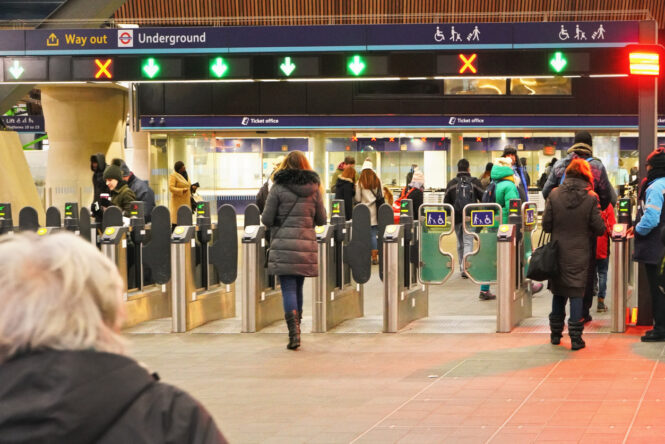
When stations get rammed, it’s easy to panic and start barging past people like you’re trying to win a rugby match. Commuters walk fast, but they do it by reading the gaps and moving into empty space, not by shoving their elbows into people’s ribs. Aggressive barging just creates bottlenecks and ruins the rhythm of the platform. Unless you’re sprinting to catch the last train home, take a breath, read the crowd, and keep to the natural pace of the corridor.
Take your backpack off during peak hours.
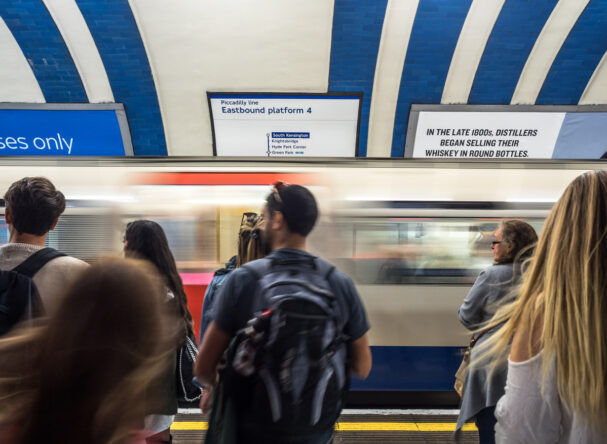
People on a busy commuter train become masters of spatial awareness, working out how to pack themselves in while leaving just enough room to breathe. The moment someone leaves a bulky rucksack strapped to their shoulders, they end up smacking three people in the face every time they turn around. Take it off before you step across the threshold, hold it by your ankles or tuck it between your feet on the floor. It frees up space and keeps you from annoying the entire carriage.
Let people off the train before getting on.
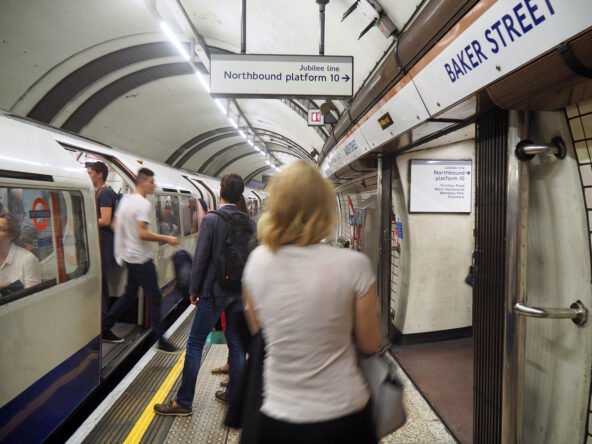
This is basic physics: a train carriage can’t take new passengers until the people inside have actually walked out. Planting yourself right in the middle of the open doorway as soon as the train stops blocks the entire exit and slows down the whole platform. Stand well to the side of the yellow lines, wait the five seconds it takes for the crowd to clear, and then walk on. The train isn’t going to leave without you while people are actively boarding.
Keep eye contact to a minimum if you can help it.
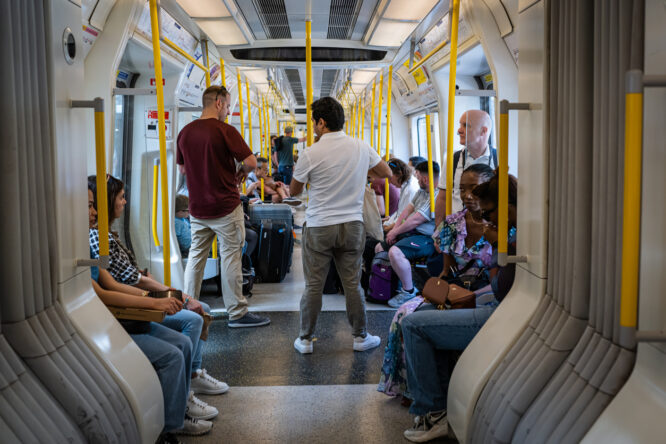
Locking eyes with a stranger on the Tube for more than a split second is an immediate breach of protocol. The standard survival tactic is staring blankly at the ads above the windows, looking down at your book, or keeping your eyes firmly on your screen. Staring directly at someone across the aisle just makes everyone involved deeply uncomfortable. Commuters are experts at pretending they’re entirely alone in a room packed with 800 other human beings.
Keep headphones in, and the volume down.

If you’re passing the journey with music, podcasts, or videos, keep the sound entirely inside your own ears. Cheap earbuds that leak tinny, buzzing audio across the carriage are just as annoying as putting your phone on loudspeaker. If the person sitting two seats down can clearly make out the drumbeat or hear the voice on your podcast, it’s too loud. Commutes are noisy enough without adding your personal soundtrack to the mix.
Never, ever block the walking lane at a station.

The tiled tunnels connecting lines are narrow, damp, and move at serious speed during peak hours. If you’re walking two or three abreast with your travel companions, or dawdling along looking at the posters on the wall, you’re blocking off the entire fast lane. Stick to the left-hand wall, walk in single file if you’re with a group, and leave plenty of room on the other side for people charging between platforms to make their connections.