Sometimes it feels as if Gen Z is speaking an entirely different language than the rest of us, and in many ways, it’s true.

A UK study from Preply (via the Daily Mail) has surveyed over 1,500 people to find out which words Gen Z finds most painful to hear, and the results are a surprisingly honest window into how fast language moves and how quickly any of us can become the uncool one in the room without even noticing. It’s a bit of a cliché to talk about the generation gap, but these findings show it’s more like a canyon when it comes to the specific phrases we use every day, where something that felt cutting edge five years ago is now enough to make a 20-year-old wince.
The reality is that language is being redrawn every few months on social media, so even if you think you’re staying current, you’re probably hitting a few linguistic tripwires that mark you out as someone who’s a bit behind the times. It’s a humbling experience to realise your go-to vocabulary has aged about as well as a pint of milk in the sun, but knowing which words are the biggest offenders is the first step toward not being the main character in a cringe compilation.
Why slang has an expiry date
Language has always transformed between generations. Every era produces its own vocabulary, and every generation eventually finds itself holding onto words that have quietly become embarrassing. What’s different now is the speed at which it happens. Social media, and TikTok in particular, has compressed the cringe cycle to a point where a phrase can go from niche internet joke to mainstream punchline within a matter of weeks.
A word starts in a small online community, spreads to a wider audience, gets picked up by brands trying to seem relatable, and is effectively dead before most people have even heard it properly. The moment something reaches mass adoption, especially among older generations, it tends to lose whatever made it feel current in the first place. Language researcher Yolanda Del Peso from Preply explains it simply: once a phrase goes mainstream, it almost always becomes cringeworthy. That’s not new, but the timeline certainly is.
The word topping the cringe list

The study asked over 1,500 people across the UK which words they found most difficult to hear, and the clear winner was “skibidi.” If you’re not familiar, it comes from a viral YouTube series where a character’s head emerges from a toilet, and it spread from there into general internet use without ever quite settling on a fixed meaning.
The Cambridge Dictionary defines it as both “cool” and “bad,” which tells you everything you need to know about how slippery this kind of slang gets. Nearly 40% of respondents flagged it as the most unbearable word on the list, which is quite the achievement for something that barely existed as a concept a couple of years ago. It’s already past its peak, which is precisely why so many people are annoyed by it.
The millennial words that made the list
What’s genuinely interesting about the rest of the results is how many of the words that Gen Z finds most grating weren’t invented by Gen Z at all. “YOLO,” “bae,” “wifey,” “holibobs,” “fri-yay,” and “bussin'” all featured, and the majority of them belong to the millennial generation that came just before.
There’s a particular flavour of cringe reserved specifically for the habits of people slightly older than you, and this list is a near-perfect illustration of that. Millennials spent years using these phrases, and Gen Z grew up watching it happen with what appears to have been quiet horror. The handover between generations is rarely clean or flattering.
How words go from cool to cringe
The pattern tends to follow the same path every time. A word or phrase emerges from a specific community, usually somewhere online, often with roots in Black culture or internet subcultures that have historically produced a disproportionate amount of modern slang. It feels fresh and specific because it belongs to a particular group with a shared reference point. Then it spreads. More people start using it. Influencers pick it up, then mainstream media, then brands, then parents.
Each stage of adoption takes it further from its origins and closer to the point where the original community wants nothing to do with it. By the time a word appears in an advert or gets used by a politician trying to connect with young voters, it’s essentially finished. The British public’s response to “holibobs” is a fairly good example of this. It was always a bit much, but the moment it escaped a specific kind of chirpy millennial social media post and started appearing everywhere, it curdled into something genuinely uncomfortable.
A new insult worth knowing about

Separate from the study but doing the rounds at the same time is a term called “choppelganger,” which has been gaining traction online and is worth being aware of. It’s a combination of “doppelganger,” which most people know, and “chopped,” which in current Gen Z slang means unattractive, unfashionable, or generally badly put together. A choppelganger is therefore someone who looks like the uglier version of another person.
It’s the opposite of being told you look like a celebrity in a flattering way. If someone tells you that you’re so-and-so’s choppelganger, they’re not paying you a compliment under any reading of the word. It’s the kind of term that spreads fast because it fills a gap that existing language didn’t quite cover, and it has the added edge of being an insult that sounds innocent until you know what it means.
The generational gap in what words mean

Part of what makes this whole area so interesting is that the same word can mean completely different things depending on who’s saying it and to whom. “Sick” has meant good for long enough that most people have caught up with it, but plenty of words are still in that in-between stage where older speakers use them in one sense and younger speakers hear something completely different.
“Literally” is used so extensively as an intensifier now that it has effectively stopped meaning literally in most conversational contexts. “Random” meant something specific for a while and then got flattened into a general-purpose reaction word. “Wicked” went through this decades ago in British English and came out the other side with its new meaning largely intact. The words that cause the most confusion are usually the ones still mid-transition, where both meanings are technically in play and the wrong one can land oddly depending on who’s in the room.
What the list actually tells us
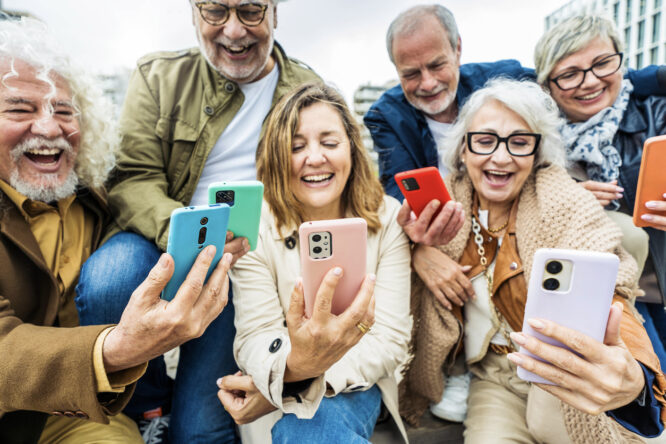
More than anything else, the study is a reminder that language is always moving and always leaving some people a step or two behind. That’s not a moral failing, it’s just how it works. The words that feel current and natural to you are almost always the ones that formed during a particular window of your life, and holding onto them past that window is something everyone does to some degree.
The interesting change is that younger generations now have a much more visible platform to express exactly how they feel about it, which is why studies like this one land with such specificity. Gen Z didn’t invent the concept of finding older people’s slang painful to listen to. They just have the tools to document it in real time and turn it into data.