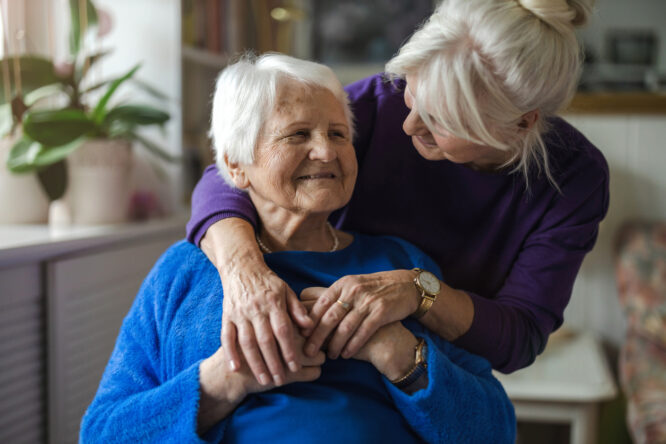
From providing emergency childcare to offering a reassuring ear when parenting feels completely overwhelming, grandmothers have always been a cornerstone of family life.
However, beyond the day-to-day helping hand, science suggests there’s a deeply rooted biological reason why a child’s maternal grandmother plays such a pivotal role in their development. Coined by researchers as the ‘Grandma Effect’, this unique bond goes far deeper than just evolutionary instinct; studies show that close involvement from a mother’s mum can actively improve a child’s well-being, boost their social skills, and even provide a vital emotional safety net for the entire household. Here’s why that maternal grandmother relationship feels so profoundly special to so many families across the UK.
Grandmothers occupy a very specific role that nobody else quite fills.
A grandmother isn’t a parent, and she isn’t a friend, she’s something in between that doesn’t really have a name. She’s lived through the hard bits, she’s raised her own children, and she’s come out the other side with a kind of calm that parents, who are still very much in the thick of it, often can’t access yet. That change in perspective matters more than it might seem.
Children pick up on tone and energy constantly, even when they’re too young to understand what they’re noticing. Spending time with someone who isn’t frazzled by the school run or worried about the mortgage gives them a different kind of emotional experience, one that’s steadier and less conditional on how the day is going.
The bond she builds with her grandchildren starts earlier than you’d think.

Research into family relationships consistently finds that the connection between a grandmother and her grandchild begins forming almost immediately and deepens over time in ways that influence how that child relates to other people. It’s not about grand gestures or memorable days out, it’s about showing up repeatedly and being reliably warm. Children learn what relationships feel like through the ones they’re in, and a grandmother tends to model something pretty good.
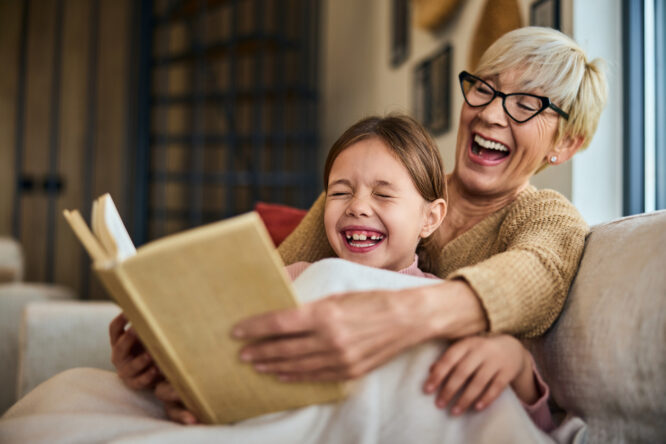
The relationship also tends to feel safe in a specific way. There’s less evaluation involved. A grandmother usually isn’t the one checking whether you’ve done your homework or eaten your vegetables, so children often relax around her in a way they don’t elsewhere. That relaxed, unhurried space turns out to be really valuable for emotional development.
She strengthens the relationship between mum and child just by being there.
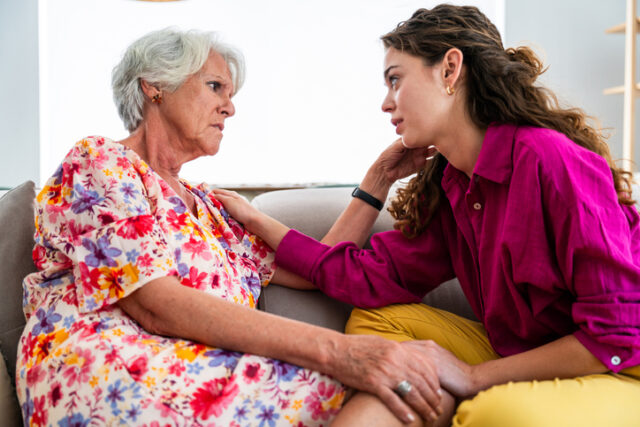
This one’s a bit less obvious, but it makes a lot of sense when you think about it. When a child watches their mum interact with her own mum, with warmth and respect and a shared history, they’re watching a model of how relationships between people who love each other actually work. That’s not a small thing. Children absorb those patterns and carry them forward into their own friendships and, eventually, their own families.
A grandmother also tends to support the parent rather than compete with them. She can offer reassurance to her daughter without undermining the choices being made, and that quiet backing can make a real difference to a new mum who’s finding her feet. The chain of care running between generations creates a sense of stability that children benefit from, even if they couldn’t articulate why.
Distance doesn’t break the bond if the connection was built well.
Plenty of grandmothers don’t live nearby, and plenty of grandchildren grow up seeing theirs only a few times a year. That’s a reality for a lot of families, and it doesn’t have to mean the relationship is any less meaningful. What builds a lasting bond isn’t constant physical presence, it’s attention and consistent effort over time. A grandmother who calls, who remembers, who asks real questions and actually listens to the answers, builds something that holds even across distance.
Modern technology has made this easier in ways that previous generations didn’t have access to. A video call on a Wednesday afternoon, a voice note, a photo sent just because she thought of them, all of it contributes. Children remember being thought of, and those small moments accumulate into something real.
What happens when there’s a falling out or family conflict.

When adults fall out and a grandchild loses access to their grandmother as a result, the child tends to bear the heaviest cost. They didn’t choose the rift, they don’t fully understand it, and they just notice that someone they loved has gone quiet. Family conflict that cuts off relationships affects children’s emotional development in ways that can be harder to trace, but are no less important for it.
Children growing up in households where conflict isn’t handled well tend to absorb those patterns and can end up repeating them in their own relationships later on. That’s not inevitable, and it’s not meant as a judgment on anyone navigating something really difficult, but it’s worth knowing. Where it’s possible to protect a child’s relationship with their grandmother regardless of what’s happening between the adults, that’s usually the better path.
Losing a grandmother early leaves a mark, but it doesn’t have to stay painful.

Some children never meet their grandmother, or lose her when they’re very young and don’t have clear memories to hold onto. That’s a real loss, and it tends to ripple through the family in ways that affect children even when the adults aren’t aware of it. How grief is handled in a household shapes how a child learns to process loss themselves, so if a grandmother has died, the way her memory is kept alive matters.
Families who talk about her, who share stories and keep her present in that way, tend to give children something to anchor to rather than a blank space. A grandmother a child never knew can still feel like someone, someone with a personality and a history and a place in the family’s story, if the adults around them choose to make her real. That can be truly comforting rather than sad.
The grandmother effect lasts well into adulthood.

This isn’t just about early childhood. Adults who had a close relationship with their grandmother often describe it as one of the most formative connections of their lives, even decades later. The sense of being unconditionally accepted by someone who had no agenda, who wasn’t trying to shape you into anything in particular, leaves a lasting impression. It’s a fairly rare experience, and people tend to carry it with them.
It’s also worth saying that the grandmother doesn’t have to be perfect for the relationship to be valuable. She just has to show up with warmth and stay consistent. The bar isn’t as high as it might sound because what children are really responding to is the feeling of being truly cared for by someone who has time for them.
Not every family looks the same, and that’s fine.

Some children have a grandmother who lives down the road and is involved in daily life, and some have one they see at Christmas and speak to on birthdays. Both of those relationships can be meaningful. What matters is the quality of the connection, not how often they’re in the same room.
For families where a maternal grandmother isn’t in the picture at all, whether through distance, estrangement, or death, other figures can step into some of that space. A paternal grandmother, a great-aunt, a family friend who’s been around since the beginning. The specific emotional function that a steady, caring older woman serves in a child’s life isn’t exclusively tied to biology. What matters is the warmth and the consistency, and those can come from more than one direction.
If you’re a grandmother yourself, you probably already know this.
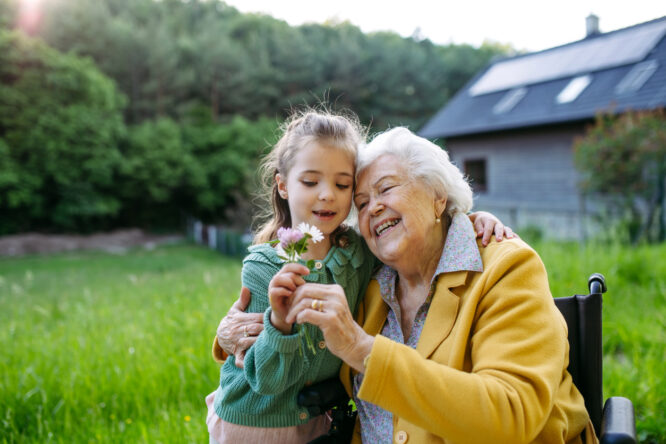
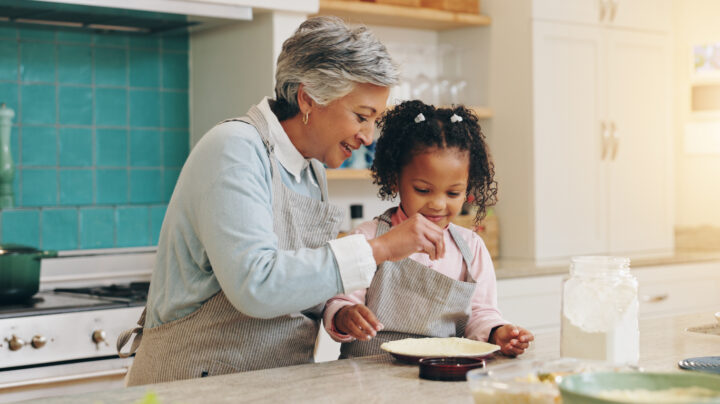
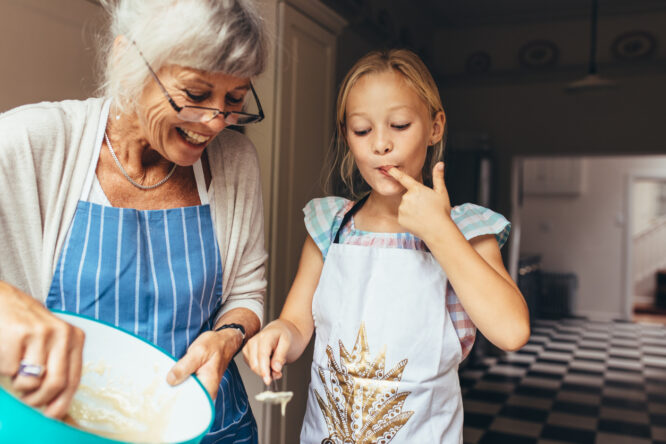
Most grandmothers don’t need to be told that they matter to their grandchildren, they feel it. Still, it can be worth being reminded that the seemingly ordinary things, the phone calls, the baking sessions, the stories about when their mum was small, aren’t small at all. They’re quietly building something in that child that will still be there long after you’re gone.
The legacy of a grandmother isn’t usually dramatic. It tends to live in the way her grandchildren treat people, in the patience they find when things get hard, in the warmth they bring to their own families one day. That’s not a bad thing to leave behind.