Leftover pizza is one of those small joys that can go either way.
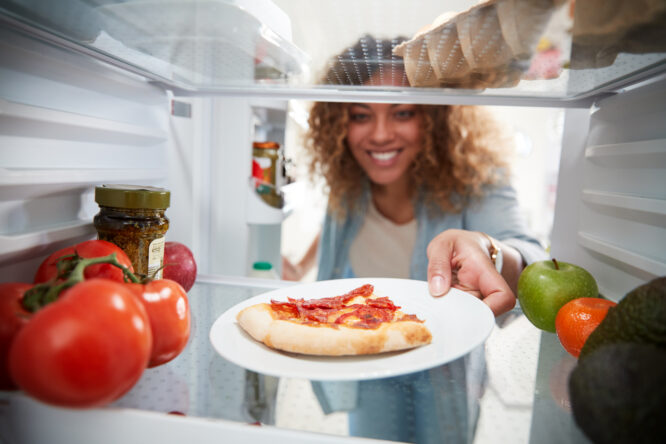
Get the reheat right and the next-day slice can be almost as good as the first, sometimes even better. Get it wrong, and you’re left chewing on a soggy, rubbery wedge that makes you wish you’d just eaten it cold. There’s no single perfect method, and the best choice depends on how much time you’ve got, how many slices you’re warming and what kit is sitting in your kitchen.
Here’s how the most common options stack up, from the quickest fix to the one that comes closest to a freshly baked pie.
The microwave is fast, but it’s rarely a winner.
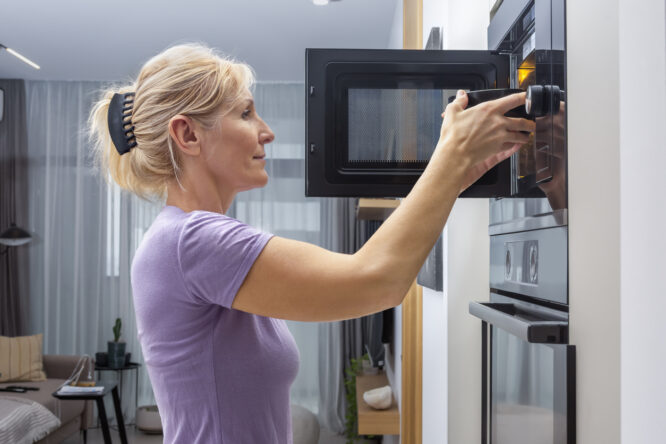
Most of us reach for the microwave first because it’s quick and easy. Pop a slice or two on a plate, cover loosely with kitchen roll and heat on full power for about a minute, adding a little more time if the middle still feels cool. The cheese softens nicely and melts evenly, which is about the best thing anyone can say for this approach.
The trouble is the base. Microwaves heat the moisture inside food, so the crust turns limp and floppy rather than crisp. One trick that helps a little is putting a mug of water in alongside the plate, which stops the dough drying into something tough. Even so, you’ll end up with a hot slice that bends in your hand, and the topping can be scorching straight out of the machine, so give it a moment before you bite.
Starting in a cold oven saves effort, not texture.
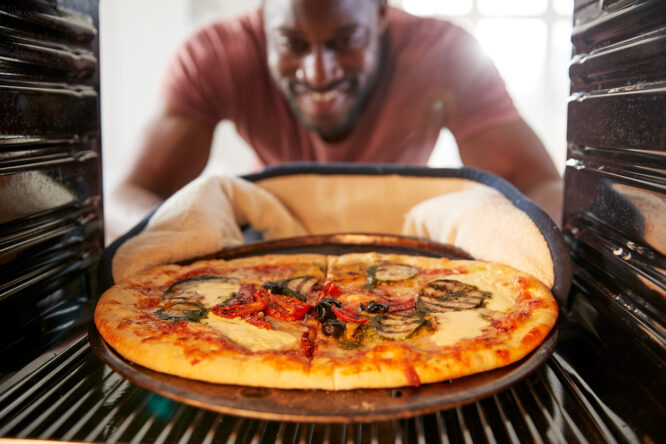
If you can’t be bothered waiting for the oven to warm up, you can put the pizza in from cold. Lay the slices on a baking tray, slide them onto the middle shelf, set the temperature to around 180C (160C fan) and leave them to it. After roughly 12 to 16 minutes they should be heated through, and you’re free to get on with something else in the meantime.
It’s a hands-off method that copes well with a whole box of leftovers, but the results tend to be a bit disappointing. Because the heat builds slowly, the base can stay chewy and slightly gummy, and the cheese may look dull rather than bubbling. If you’re happy to wait a little longer, covering the tray with foil and giving it 25 to 30 minutes helps keep the slices moist and brings them much closer to how they tasted the night before.
An air fryer gives you crunch in minutes.
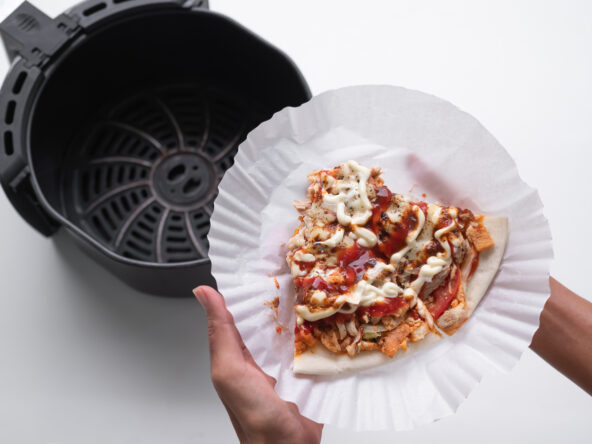
Anyone who owns an air fryer will be pleased to hear it does a decent job here. Heat it to about 180C, add a slice or two once it’s ready and give them around four minutes. The hot air circulating around the pizza crisps up the underside and warms the topping right through, all in less time than most ovens take to heat.
The main drawback is space. Most baskets only fit one or two slices at a time, so feeding a family can mean working in batches. Some slices can also end up a little soft on top. To get a crispier result, try lightly dampening the bottom of the slice with a wet hand and giving the basket a quick rinse before heating, then cook for about five minutes. The small amount of moisture stops the dough drying out while the base browns.
A frying pan does a surprisingly good job.
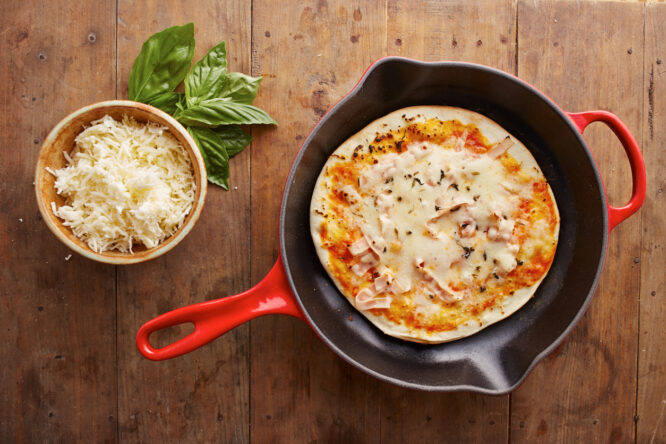
You don’t need fancy gadgets for a crisp result. Put a large frying pan on a low to medium-low heat and let it warm up. Add the slices, making sure they aren’t crammed together, then sprinkle a teaspoon of water into the pan, away from the pizza, and pop a lid on top. The steam warms and melts the cheese while the base crisps up against the metal.
After about five minutes, add another splash of water and give it another five or six minutes. You’ll need to keep an eye on things, as the underside can go from golden to burnt quite quickly, and the base can turn a bit hard if you leave it too long. For a richer twist, melt a knob of butter in a cast-iron pan, wipe most of it away, so there’s just a thin shine left, then heat the slices under a lid for around six minutes. It won’t taste quite like the original, but the buttery, crunchy edge is a treat in its own right.
A pizza stone brings back that takeaway feel.
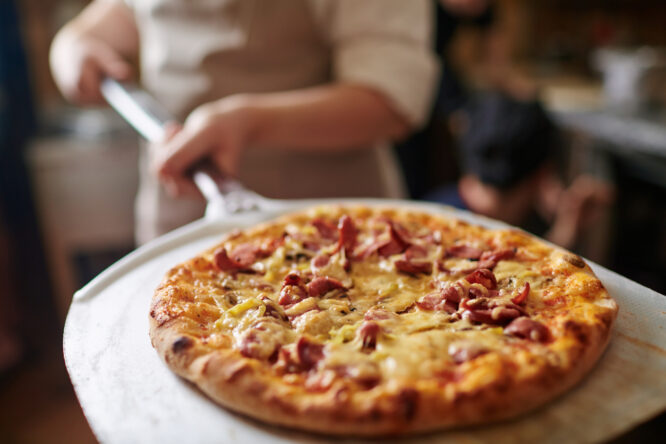
If you want leftovers that taste closest to fresh, a pizza stone is the way to go. Put the stone in the oven, set it to 200C and let everything heat up together. Once the oven reaches temperature, lay your slices directly on the stone and give them about five minutes, until the cheese is glossy, and the crust has turned crisp.
The stone holds a lot of heat, so the base browns quickly while staying slightly chewy, and the topping melts in a way that’s much more like a pizza straight out of the box. You can warm several slices at once, too. The catch is time because a stone can take half an hour to get hot enough, which is roughly how long it would take to have a new pizza delivered. If that doesn’t bother you, the results speak for themselves.
No stone? A hot baking tray works nearly as well.
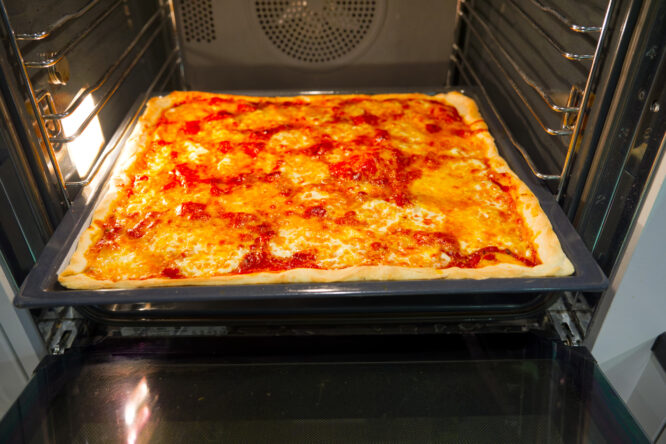
Not everyone has a pizza stone tucked away in a cupboard, and you don’t need to buy one to get a similar result. Put an empty baking tray on the middle shelf, turn the oven up to around 230C and let the tray heat along with it. Once the oven is ready, carefully place your slices on the hot metal and cook for about five minutes.
Because the tray is already hot when the pizza goes on, the base starts crisping straight away instead of slowly warming up. Use oven gloves, as the tray will be extremely hot, and keep children well back while you’re moving things in and out. This is one of the best options for a big batch, and it gets you most of the way to a stone finish with gear nearly every home already owns.
Different styles need slightly different handling.

Not every pizza reheats the same way. Thin, crisp bases, like the kind you’d get from a lot of takeaway shops, cope well with a hot oven, frying pan or air fryer because there’s not much dough to warm through. Thick, deep-pan slices take longer, so a lower heat with foil on top stops the outside burning before the middle gets hot.
Soft, airy Italian-style pizzas with puffy edges are the hardest to revive. They’re at their best minutes after leaving a wood-fired oven, and a reheat can’t really bring back that pillowy texture. A quick blast in a hot pan or on a preheated tray is your best bet. Some people actually prefer to treat leftovers as a different dish altogether, aiming for a crunchier, toastier slice rather than trying to copy the original.
Storing slices so they’re good to go tomorrow is important as well.

How you keep leftovers makes a big difference to how they reheat. Don’t leave the box sitting out overnight. Once the pizza has cooled, wrap the slices in foil or pop them in a sealed container and get them into the fridge within a couple of hours. Leaving them in the cardboard box tends to dry them out and lets them soak up fridge smells.
Try to eat leftovers within a couple of days, and whichever method you pick, make sure the slice is piping hot all the way through before you tuck in. If you’re a fan of cold pizza, that’s fine too, as long as it’s been chilled in the fridge rather than left on the side. Stacking slices with a sheet of baking paper between each one stops them sticking together and makes it easy to grab just the amount you want next time.