We’ve all had those meals where something feels a bit off, but we usually just shrug it off and keep eating.

However, if you talk to anyone who’s spent a few years working behind the scenes in a professional kitchen, they’ll tell you there are certain things they wouldn’t touch with a bargepole. It’s not necessarily that the food is “bad,” but more that the shortcuts, the cleaning habits, and the reality of how certain dishes are actually put together when the pressure is on are extremely problematic.
Restaurant staff see the stuff that never makes it onto the glossy menu descriptions, and they’ve got a very specific list of items they’ll warn their mates to steer clear of if they want to avoid a rough night. Here are some of the most common red flags.
Monday fish specials

Most UK restaurants take their main seafood delivery on a Thursday or Friday, which means by Monday, whatever’s left is getting used up. A “daily special” early in the week can just mean the kitchen’s working through stock that didn’t shift over the weekend. Fish doesn’t have much margin for time, so if the chalkboard special sounds a bit random on a Monday, there’s usually a reason for it.
Soup near closing time

This one comes straight from kitchen workers themselves. Whatever protein was in that soup has often been quietly removed throughout the day to appease impatient tables, with the pot topped up repeatedly. By closing time, you’re essentially getting the watery end of a soup that’s been on the go for hours. The flavour’s gone, the texture’s off, and it’s rarely worth it.
Drinks with ice

Ice machines are notoriously difficult to keep clean, and they don’t get cleaned anywhere near as often as they should. Pink mould builds up inside them, and because the machine is tucked away and no one’s looking at it directly, it gets overlooked for far too long. Several people who’ve worked in restaurants have said they just don’t have ice in their drinks when they go out. It’s not a universal problem, but it’s common enough that it’s worth thinking about.
Heavily sauced steaks

When a steak comes with a thick peppercorn or mushroom sauce, piled high with garnishes, it’s often because the cut itself isn’t the best. A genuinely good piece of beef doesn’t need all that on top of it. Chefs know that all those extras are doing a job, and it’s not just about flavour. If you want to know what the kitchen’s actually confident about, the plainer the steak, the better sign that tends to be.
Well-done steak

Kitchens typically keep their best cuts back for medium and medium-rare orders. A well-done request doesn’t require the same quality of meat because you’re cooking all the nuance out of it anyway, so that’s often where the less impressive pieces end up. You’ll pay the same price and get a noticeably inferior experience, which is exactly what people who work in restaurants know and why they rarely order it that way.
Crispy chicken sandwiches

The breading on a lot of crispy chicken in mainstream restaurants is doing a lot of heavy lifting. Underneath it, the chicken is frequently made from mechanically recovered meat, shaped and processed before it ever reaches the kitchen. The coating is thick, partly because that’s the point of the dish, but also because it covers a multitude of sins. If a restaurant advertises hand-breaded chicken from named farms, that’s a different story entirely.
Pre-packaged salads

What gets described as fresh on the menu has often been sitting in a bag in the fridge for several days before it reaches your plate. Chain restaurants in particular receive their salad leaves pre-washed and pre-prepared from suppliers, and by the time it’s dressed and served, it’s far from what you’d call fresh. The dressings are often heavy on salt and preservatives, too, which takes the shine off what’s supposed to be the lighter option.
Brunch hollandaise
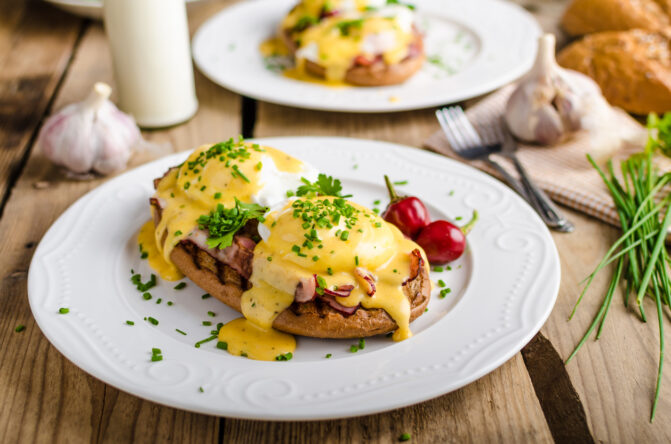
Eggs Benedict is a classic for a reason, but hollandaise is genuinely tricky to hold at the right temperature for any length of time. A brunch service is usually long and busy, which means the sauce has often been sitting in a warm spot for a good while before it lands on your plate. When hollandaise splits or sours, it’s not pleasant, and the risk goes up the longer a brunch service runs. Early in the sitting at a place that clearly does a high volume of it is probably your safest bet.
Desserts at most restaurants

That glossy cheesecake with the raspberry drizzle almost certainly didn’t come from the restaurant’s kitchen. The majority of restaurant desserts, particularly at mid-range chains, arrive from wholesale food suppliers already made. They’re not necessarily bad, but they’re not what the menu sometimes implies, and at £8 or £9 a slice, they represent genuinely poor value for what’s essentially a product from a freezer lorry. If a restaurant has an actual pastry chef or makes a point of mentioning homemade puddings, that’s worth paying attention to.
Truffle anything on a casual menu

Truffle oil and real truffle are two very different things, and the majority of restaurants using “truffle” on their menus are working with a synthetic oil that’s cheaper than it sounds. The flavour it produces is distinctive but not actually close to what real truffle tastes like, and staff who know this tend to find it a bit of a red flag about how the menu is being sold. A trusted, specialist restaurant is one thing, but truffle fries on a pub menu are almost always not what they’re being presented as.