It turns out you don’t always need a high-tech lab or a massive battery of blood tests to get a glimpse into how well you’re actually ageing.

Once you cross the 60-mark, your body starts giving off some pretty clear signals about its long-term durability, and many of them are surprisingly low-tech. We’re talking about basic physical markers, such as how fast you walk or whether you can get yourself off the floor without using your hands, that serve as a sort of MOT for your biological age.
These tests have nothing to do with showing off at the gym; they’re genuine indicators of heart health, muscle density, and neurological function that can tell a doctor more about your life expectancy than a standard check-up might. It’s a bit of a wake-up call, but knowing where you stand now means you’ve actually got a chance to do something about it.
The tests that researchers are paying attention to
Scientists have been circling around grip strength for years as one of those weirdly reliable indicators of how well your body is holding up overall. It connects to bone density, muscle mass, cognitive function, sleep quality and general ageing status in ways that feel almost too straightforward to be true. But a new study published in JAMA Network Open has taken things further by pairing grip strength with something called a sit-to-stand test, and the results are pretty hard to ignore.
The study followed over 5,000 women aged between 63 and 99 for eight years, tracking how their performance in both physical tests at the start of the study related to whether they were still alive at the end of it. Women who scored well in both tests were significantly less likely to die during the follow-up period. That’s not a small or niche finding.
What the grip strength test actually involves
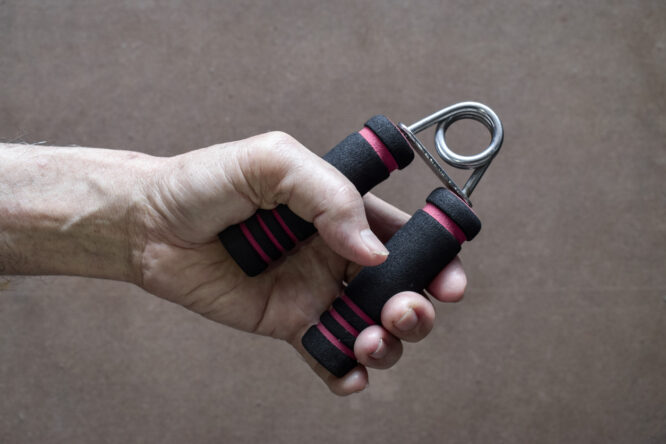
Grip strength is measured in kilograms using a device called a hand dynamometer, which is essentially a tool you squeeze as hard as you can. The number it produces reflects how much force your hand and forearm muscles can generate, and that number turns out to be surprisingly telling about the state of your body more broadly.
In this study, every additional seven kilograms of grip strength was associated with a 12% lower mortality risk on average. That’s a meaningful difference, and it holds up even after accounting for other health variables. Your hands, it turns out, are doing a lot of talking about the rest of you.
What the sit-to-stand test involves
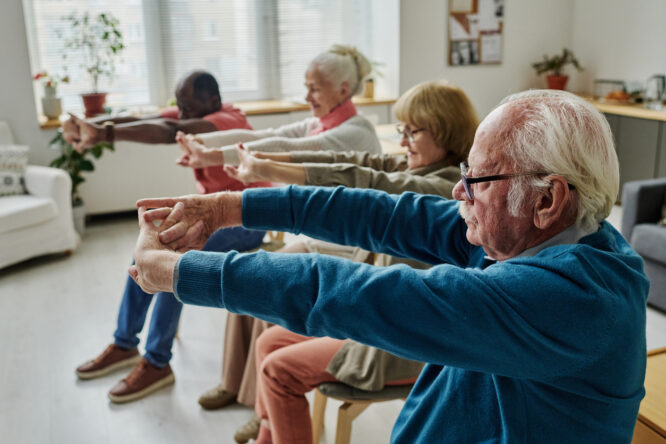
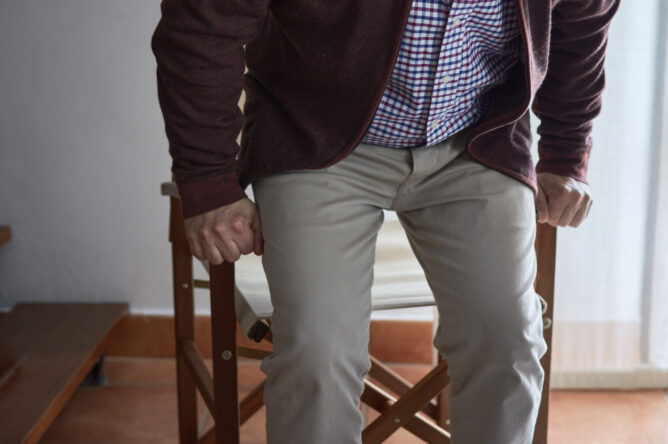
The sit-to-stand test is exactly what it sounds like. You sit in a chair and then stand up five times in a row as quickly as you can, without using your arms to push yourself up or leaning on anything for support. Researchers timed how long it took participants to complete all five rises.
For every six seconds faster that participants completed the five stands, mortality risk dropped by 4%. So the difference between someone who took 20 seconds and someone who took 14 seconds translated into a measurable difference in survival odds over the following eight years. It’s one of those findings that sounds almost too simple, but the data backs it up consistently.
Why muscle strength connects so directly to how long you live

The lead researcher on the study, Dr Michael LaMonte from the University of Buffalo, put it pretty plainly. If you don’t have the muscle strength to get yourself out of a chair, you’re going to struggle with everything that follows, including walking, which is the most commonly reported physical activity among adults over 65. Strength isn’t just about lifting things. It’s what lets you move your body through space, particularly when you’re working against gravity.
The moment you lose the ability to stand up independently and move around, your world starts to contract in ways that affect everything else. Mobility connects to independence, independence connects to mental health, mental health connects to physical health, and the whole thing builds on itself in one direction or the other depending on what’s happening with your strength.
It’s not just about how much you exercise

One of the more interesting findings in the study is that the benefits of greater strength didn’t disappear even among women who weren’t hitting the standard exercise recommendation of 150 minutes a week. That’s important because it suggests that strength itself is the protective factor, not just the act of exercising regularly.
Dr LaMonte also noted that differences in body size didn’t explain the relationship between strength and mortality. When researchers adjusted the strength measurements to account for body weight and even lean body mass, the lower mortality risk among stronger participants remained. So it’s not simply that larger or heavier bodies skew the numbers. Strength matters independently of size.
What this means if you’re in your 60s or beyond

The takeaway here isn’t that you need to overhaul your entire lifestyle overnight. It’s more that if you’re in your 60s, 70s, 80s or beyond, paying attention to your strength levels is genuinely worth doing. Not just for how you feel day to day, but for what the research increasingly suggests it means for your long-term survival odds.
The sit-to-stand test in particular is something you can do at home right now with any standard chair. Time yourself doing five stands from seated without using your arms. There’s no official pass or fail threshold here for everyday purposes, but noticing how easy or difficult it feels, and whether that changes over time, is useful information to have.
You don’t need to lift heavy weights to make a difference

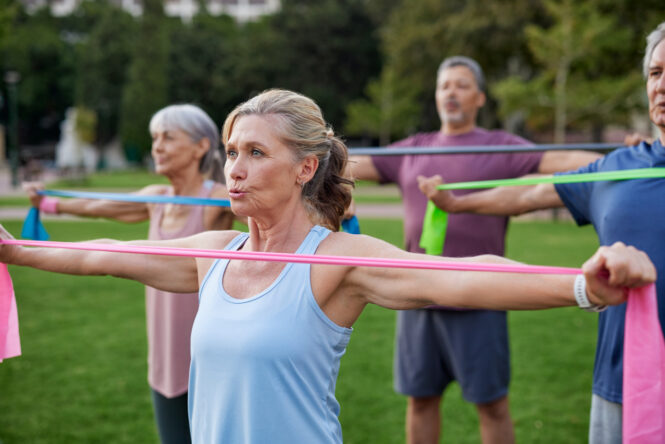
Dr LaMonte was clear that this isn’t an argument for everyone over 60 to start lifting heavy weights at the gym. Even low-level resistance activities count as a stimulus for your muscles. He specifically mentioned using soup cans or books as makeshift weights as a genuinely valid option for people who don’t have access to other equipment or find traditional exercise settings difficult to access.
The research points to a combination of aerobic activity and muscle-strengthening work as the most effective approach for healthy ageing. Walking is brilliant and worth keeping up, but adding in some form of resistance training alongside it seems to make a meaningful difference to outcomes in a way that walking alone doesn’t fully cover.
The bottom line
Grip strength and the ability to get up from a chair without help are two of the clearest physical signals we have about how well the body is ageing. They’re not perfect predictors, and they’re not the whole story, but a large, long-term study involving thousands of women has now added solid weight to what researchers have suspected for a while.
Staying strong as you get older isn’t just about feeling capable in the moment. It’s one of the more reliable things you can do for your long-term health. The good news is that you don’t need much to start working on it.