Dogs have a long history of stepping up when someone needs help, from war heroes who saved wounded soldiers to the family pet fetching help when something’s gone wrong.

Cats, meanwhile, tend to have a rather different reputation, one that involves a lot of napping and very little heroics. Scientists decided to actually test this properly, putting cats, dogs, and toddlers through the same experiment to see who would lend a hand. The results were about as brutal as you’d expect.
The dog who became a real war hero is etched in our collective memory.
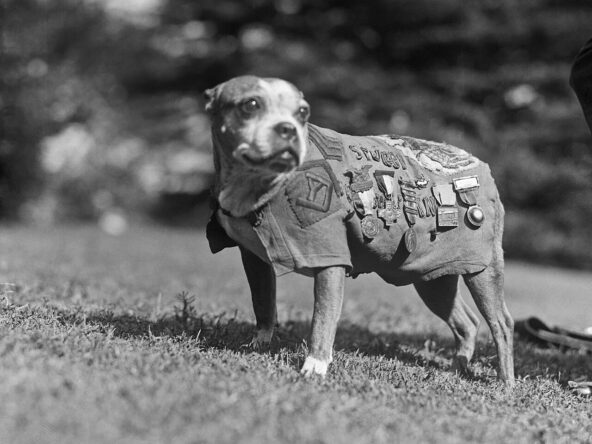
Long before this study came along, there was already plenty of evidence that dogs are wired to help. A stray terrier crossbreed named Stubby served with the US Army during the First World War, warning soldiers of gas attacks and helping locate wounded men on the battlefield.
Stubby served for 18 months, took part in 17 battles, and ended up becoming one of the most decorated war dogs in history, earning a gold medal, two Purple Hearts and even a promotion to sergeant. Stories like his aren’t hard to find when it comes to dogs, but cats are a very different story altogether.
How did scientists actually test this?

To find out just how helpful cats really are, researchers in Budapest set up an experiment comparing cats, dogs, and 2-year-old toddlers, all tested in the comfort of their own homes. A scientist would hide an object while the animal or child watched, sometimes something boring like a dish scrubber, other times something truly exciting like a favourite toy or a snack.
Once the object was hidden, the child’s parent or the pet’s owner would pretend to search for it, fretting out loud and saying things like “Oh no, I can’t find it, what should I do?” The whole point was to see whether the watching cat, dog, or toddler would step in and help without being asked.
Dogs and toddlers passed with flying colours.

The results for dogs and children were remarkably similar. More than three quarters of both dogs and toddlers either pointed toward the hidden item or went and fetched it themselves, regardless of whether it was something exciting or something truly dull. None of them had been specially trained to do this, and there was nothing obvious in it for them either. They simply seemed happy to help out, purely because someone nearby needed a hand.
Cats only helped when it suited them.

Cats told a very different story. They only bothered to “help” when the missing item was something they actually cared about themselves, like a toy or a treat, completely ignoring the boring items every single time. Even then, only around 40% of cats bothered to approach or even glance toward where the item was hidden. In other words, most cats couldn’t be bothered to help even when there was something they wanted in it for themselves.
Are cats clueless or just plain selfish?

One tricky part of this experiment is that it’s truly hard to tell why the cats behaved this way. It’s possible they simply didn’t understand what was being asked of them and had no way of knowing they could help.
It’s equally possible they understood perfectly well and simply couldn’t be bothered. Anyone who’s ever owned a cat that watches you struggle with something while looking thoroughly unimpressed will probably have their own strong opinion on which explanation feels more likely.
Why dogs and cats ended up so different

Part of the explanation likely comes down to where these animals originally came from. Dogs descended from wolves, animals that already lived and worked together in cooperative social groups long before humans got involved.
Cats, on the other hand, descended from solitary animals that were never really built for teamwork in the same way. When humans began breeding both species, they shaped not just how they looked but how they behaved too, and it seems we managed to breed extra helpfulness into dogs while barely making a dent with cats.
What this actually means if you lose something

The practical takeaway from all this is pretty straightforward. If you’ve lost your keys, your phone, or anything else important, don’t bother asking your cat for help, since the odds are firmly stacked against you. Your dog, on the other hand, will likely be far more willing to lend a paw, even without any obvious reward on offer. It’s not that cats are incapable of caring, they just seem to have a rather different idea of what’s actually worth caring about.