
Everyone talks about new mothers struggling with depression after having a baby, but fathers can feel just as lost, overwhelmed, and depressed during those early months. The difference is that nobody really talks about it or expects it to happen to men. Here’s why it’s so important to recognise and deal with this very serious condition in both mums and dads.
The symptoms look the same, but nobody notices them in men.
New fathers can feel hopeless, exhausted, and completely disconnected from their baby just like mothers do, but when men experience these feelings, everyone just assumes it’s normal stress or that they’re adjusting to fatherhood.
Men might also show depression through anger and irritability rather than obvious sadness, which makes it even harder for people to recognise that they’re actually struggling with their mental health rather than just being moody.
Men’s hormones go crazy after babies are born, too.
Fathers’ testosterone drops while their estrogen goes up after their baby arrives, which creates the same kind of hormonal chaos that affects new mums. These changes are meant to help men bond with their babies, but they can also trigger depression.
Nobody talks about men’s hormones changing after childbirth, so fathers don’t realise that feeling awful might be partly biological rather than just evidence that they’re not cut out for parenting.
Everyone expects fathers to be the strong one.
Society assumes that new dads should be supportive rocks for their partners rather than people who might need emotional support themselves, which makes it nearly impossible for men to admit they’re struggling without feeling like failures.
The pressure to stay strong, and handle everything means many fathers suffer alone rather than getting help because asking for support feels like letting everyone down when they’re supposed to be the stable one.
Sleep deprivation destroys everyone, including fathers.
Even when mums handle most night feedings, fathers still lose tons of sleep because babies cry, schedules change completely, and the stress of new responsibilities keeps them awake worrying about everything that could go wrong.
Chronic exhaustion makes everything harder to cope with and can trigger depression in people who might otherwise handle stress fine. When you’re running on three hours of sleep for weeks, normal problems feel impossible.
Money worries become absolutely crushing.

The pressure to provide for a bigger family can feel overwhelming, especially when household income might drop if a partner stops working or cuts back hours to care for the baby. The intense financial stress makes fathers feel like they’re failing at their main job of taking care of their family, which can spiral into depression about not being good enough providers or capable enough adults.
The relationship changes in ways that feel awful.
When couples become parents, the whole dynamic changes and fathers can feel like they’ve lost their partner to the baby. They might feel jealous of the attention the baby gets or worry that their relationship will never be the same. Mothers are naturally focused on recovering and caring for the baby, which can leave fathers feeling left out, unimportant, or like they don’t know where they fit in this new family structure anymore.
They don’t fall in love with the baby immediately and panic about it.
Despite what movies suggest, not all fathers feel instant overwhelming love for their babies, and when bonding takes time, they worry that something is seriously wrong with them as parents and human beings. The lack of immediate connection can create horrible guilt and shame, especially when fathers hear other people talking about how much they adore their babies, while they feel confused or detached from their own child.
Work and identity crisis hit at the worst possible time.
Becoming a father often triggers major questions about career priorities and work-life balance right when men are already stressed about everything else, creating internal conflict about what kind of father and provider they want to be.
The pressure to advance professionally to support their family conflicts with wanting to spend time at home, leaving fathers feeling torn and guilty about every choice they make regarding work and family time.
They feel useless when they can’t fix crying babies.
Men are often taught that they should be able to solve problems, but babies cry for reasons that can’t be figured out or fixed, which makes fathers feel completely incompetent and frustrated with their inability to help.
This helplessness is particularly hard for men who are used to being able to control outcomes through effort, leaving them feeling like terrible parents when normal baby behaviour can’t be “solved” no matter what they try.
Social connections disappear and nobody replaces them.
New fathers often lose touch with friends as their free time vanishes, but unlike mums who might join parent groups or connect with other mothers, men have fewer opportunities to meet other fathers going through similar struggles.
This isolation makes depression worse because fathers don’t have anyone to talk to about their feelings or to reassure them that other men are struggling with the same challenges and doubts about parenting.
The fear of messing up becomes paralysing.
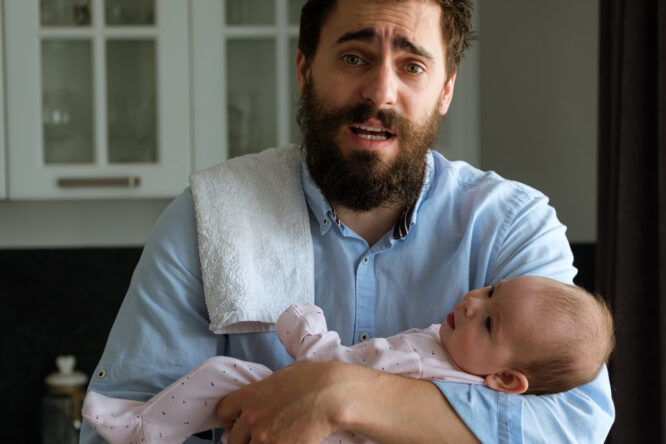
Being responsible for keeping a helpless baby safe and healthy can trigger intense anxiety about making mistakes or not being capable enough, especially for men who haven’t spent much time around infants before having their own.
These worries about being a good enough parent can become overwhelming and contribute to depression when fathers feel like they’re constantly failing or not living up to their own expectations about what fathers should do.
Getting better requires actual help, not just “toughing it out.”
Paternal depression doesn’t just go away on its own and needs the same kind of support that helps mothers, including talking to professionals, connecting with other fathers, and getting practical help with baby care and household stuff.
The problem is that many fathers don’t realise they need help or don’t know how to ask for it, which means they continue struggling alone when treatment could make a huge difference for them and their whole family.
If you or someone you know is struggling with postnatal depression, especially as a new dad, Tommy’s has put together an amazing list of resources that can help.