We’ve been sold a version of middle age that involves a slow, inevitable decline, where making it through the day without a mysterious back twinge is considered a win.

While most of us are happy enough if we can still touch our toes, experts are pointing to a much higher bar for those who want to stay truly capable as they hit 50 and beyond. It turns out there are a handful of physical benchmarks—specific tests of balance, grip strength, and explosive power—that act as a brutally honest health check for your biological age.
These aren’t just gym-bro party tricks; they’re the fundamental movements that predict whether you’ll be independent and mobile in 30 years or struggling with the basics. If you think you’re still in decent nick because you go for a brisk walk once a week, these milestones might be the reality check that forces you to change how you’re training for the second half of your life.
Stand on one leg for 37 seconds without wobbling.
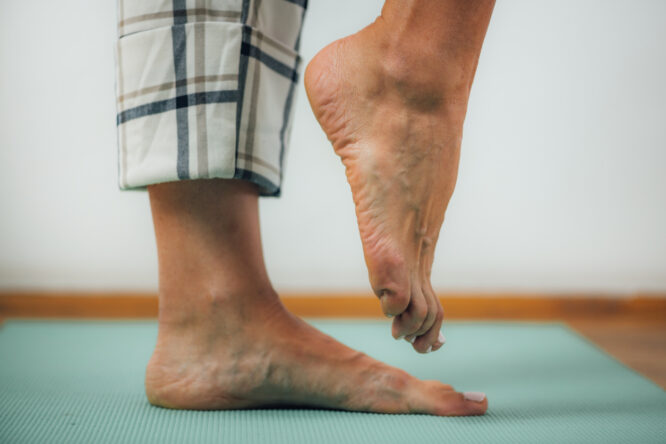
This one sounds almost embarrassingly simple until you try it. Balance deteriorates considerably after 50, and the ability to hold a single-leg stance is one of the most reliable indicators of neuromuscular health and fall risk. Fitness benchmarks suggest that people in their fifties should be able to balance on one leg, eyes open, for around 37 seconds.
Researchers tracking midlife physical capability over 13 years found that standing balance time at age 53 was strongly associated with all-cause mortality, meaning it wasn’t just a party trick but a genuine window into how the body is ageing. If you can’t manage it comfortably, balance training is worth prioritising before it becomes a more serious issue.
Get up off the floor without using your hands.

This one was made famous by a Brazilian study that linked the sitting-rising test to longevity, and it’s stayed in circulation because the finding was striking. The test involves lowering yourself to the floor and getting back up using as little support as possible, with points deducted for using hands, knees, or forearms.
A genuinely fit 50-year-old should be able to do this smoothly and without assistance. It requires flexibility, core strength, joint mobility, and lower body power working together, and the fact that it declines so predictably with age makes it a useful marker of whether all those systems are still communicating properly.
Do at least 8 to 12 full push-ups with good form.
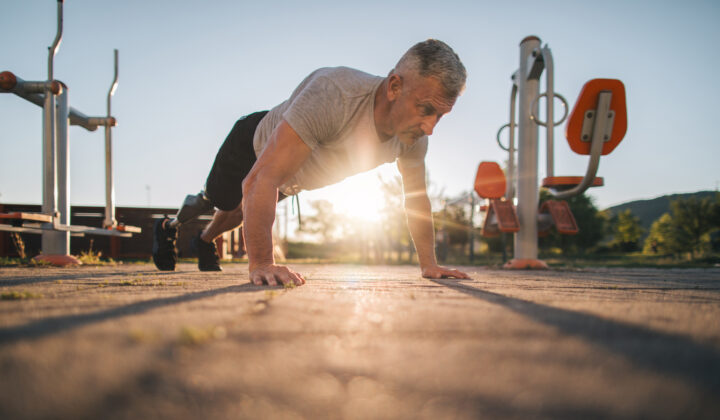
Not modified, not on your knees, but full push-ups with chest to the floor and a straight body from head to heels. Research on push-up standards suggests that men at 50 looking at intermediate fitness levels should be working toward around 33 reps, though fitness experts point out that 8 to 12 solid reps represents a reasonable real-world benchmark for most people over 50, with 15 putting you solidly above average.
For women, the bar is slightly lower, but the principle is the same. Push-ups test upper body strength, shoulder health, and core stability simultaneously, and the inability to do a single full one is a meaningful sign that something in that chain needs work.
Sit to stand from a chair 15 to 17 times in 30 seconds.
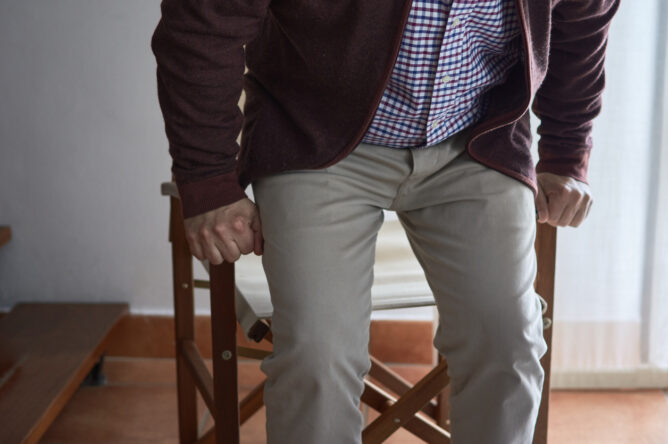
The chair stand test is one of the most widely used functional fitness assessments for midlife and older adults, and for good reason. It measures lower body power directly, which is the physical quality that tends to decline fastest with age and matters most for daily independence. Women over 50 should be aiming for at least 15 repetitions in 30 seconds without using their arms, and men should be hitting at least 17.
Fitness experts describe this as probably the single best predictor of whether someone will stay mobile in their seventies or start needing assistance with basic movement. The fact that it requires nothing more than a chair makes it easy to test right now.
Walk a mile in under 15 minutes without stopping.

Cardiovascular fitness is among the strongest predictors of all-cause mortality, and VO2 max, which is the measure of how efficiently your body uses oxygen during exercise, declines by roughly 10 percent per decade after 30 in sedentary people and much more slowly in those who stay active.
A useful and accessible proxy for cardio fitness is the one-mile walk test. A fit 50-year-old should be able to cover a mile in well under 15 minutes, ideally closer to 12, while still being able to hold a conversation. Struggling noticeably on a flat mile walk is a sign that the cardiovascular system needs more attention than it’s currently getting.
Hold a dead hang from a bar for at least 30 seconds.
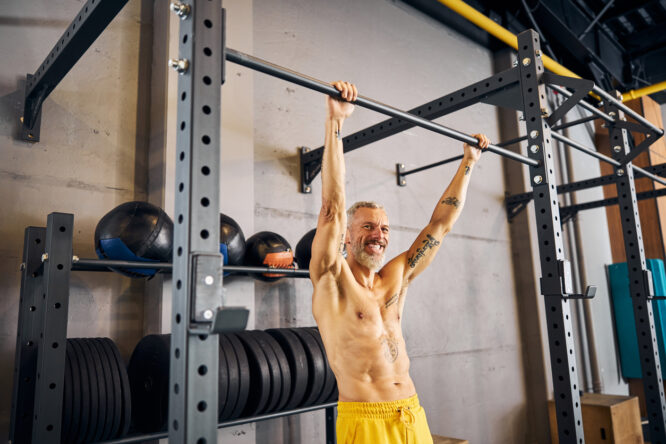
Grip strength has emerged as one of the most compelling biomarkers in longevity research, consistently predicting overall strength, muscle health, and even cognitive function decades later. A 2024 study looking at midlife physical capability found considerable associations between grip strength measured at 53 and mortality rates over the following 13 years.
Hanging from a bar requires not just grip but shoulder stability and decompression of the spine, and fitness experts working with the over-50 population suggest that being able to hold a dead hang for 30 seconds is a meaningful indicator of upper body health. Most people are surprised by how quickly this reveals weakness that other exercises might mask.
Perform a full bodyweight squat with proper depth.

A full squat, meaning hip crease below knee level, completed without heel raise, forward lean, or knee collapse, tests hip mobility, ankle flexibility, and lower body strength together. It’s one of the movements that deteriorates most visibly in people who spend a lot of time sitting, and the loss of it tends to be gradual enough that many people don’t notice until the range of motion is significantly restricted.
Fitness professionals note that an inability to achieve proper squat depth often points to mobility restrictions that accelerate joint degeneration over time. A fit 50-year-old should be able to perform multiple clean repetitions without compromise.
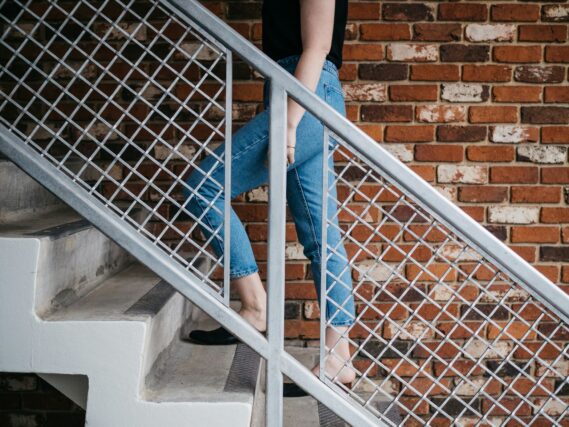
Recover quickly after a flight of stairs.
 Source: Unsplash
 This isn’t a formal fitness test, but it’s one of the more honest self-assessments available. Climbing a flight or two of stairs at a normal pace and being able to hold a conversation within a minute of reaching the top is a basic functional benchmark that reflects cardiovascular and muscular fitness together.
Needing to stand and breathe for several minutes, or avoiding stairs when a lift is available, is a practical signal that fitness has dropped below a functional threshold. Experts studying healthy ageing consistently highlight this kind of incidental exertion as a reliable indicator of where someone actually sits on the fitness spectrum, separate from anything they claim to do at the gym.
Touch your toes, or get close.
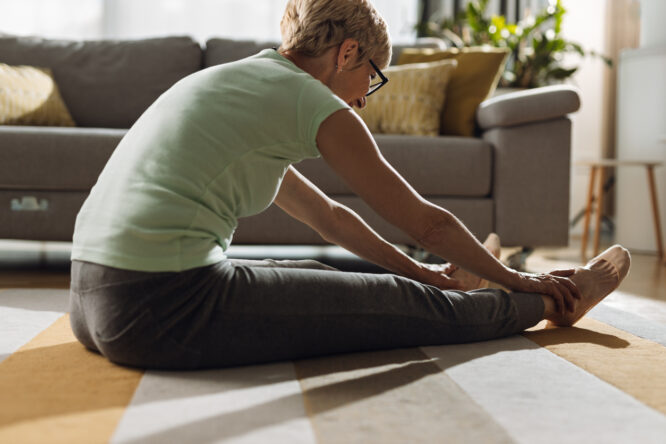
Flexibility declines with age, and it takes genuine maintenance to hold onto. The ability to reach your toes from standing or from a seated forward fold reflects hamstring length, lower back mobility, and overall posterior chain flexibility. It’s linked in research to arterial stiffness as well as physical performance, meaning it’s not purely about whether you can tie your shoes without sitting down.
A fit 50-year-old should be able to get fingertips to the floor or close to it. Major tightness that prevents even reaching the mid-shin area is a sign that regular mobility work has been absent, and that the window for recovering it is narrowing with every year it goes unaddressed.