Love for your parents and the memories of being spanked can live side by side, even if it feels contradictory.
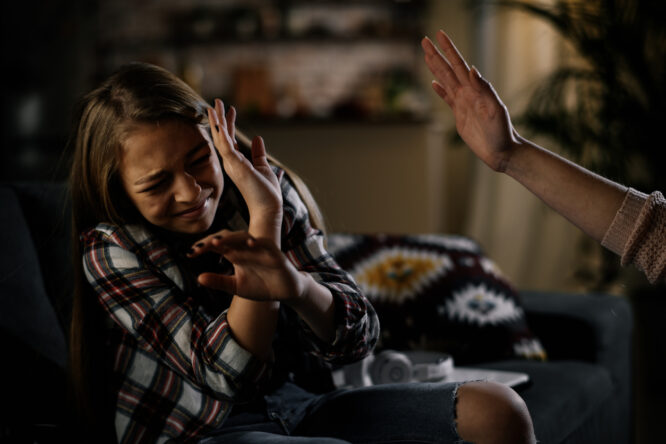
These days, the idea of physical punishment is much more taboo than it used to be, but it still happens in far too many families. For those who grew up being smacked as a form of punishment, they often carry some mixed feelings once they become adults. If your childhood included spanking, these are some of the more complicated feelings you might have these days.
1. You love them, but the memory still stings.
 Source: Unsplash
 You may feel deep affection for your parents and appreciate all they did for you, yet certain memories of being spanked remain sharp. That mixture can be confusing because the warmth you feel now doesn’t erase the discomfort you remember.
Recognising that both emotions can exist together helps bring clarity. It means you can value the love that shaped your bond without pretending the harder moments never left their mark on you.
2. You respect their effort, but question their choices.

It’s natural to admire your parents for their hard work and sacrifices. Yet as you reflect, you may also find yourself wondering whether spanking was really necessary, or whether there could have been gentler ways to teach lessons.
Allowing that question doesn’t make you ungrateful. It simply shows you’re looking back with more perspective, holding respect for your parents while also admitting you wish certain choices had been different.
3. You feel grateful, but still unsettled.

Part of you might feel thankful for the structure your parents gave you, especially if they believed it was for your good. But gratitude can sit alongside unease when you realise that discipline through spanking left you feeling vulnerable.
By naming both sides, you avoid forcing yourself into one feeling. You can hold on to gratitude for their intentions while also being honest about the discomfort that lingers.
4. You forgive, but the hurt hasn’t disappeared.

You may have forgiven your parents long ago, choosing to focus on love rather than pain. Yet forgiveness doesn’t mean forgetting, and moments of hurt may still resurface even when you feel peace about the past overall.
Accepting that forgiveness and hurt can coexist makes healing less rigid. It allows you to love your parents as they are, while also honouring the child you once were who felt that pain.
5. You understand, but you still feel conflicted.
As an adult, you might understand why your parents turned to spanking whether it was cultural, generational, or a method they inherited from their own upbringing. That understanding can soften your view but doesn’t always erase your conflict.
That awareness is valuable because it lets you separate explanation from approval. You can accept that their choices had context while still believing it wasn’t the healthiest way to raise a child.
6. You admire them, but sadness lingers.

There may be parts of your parents you admire deeply, such as their resilience or devotion to family. At the same time, sadness can linger when you think of the moments when their love included discipline that hurt.
That sadness doesn’t diminish your admiration. It simply highlights the gap between the comfort you needed and the methods they believed were right, which is a natural part of growing into your own perspective.
7. You trust them, but hesitation remains.

Trust often grows strong in loving families, but memories of spanking can leave a small thread of hesitation woven into that trust. It’s not always visible, but it can show up when you reflect on how discipline shaped your sense of safety.
Allowing yourself to notice the hesitation doesn’t weaken your bond. It makes it more honest because it acknowledges the reality that love and caution have always lived side by side in your relationship.
8. You value discipline, but dislike the method.
Source: Unsplash As an adult, you may recognise that discipline and accountability are valuable parts of life. However, you can also dislike the way it was taught to you, feeling that spanking was unnecessary or even harmful at times.
The distinction helps you separate the lesson from the method. You can carry forward the value of responsibility while deciding that in your own life, you will use kinder ways to teach it.
9. You see strength, but also vulnerability.

Looking back, you may credit your experiences with shaping resilience, teaching you to cope with rules and consequences. Yet at the same time, those moments might have left you feeling more fragile in areas like conflict or authority.
Both sides are true, and both matter. Acknowledging the vulnerability doesn’t erase the strength, but instead helps you grow in a way that honours the whole of your experience.
10. You accept it was normal then, but question it now.

Spanking may have felt normal in your household or even your community. At the time, you might not have questioned it, especially if it seemed common. Luckily, adulthood gives you space to see that “normal” doesn’t always mean healthy.
A bit of deeper reflection lets you break away from what once felt unquestionable. You can accept the context without carrying the same belief forward, giving yourself permission to define what normal looks like now.
11. You feel loyal, but also doubtful.

Loyalty to family runs deep, and it can make questioning your parents’ choices feel uncomfortable. Yet under that loyalty, doubt can remain about whether spanking was really the right way to handle things.
Holding both feelings shows growth. Loyalty doesn’t have to mean blind agreement, and doubt doesn’t cancel out love. Instead, the two can live together in a more balanced perspective.
12. You appreciate them, but you wish it had been different.

It’s possible to look at your childhood and appreciate the effort your parents gave, the food on the table, the clothes provided, and the love that was present. Yet at the same time, you can still wish the discipline had taken another form.
That wish doesn’t erase appreciation. It just shows that you can acknowledge care while hoping for gentler ways that might have protected both love and trust more closely.
13. You carry love, but sometimes feel guilt.

Love for your parents may be unquestionable, but you might still feel guilty when painful memories of spanking rise to the surface. That guilt often comes from believing love should mean overlooking everything, even the moments that hurt.
Letting go of that guilt allows you to see love as strong enough to handle honesty. Acknowledging the pain doesn’t mean rejecting your parents, it simply means being truthful with yourself.
14. You feel independent, but cautious.

Spanking might have shaped your drive to assert independence and build your own values. However, it may also have left you cautious in certain areas, hesitant to speak up or make choices for fear of disapproval.
That mix isn’t a flaw, it’s a reflection of your journey. Each time you step into independence now, you prove to yourself that freedom can be safe, not something that has to come with punishment.
15. You choose healing, but you still hold love.

The most important realisation may be that you can heal without letting go of love for your parents. You can look at the past honestly, acknowledge both the affection and the pain, and still decide to maintain connection today.
This is what growth looks like: not erasing the complicated parts but learning to live with them in a healthier way. Healing and love can walk together, and recognising that is a sign of real strength.