The weather is finally turning, but the downside to those long walks through the woods is the sudden return of ticks looking for a free meal.
Most of us have heard a dozen different horror stories about how to get them off, ranging from using a lit match to dousing them in nail polish, but most of those so-called hacks actually make things worse. Instead of helping, they often stress the tick out, causing it to vomit back into your bloodstream and increasing your risk of things like Lyme disease.
It’s not complicated to get it right, though. It simply requires a steady hand and the correct tools to make sure you’re not leaving the head behind. If you’ve spotted a passenger after a day out, you need to ignore the old wives’ tales and follow the actual medical advice to get it sorted safely.
What are ticks?
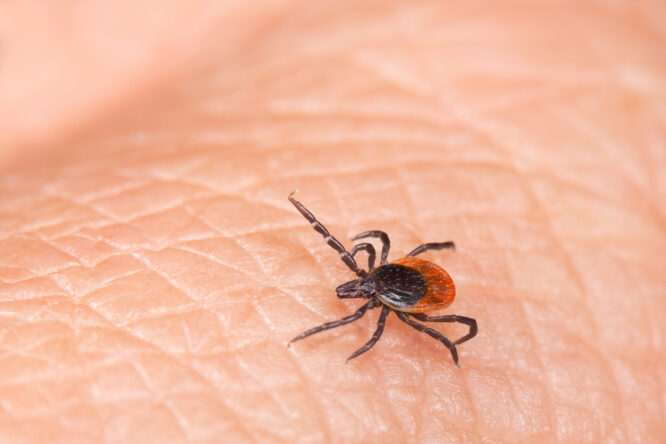
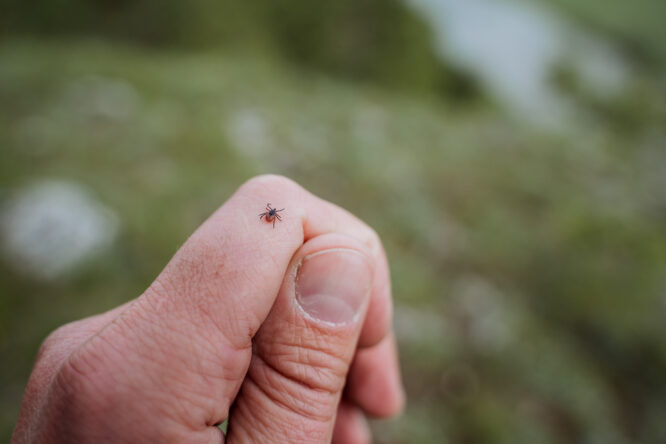
If you haven’t encountered one before, ticks are tiny spider-like creatures about the size of a sesame seed, with oval bodies and either six or eight legs depending on how mature they are. They live in grassy and wooded areas and attach themselves to passing animals or humans by climbing onto you as you brush past vegetation. They’re not jumping or flying at you, they’re simply hitching a ride, but once they’re on, they’ll burrow in and feed on blood if you don’t catch them first.
It’s important to take the threat they pose seriously.

Most tick bites in the UK won’t cause any lasting harm, and the majority of ticks here don’t carry infection. That being said, some do carry Lyme disease, a bacterial infection that can cause serious long-term problems if it goes untreated, including joint pain, nerve damage, and memory issues.
Cases of Lyme disease in England and Wales have been rising steadily since reporting started in 1986, with over a thousand lab-confirmed cases annually and an estimated additional thousand to two thousand going unconfirmed each year. The good news is that removing a tick quickly and correctly reduces the risk considerably.
How to remove a tick properly
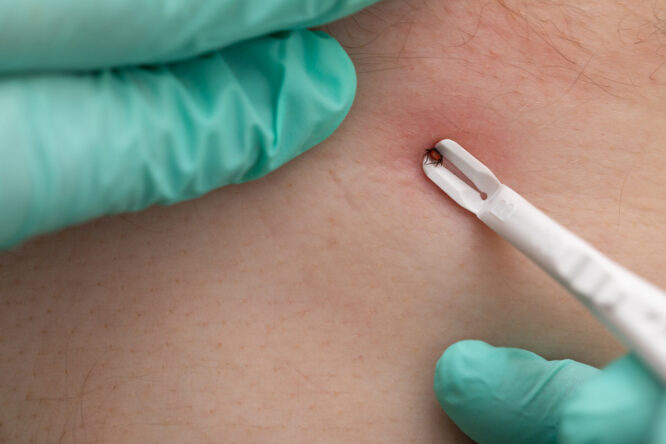
The NHS recommends using a tick removal device or fine-toothed tweezers. Grip the tick as close to the skin as possible and pull steadily away without twisting or crushing it. That last part really matters. Squashing the tick can push pathogens into the body, which is exactly what you’re trying to avoid.
Bite prevention expert Howard Carter recommends dedicated tick remover tools over tweezers where possible, as tweezers increase the chance of the tick breaking and leaving parts behind in the skin. Once you’ve removed it, clean the area with soap and water and apply antiseptic cream around the bite.
What not to do

Don’t use alcohol or petroleum jelly on the tick, and don’t try to burn it off or suffocate it with creams. These methods are ineffective and can actually make things worse by causing the tick to release more fluid into the bite. If the mouthparts snap off and stay in the skin, the NHS advises leaving them alone as they should fall out naturally over time, though it might cause some localised irritation while they do.
Symptoms to watch for in the weeks after a bite
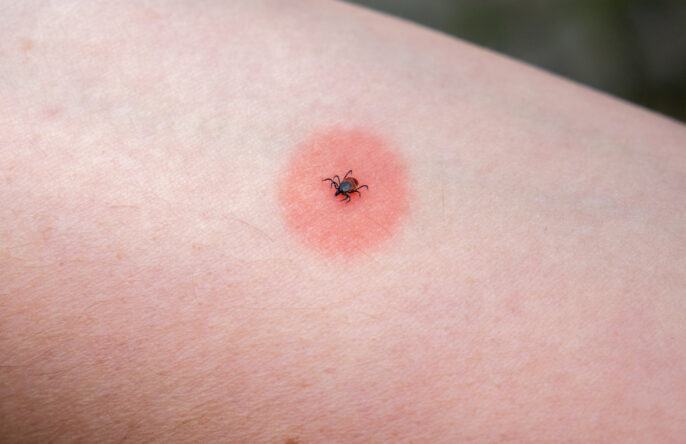
Getting a tick bite doesn’t mean you’ll definitely develop an infection, but it does mean you need to keep an eye on things for the following few weeks. The most well-known sign of Lyme disease is a bullseye-shaped rash around the bite, though not everyone gets this, so its absence doesn’t mean all is fine.
Other early symptoms to watch for include flu-like fatigue, fever, muscle aches, headache, joint pain, and swollen lymph nodes. If a rash appears, take a photo of it so you can show your GP. The UK doesn’t routinely recommend antibiotics immediately after a tick bite, but you should see your GP if you feel unwell or notice any of these symptoms appearing.
If Lyme disease is suspected, a course of antibiotics will be prescribed, and early treatment is far more effective than treating it once symptoms have progressed.
Signs things have progressed further

If a bite goes unnoticed or untreated, symptoms can develop into more serious problems over time. These include facial palsy, where one side of the face stops moving properly, heart rhythm problems, neck pain or stiffness, and pain, weakness or numbness in the hands or feet. If any of these appear after a recent tick bite, contact your GP straight away, rather than waiting to see if they resolve on their own.
How to avoid them in the first place

Ticks are most active between April and July, though the season runs through to October. When you’re in grassy or wooded areas, covering your arms and legs reduces the risk considerably. Tucking trousers into socks when walking through long grass is effective if unfashionable.
Wearing light-coloured clothing makes ticks easier to spot and brush off before they attach. Applying insect repellent adds another layer of protection, and checking children and pets thoroughly after any time outdoors is one of the most reliable ways to catch a tick before it has a chance to dig in. They tend to prefer warm, hidden spots, so check behind knees, in armpits, behind ears, and around the hairline.
For more information about ticks and Lyme disease, visit the NHS website.