As the temperature drops outside, plenty of us are sitting at our desks in a coat and scarf, wondering whether the office is supposed to be this chilly.

There are rules about how warm a workplace should be, and official guidance from the Health and Safety Executive, or HSE, says it should normally be at least 16C, or 13C if your job involves a lot of physical effort. The catch is that this isn’t quite a strict legal minimum, and what counts as reasonable can depend on the kind of work you do. Here’s what the rules actually say, what your employer should be doing and what you can do if you’re feeling the cold.
The law has something to say about workplace temperatures.

The main rules come from the Workplace (Health, Safety and Welfare) Regulations 1992, which say that the temperature in indoor workplaces must be reasonable while people are working. The law itself doesn’t give an exact number, but the official code of practice that goes with it does give a guide.
According to that guidance, the temperature in workrooms should normally be at least 16C, or at least 13C where much of the work involves severe physical effort, such as in a warehouse or on a factory floor. Employers who don’t follow the guidance would usually need to show that they’ve done something else that’s just as effective at keeping staff safe and comfortable.
Is there a maximum workplace temperature?

There’s no maximum temperature in the law, which often surprises people because the same rule about being reasonable applies whether it’s too hot or too cold. That’s partly because some workplaces, such as bakeries and foundries, will always be hot by nature.
The HSE says employers should think about what’s known as thermal comfort, which takes into account the air temperature, draughts, humidity, what people are wearing and how active their job is. So two people in the same office may feel quite differently, and a good employer will try to take that into account.
What your employer should do

Employers have a duty to assess risks to the health and safety of their staff, and that includes the temperature they work in. If people are regularly too cold, they should look at practical ways to fix it, such as getting the heating checked, sorting out draughts or moving desks away from doors and windows.
Employers should also provide enough thermometers so that staff can check the temperature for themselves. Other steps might include allowing people to wear warmer clothes or relaxing the dress code, giving extra breaks to warm up and making hot drinks available.
When the cold becomes a health risk

Being cold at work isn’t just uncomfortable because it can make it harder to concentrate and can make some health conditions worse, such as arthritis, asthma, and circulation problems like Raynaud’s. Older workers, pregnant women and people with certain medical conditions may be more affected by the cold than others.
If you have a disability or long-term health condition that’s affected by the temperature, your employer may need to make reasonable adjustments under the Equality Act, such as giving you a desk near a radiator or providing a heater. It’s worth speaking to your manager or occupational health team if this applies to you.
Working outdoors or in cold places

If you work outdoors or somewhere that can’t easily be heated, such as a cold store, the 16C guidance doesn’t apply in the same way, but your employer still needs to protect you. That could mean providing warm protective clothing, setting up heated rest areas, and making sure you can take regular breaks to warm up.
Employers should also think about how long people are exposed to the cold, and whether jobs can be rotated or done at warmer times of day. Hot drinks, proper training and keeping an eye on anyone showing signs of being unwell are all part of keeping outdoor workers safe.
Working from home

If you work from home, your employer is still responsible for your health and safety, but they don’t control the temperature of your house. Some employers offer help towards the cost of equipment or bills for home workers, so it’s worth checking your contract or staff handbook to see what’s on offer.
If heating your home all day is a real worry, it may be worth asking whether you could spend more of your working week in the office, where the heating is paid for. Small changes, such as heating just the room you work in or using a heated throw, can also help keep costs down.
Questions to ask yourself
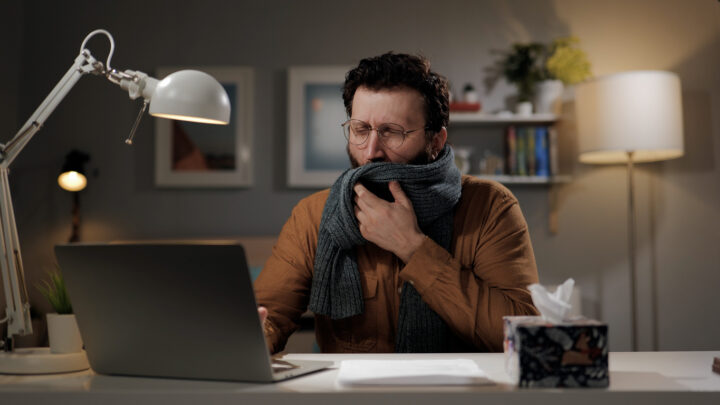
Before you raise it with your employer, it’s worth asking yourself whether the problem happens all the time or only at certain times of day, such as first thing in the morning. Checking the temperature on a thermometer over a few days can give you useful evidence if you need to make a complaint.
It also helps to think about whether colleagues are feeling the same because a problem that affects lots of people is more likely to be taken seriously. Speaking up together can also make it feel less awkward than going it alone.
How to raise a complaint

Start by speaking to your manager, as it may be something that can be sorted out quickly, such as a broken radiator or a heating timer that’s been set wrongly. If that doesn’t work, you can raise it with your health and safety representative or your trade union, if you have one, or put your concerns in writing.
If your employer still won’t do anything about it, you can report your concerns to the HSE, which can investigate. Acas also offers free and impartial advice on your rights at work on 0300 123 1100, and it’s always a good idea to keep a note of the temperature and any steps you’ve taken.