Most drivers remember the nerves of sitting their driving theory test, but how much of it would you still know today?

Once we’ve passed our practical test, many of us never look at the Highway Code again, even though it’s been updated many times in recent years. That means some rules may have changed since you last checked. Test your knowledge with these ten questions, then see how many you got right.
How the theory test works
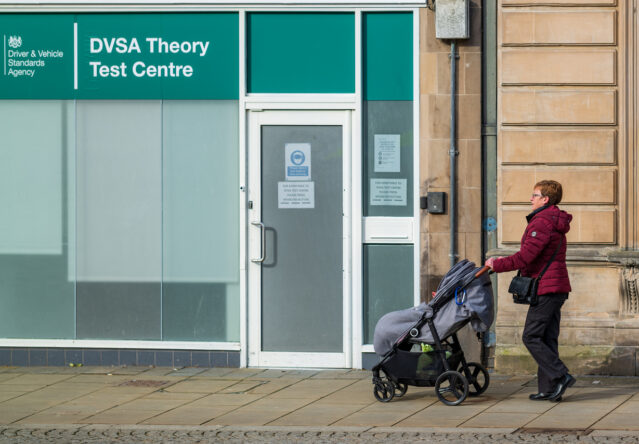
To pass the driving theory test, learners must answer 43 out of 50 multiple choice questions correctly. These questions are based on the Highway Code and cover topics such as road signs, hazard awareness and how to handle a vehicle safely.
Learners must also pass a hazard perception test, scoring at least 44 out of 75. This involves watching 14 video clips and clicking when they spot developing hazards, such as a pedestrian stepping into the road.
Question one: road signs
Traffic signs that give orders are normally which shape? Is it a white rectangle with a red border, a white circle with a red border, a white triangle with a red border or a blue rectangle with a white border?
Question two: stopping at 30mph
What is the typical total stopping distance for a car travelling at 30mph on a dry road? Is it 12 metres, 23 metres, 36 metres or 53 metres?
Question three: stopping at 70mph

What is the typical total stopping distance at 70mph on a dry road? Is it 53 metres, 73 metres, 96 metres or 120 metres?
Question four: keeping your distance
On a dry road, how big a gap should you leave between your car and the vehicle in front? Is it a one-second gap, a two-second gap, a three-second gap or a five-second gap?
Question five: pedestrians at junctions

You’re turning into a side road and a pedestrian is waiting to cross it. What should you do? Should you carry on because you have priority, sound your horn, give way to the pedestrian or flash your headlights?
Question six: passing cyclists

How much space should you leave when overtaking a cyclist at speeds of up to 30mph? Is it 50 centimetres, one metre, 1.5 metres or three metres?
Question seven: opening your car door

Which hand does the Highway Code suggest using to open your car door when you’re getting out? Is it your nearest hand, your furthest hand, both hands or it doesn’t matter?
Question eight: using your phone

When is it legal to hold your phone while driving? Is it when you’re stopped at traffic lights, when you’re in a queue of traffic, when you need to call 999 in an emergency, and it’s not safe to stop or when you’re using it for directions?
Question nine: crossings and junctions

What should you do when the amber light is flashing at a pelican crossing? Should you stop and wait, give way to anyone still crossing, speed up to get through or sound your horn?
Question ten: speed limits

What is the national speed limit for cars on a single carriageway road? Is it 50mph, 60mph, 70mph or 40mph?
Answers

1. A white circle with a red border
2. 23 metres
3. 96 metres
4. At least a two-second gap
5. Give way to the pedestrian
6. At least 1.5 metres
7. The hand furthest from the door
8. When you need to call 999 or 112 in an emergency, and it’s not safe or practical to stop
9. Give way to anyone still crossing
10. 60mph