Men have plenty of insecurities that women often aren’t aware of.

Ask a group of men how they’re doing over a pint, and nine times out of 10 you’ll get a shrug, a quick “all good,” and an immediate pivot to football or work. Most men grow up learning to keep their vulnerabilities tucked firmly out of sight, mastering the art of looking completely unbothered even when their confidence is taking a hammering behind the scenes.
Because those anxieties rarely make it into everyday conversation, partners and friends often assume men breeze through life without the same swirling self-doubt women deal with. Psychologists who study male mental health see a very different picture underneath that calm exterior, where quiet pressures around appearance, money, and status weigh heavily on men of every age.
Feeling like their body doesn’t match the modern ideal

Body image pressure used to be viewed almost exclusively through a female lens, yet modern men are surrounded by unattainable physiques every time they unlock their phones. Between Hollywood action stars, fitness influencers, and shirtless reality TV contestants, the baseline expectation for an attractive male body has crept into territory that demands extreme dieting and hours in the gym every day.
For an ordinary man working a desk job and trying to live a balanced life, catching his reflection in a changing room mirror can trigger a quiet sense of falling short. Clinical psychologists studying muscle dysmorphia have documented a sharp rise in men feeling too small or soft even when they’re objectively fit and healthy, largely because male self-worth still gets tangled up with physical strength.
Private worries about anatomy and size

Almost every man has wondered at some point in his life whether he measures up physically in the bedroom, even if he would never dream of bringing it up with his closest mates. Decades of locker-room jokes, pop culture tropes, and adult media have created a wildly distorted idea of what counts as standard.
A major review published in the British Journal of Urology International analysed measurements from over 15,000 men and confirmed that the actual global average sits well below the exaggerated figures tossed around online. Even with hard medical data proving that almost everyone falls comfortably within normal range, the stigma around discussing it leaves countless men carrying unnecessary anxiety in silence.
Performance pressure during intimacy

Physical intimacy is frequently framed as something men should effortlessly master from day one, leaving very little room for nerves, tiredness, or getting to know a new partner. When things don’t go smoothly, whether that means struggling to stay aroused under stress, finishing sooner than planned, or feeling unsure about what their partner enjoys, many men treat it as a crushing verdict on their masculinity.
The frustrating catch is that worrying about performance triggers the exact adrenaline response that disrupts physical arousal in the first place. Instead of brushing off a bumpy night as a normal human blip, men often spiral into private embarrassment and start pulling away from closeness altogether.
Being hung up on their height

Height is one of the few physical traits you cannot change at the gym, with a sharp haircut, or through sheer discipline, which makes it a particularly stubborn sore spot for shorter men. Dating app filters, throwaway jokes on social media, and the enduring Hollywood casting of tall romantic leads constantly reinforce the idea that extra inches equal higher value.
Even confident, successful men can feel strangely invisible in crowded bars or group photos when taller men effortlessly draw attention. Having zero control over a trait that carries so much social weight can leave a lingering sense of disadvantage that’s hard to shake.
The slow panic of losing their hair
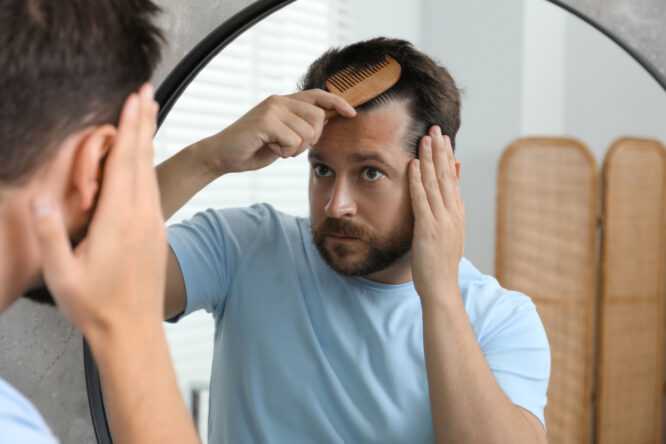
Spotting a receding hairline in the bathroom mirror or noticing thinning at the crown hits many men far harder than they ever anticipated. Hair sits closely alongside youth, vitality, and personal identity, so watching it disappear can make a man in his late twenties feel as though he’s ageing overnight before he’s ready for it.
Plenty of men spend years quietly researching hair-loss treatments, adjusting how they style their hair under bright office lights, or dreading windy days before they finally decide whether to shave it off. Accepting a changing reflection takes a surprising amount of quiet emotional adjustment.
Lingering pressure to be the main breadwinner

Even though dual-income households are completely standard now, traditional expectations around money still sit deep in the background for a huge number of men. Many men grow up absorbing the unspoken rule that their primary value in a relationship comes down to financial stability and providing for everyone else.
When a man hits a rough patch at work, earns noticeably less than his partner, or struggles to keep pace with rising living costs, that financial strain often morphs into personal shame. Feeling like he’s failing to pull his weight financially cuts straight to his sense of purpose and reliability.
Feeling clumsy or blocked when it comes to emotions

From childhood onward, boys are frequently praised for brushing things off and discouraged from crying, dwelling on hurt feelings, or asking for reassurance. By adulthood, many men find themselves wanting deeper closeness with partners and friends yet lacking the emotional vocabulary to explain what’s actually going on inside.
Psychologist Ronald Levant coined the term “normative male alexithymia” to describe this widespread difficulty men have in putting complex emotions into words after years of social conditioning. Carrying heavy stress, grief, or loneliness without knowing how to let someone in often surfaces as irritability or withdrawal, leaving men frustrated with themselves for seeming distant when they actually want connection.
Constantly anxiety about falling behind peers

Male social circles often run on subtle comparisons around career progression, salaries, property, and general life milestones. Even when nobody is bragging outright, scrolling through updates from old university mates or listening to colleagues talk about promotions can spark a quiet panic that you’re running out of time.
When a man feels like his career has stalled, or he hasn’t hit the markers he expected by 30 or 40, he rarely talks about that disappointment out loud. Instead, the fear of being seen as average or lacking ambition sits heavily in the background of his daily thoughts.
Feeling pressured to always have the answers

A stubborn cultural stereotype paints an ideal man as decisive, practical, and instantly knowledgeable about everything from fixing a boiler to navigating mortgage rates. Because of that expectation, admitting “I have no idea how this works” or asking for help can feel strangely uncomfortable.
In workplaces and social groups alike, plenty of men bluff their way through unfamiliar topics rather than risk looking clueless in front of other men. Keeping up an image of effortless competence gets exhausting when you’re privately figuring things out as you go along.
Falling behind when it comes to dating experience

Men who arrive late to dating or go through a long stretch without a relationship often carry a heavy dose of private embarrassment about their track record. Pop culture tends to treat sexual and romantic experience like an automatic badge of male adulthood, leaving men with less history feeling strangely self-conscious when conversations turn to past relationships.
Instead of seeing a quieter dating history as simple timing or bad luck, many men worry that a potential partner will view them as awkward or undesirable. That fear of being judged for a lack of experience can make putting themselves out there feel twice as intimidating.
Worrying that being kind makes them easy to overlook

Thoughtful, attentive men frequently get caught in the crossfire of terrible internet dating advice claiming that women only fancy arrogant jerks. After a few painful rejections, it’s easy for a decent man to start wondering whether being reliable, gentle, and emotionally steady somehow makes him boring.
That doubt often spills beyond dating into everyday life, leaving men questioning whether their natural warmth makes them look like a pushover at work or in social groups. Trying to act tougher or more aloof than you actually are rarely works, yet plenty of men wrestle with the urge to dial down their kindness.
Feeling boxed in by rigid rules around sexuality

For men who are gay, bisexual, asexual, or simply don’t fit the narrow mould of traditional heterosexual masculinity, navigating everyday male spaces can feel exhausting. Even in progressive cities and workplaces, subtle assumptions about who men should fancy and how they should act still linger in the background.
Psychologists studying minority stress have found that constantly monitoring your tone, posture, or conversation topics to blend in takes a measurable toll on mental wellbeing. Having to edit parts of your identity just to avoid awkwardness leaves a lingering sense of self-doubt that straight men rarely have to think about.
Struggling to build close friendships as an adult

Plenty of men have a lively group chat for fantasy football, five-a-side, or weekend pub trips, yet realise with a jolt that they don’t have a single mate they could ring at midnight during a personal crisis. Male friendships often revolve around shared activities rather than open conversation, which works fine until life hits a serious rough patch.
Sociological research on friendship patterns consistently shows that men’s social circles shrink sharply after their late twenties, leaving many men surprisingly isolated. Instead of recognising how common that drift is, men frequently blame themselves and assume they’re simply bad at keeping people close.
Carrying unresolved tension with their dads

A complicated or distant relationship with a father leaves a mark that follows many men well into middle age. Whether a dad was emotionally unavailable, overly critical, or physically absent, growing up without steady paternal warmth often leaves a lasting question mark over a man’s sense of self-worth.
Even men who rarely talk about their childhood can find themselves unconsciously chasing approval from bosses, mentors, or peers to fill that missing gap. Making peace with a flawed father takes real emotional work that most guys never get encouraged to do.
Feeling like a fraud despite their success

On paper, a man might have the decent salary, the respected job title, and the outward confidence that makes colleagues assume he has life completely figured out. Inside, however, plenty of high-achieving men live with a nagging dread that they’ve simply blagged their way into their position and will eventually get found out.
Psychologists Pauline Clance and Suzanne Imes first identified imposter syndrome decades ago, and later studies confirmed it hits men just as hard as women, though men are far less likely to admit it out loud. Rather than celebrating a promotion or a big win, they immediately start bracing for the moment everyone realises they’re winging it.
Quietly measuring themselves against the pecking order

Walk into almost any room full of men and an unspoken status radar flickers on within seconds. Whether it’s comparing salaries, job titles, fitness, or who commands the most attention in a group, many men stay hyper-aware of where they sit in the social hierarchy.
Evolutionary psychologists note that male social groups often lean heavily on status cues, which can make feeling lower down the ladder cut deeply into a man’s confidence. Even around close friends, worrying that everyone else is further ahead in life can turn a relaxed evening into a silent comparison trap.
Dreading the slow physical changes of getting older

Hitting 40 or 50 brings a noticeable change in how a man moves through the world, from slower recovery after a Saturday football match to feeling suddenly invisible in spaces geared toward younger crowds. Because so much of traditional male identity gets built around physical capability, energy, and drive, watching those traits naturally soften can feel unsettling.
Some men respond by buying expensive toys or overdoing it at the gym to prove they’ve still got their edge. Coming to terms with ageing gracefully without feeling washed up is a quiet hurdle almost every man faces eventually.